

There are some cakes that announce themselves with layers and frosting and ceremony, and then there is lemon drizzle cake, which does something quieter and, I would argue, better. It comes out of the oven golden and unassuming, and then you pour hot lemon syrup over it, and something almost magical happens: the syrup sinks into the crumb, the top turns crisp and sugary, and a plain loaf becomes the thing everyone asks about. It is the cake I make when friends are coming over and I have not planned anything, and it has never once let me down.
I learned this recipe from a neighbour years ago, scribbled on the back of an envelope, and I have barely changed it since. That is part of its charm — it does not need changing. The method is the simplest kind of baking: everything beaten together, poured into a tin, and left alone in the oven. There is no creaming butter and sugar for ten minutes, no folding egg whites, no thermometer. If you can measure and stir, you can make this cake, and it will taste like you know what you are doing, because the lemon does most of the work.
If you are new to baking, this is a kind place to start. The batter is forgiving, the syrup covers a multitude of small sins, and the result is a cake that looks humble and tastes bright and grown-up at the same time. Keep a couple of unwaxed lemons in the fruit bowl, because once this cake is in your rotation, you will want to make it more often than you expect. And make the full batch — it disappears faster than any cake its size has a right to.
Why This Recipe Works
The reason lemon drizzle cake works so well is the contrast it builds into a single loaf. The crumb is soft and buttery, the syrup is sharp and bright, and the top is crisp with crystallised sugar. Each bite has all three, and that combination is what makes people go back for a second slice without quite knowing why. A lot of lemon cakes lean too far one way — either dry and polite, or so sour they make you wince — but the drizzle method balances itself. The syrup soaks in while the cake is hot, so the lemon flavour runs all the way through instead of sitting on the surface, and the sugar in the syrup bakes into a thin, crackly crust as it cools.
The second reason it works is the simplicity of the method. This is an all-in-one cake, which means the butter, sugar, eggs, flour, and lemon zest all go into one bowl and get beaten together. There is no sequence to get wrong, and the batter is sturdy enough to forgive a little over-mixing, which is not true of more delicate cakes. That sturdiness is a feature, not a flaw — it means this cake survives a busy kitchen, a distracted baker, and an oven that runs a little hot or cold. If you want to know more about the cake’s background, the story of lemon drizzle cake is a short and sweet read, though you do not need history to bake it well.
There is also the practical side. This cake keeps beautifully, it travels well, and it is one of those rare bakes that actually improves on the second day, as the syrup settles fully into the crumb. You will find the same forgiving, home-kitchen thinking across the SavorFoodies desserts and baking recipes, and on the SavorFoodies homepage you will see that same approach — food meant for real kitchens, not just special occasions.
Ingredients You Need
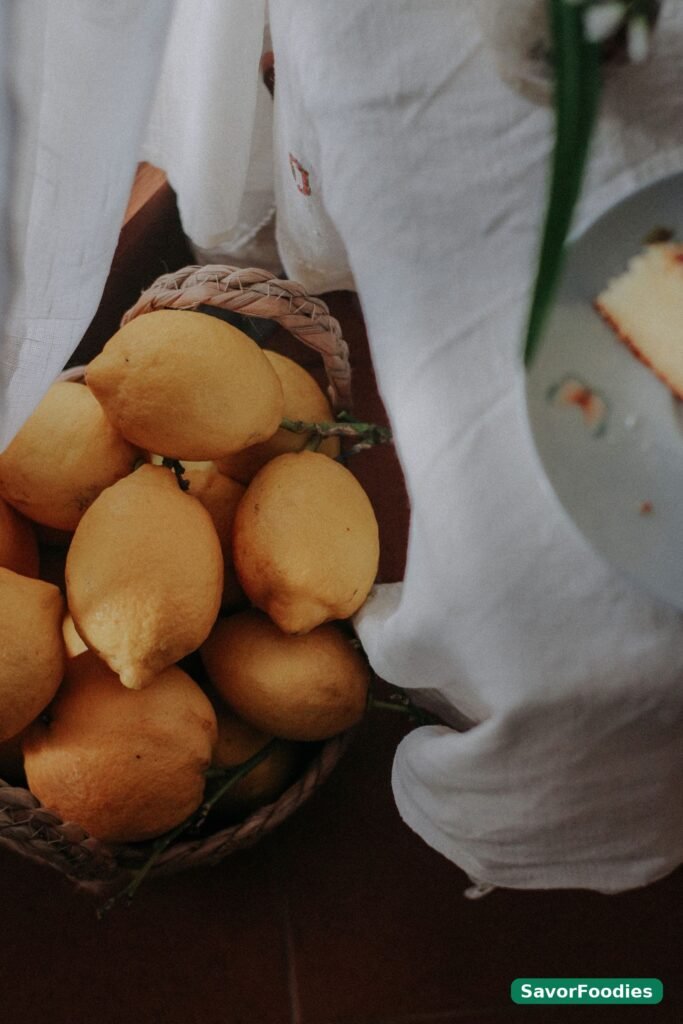
For the lemons, use unwaxed ones if you can, because the zest is doing real work here and waxed peel can taste bitter. Lemons vary a lot in juiciness, so if you can only find waxed lemons, scrub them well under hot water and dry them before zesting. You will need two or three lemons in total — two for the cake and syrup, and possibly a third if yours are small or not very juicy. Roll each lemon firmly on the counter before juicing it; it sounds like superstition, but it genuinely helps release more juice.
For the rest, gather:
- 225 g unsalted butter, softened, plus a little extra for greasing
- 225 g caster sugar
- 4 large eggs, at room temperature
- 225 g self-raising flour
- 1 teaspoon baking powder
- Zest of 2 lemons, finely grated
- 2 tablespoons lemon juice, for the batter
- For the drizzle: juice of 2 lemons (about 80 ml) and 100 g granulated sugar (not caster — granulated gives the crunch)
- A pinch of salt
A note on the flour, because it is the one ingredient people most often get wrong. Self-raising flour already contains raising agents, and this recipe adds a little extra baking powder for insurance. If you only have plain flour, use the same weight plus 2 teaspoons of baking powder, and the cake will be fine. And on the sugar for the drizzle: granulated, not caster, is deliberate. Caster sugar dissolves completely into the syrup, while granulated sugar leaves tiny crystals on the surface as it cools, and those crystals are what give the top its signature crunch. It is a small detail that makes a visible difference.
As for the butter, it needs to be genuinely soft — soft enough that your finger leaves a dent without effort, but not melted or greasy. If you forgot to take it out of the fridge, cut it into small cubes and leave it for twenty minutes, or give it ten seconds in the microwave at low power, turning it halfway. Cold butter will not beat smoothly into the batter, and melted butter makes a denser cake. Room temperature eggs matter too, for the same reason — cold eggs can make the batter curdle, though a spoonful of the flour beaten in with each egg usually rescues it.
How to Make It

- Prepare the tin and oven. Heat the oven to 180°C (350°F). Grease a 900 g (2 lb) loaf tin with butter and line it with a strip of baking parchment, leaving a little overhang on the long sides so you can lift the cake out later. This overhang is worth the thirty seconds it takes — a lemon drizzle cake that sticks to its tin is a sad sight, and the syrup makes the loaf a little more fragile than usual while it is warm.
- Beat the batter. Put the softened butter, caster sugar, eggs, flour, baking powder, salt, lemon zest, and lemon juice into a large bowl. Beat with an electric mixer on medium speed for about two minutes, until the mixture is smooth, pale, and slightly fluffy. Scrape down the sides halfway through. If you are beating by hand, a wooden spoon and three to four minutes of determined stirring will get you there — the batter should fall off the spoon in a thick ribbon. Do not worry about a few small lumps; they will bake out. The batter should be soft and dropping, not stiff — if it seems very thick, add a tablespoon of milk.
- Bake the cake. Scrape the batter into the prepared tin and smooth the top with the back of a spoon. Make a shallow groove down the centre with the spoon — this helps the cake rise evenly instead of doming wildly in the middle. Bake for 45 to 55 minutes, until the top is deep golden and a skewer pushed into the centre comes out clean. If the top is browning too fast, lay a sheet of foil loosely over it for the last 15 minutes. Every oven is a little different, so start checking at 45 minutes rather than trusting the timer blindly.
- Make the drizzle. While the cake is in its last ten minutes, mix the lemon juice and granulated sugar in a small bowl. Do not heat it, and do not stir it until the sugar dissolves — you want a gritty mixture, not a smooth syrup, because those undissolved crystals are what will crunch on top. Taste it if you like; it should be sharply lemony and sweet at the same time, which is exactly the balance you want in the finished cake.
- Drizzle while hot. As soon as the cake comes out of the oven, leave it in the tin and prick the top all over with a skewer or a fork, going about halfway down into the crumb. Spoon the lemon-sugar mixture evenly over the top, letting it sink into the holes. It will look like a lot, and some of it will pool on the surface — that is fine. The cake will absorb it as it cools, and the sugar left on top will dry into that crisp, crackly crust. Leave the cake in the tin until it is completely cool, then lift it out using the parchment overhang and peel the paper away.
Tips for the Best Result
The most important thing in this recipe is the timing of the drizzle, and I cannot stress it enough. The cake must be hot, and the drizzle must go on immediately. A cooled cake does not absorb syrup properly — it pools on the surface and makes the top wet instead of crisp, and the lemon flavour stays on the outside instead of running through the crumb. If you get distracted and the cake cools, warm it gently in a low oven for ten minutes before drizzling, and you will rescue most of the effect. But really, have the drizzle mixed and waiting before the cake comes out, so there is no gap at all.
Another tip: do not over-bake. A lemon drizzle cake that is dry in the middle cannot be saved by syrup alone, because the syrup only goes so deep. Start checking at 45 minutes, and pull the cake the moment a skewer comes out clean, even if the top looks a shade paler than you expected — it will darken slightly as it cools in the tin. If your oven runs hot, check at 40 minutes. The difference between a moist cake and a dry one is often just five minutes, and yours is the oven you are baking in.
A few more things I have learned the hard way. Weigh your ingredients if you can, because cup measurements for flour are notoriously inconsistent, and this cake is sensitive to too much flour. If you are using a fan oven, drop the temperature by 10 degrees from what the recipe says. And if your cake sinks in the middle, the usual culprits are too much baking powder, an oven door opened too early, or under-baking — all fixable next time, and the drizzle covers a sunken centre surprisingly well in the meantime. If you are building a baking habit generally, small-batch recipes are a kind way to practise, like these small batch cookies without baking soda, where a mistake costs you a tray rather than a whole cake.
What to Serve With It
This cake needs almost nothing, and that is part of its charm. A cup of tea is the classic partner — the tannin and warmth balance the sharp lemon, and there is a reason this cake has survived a century of afternoon teas. Coffee works just as well, especially a milky one, and a glass of cold milk is surprisingly good with a warm slice. If you want to dress it up for guests, a spoonful of lightly whipped cream or a scoop of vanilla ice cream turns it into a proper dessert without any extra baking.
For a slightly fancier presentation, serve it on a plain cake stand with nothing but a dusting of extra lemon zest, or a few thin twists of lemon peel on top. The cake looks best when it is not fussed over — the crackly top is decoration enough. If you are serving it as part of a larger spread, it sits happily next to other simple bakes, and its brightness is a welcome contrast to anything chocolatey or rich. That contrast is what makes a tea table feel considered rather than thrown together.
And if you are planning a baking afternoon, this cake pairs well in the oven with something that uses the same temperature. A tray of cookies at 180°C can go in alongside, and you will come out of the kitchen with two bakes for one heating of the oven. This small batch chocolate chip cookies without brown sugar recipe is a good companion, because it bakes at the same temperature and the two together make a tea table that looks like you spent all day, when you really spent about an hour.
Storage and Reheating
This cake keeps beautifully, which is one of the reasons it is so popular. Wrapped tightly in cling film or kept in an airtight tin, it will stay moist for four to five days at room temperature, and many people — myself included — think it is at its best on the second day, once the syrup has settled fully into the crumb. The top stays crisp for the first day or two, then softens gradually, though the flavour only improves.
For the freezer, this cake is excellent. Wrap the whole cooled loaf, or individual slices, in cling film and then foil, and it will keep for up to three months. Thaw slices at room temperature for an hour, or a whole loaf overnight in the fridge. A slice warmed for ten seconds in the microwave tastes almost freshly baked, and a few minutes in a low oven brings back a little of the top’s crunch. If you know you will freeze half, drizzle the whole cake first — the syrup freezes perfectly well, and it protects the crumb during thawing.
Frequently Asked Questions
Can I use bottled lemon juice?
You can, but the result will be noticeably less bright. Fresh lemons give you both juice and zest, and the zest carries a large part of the flavour — the aromatic oils in the peel are what make the cake smell like lemon rather than just taste sour. If you must use bottled juice, use it only for the drizzle, and still zest a fresh lemon for the batter if you possibly can. Two lemons are not much to ask for a cake this good.
Why did my cake sink in the middle?
The usual culprits are too much raising agent, an oven door opened too early, or under-baking. Weigh your flour and baking powder rather than scooping, resist opening the oven for the first 30 minutes, and test with a skewer rather than trusting the timer. A sunken centre is also more likely if the batter was over-beaten after the flour went in, which develops the gluten and then collapses. The good news is that the drizzle covers a multitude of sins, and a slightly sunken cake still tastes wonderful.
Can I make this in a round tin?
Yes. A 20 cm round tin works well, though the baking time drops to about 35 to 45 minutes, so start checking earlier. A bundt tin also works and looks beautiful, but the drizzle needs to be spooned slowly so it soaks in rather than running off the curves. Whatever tin you use, line it well and leave the cake to cool in the tin — the syrup makes the crumb fragile while warm, and a cake that breaks coming out of the tin is a heartbreak nobody needs.
Is this cake very sour?
No, and that is the point of the balance. The batter itself is only mildly lemony, and the drizzle — sharp lemon juice mixed with a good amount of sugar — lands somewhere between tart and sweet. Children usually love it, and adults who claim not to like lemon cake often change their minds after one slice. If you are nervous, use slightly less lemon juice in the drizzle and a little more sugar, but I would encourage you to try it as written first. The sharpness is the whole charm.
Can I add poppy seeds or blueberries?
Both work well. A tablespoon of poppy seeds beaten into the batter adds a lovely speckled look and a faint nuttiness. A handful of blueberries, tossed in a spoonful of flour before folding in, adds bursts of sweetness — though they make the crumb a little wetter, so add five minutes to the baking time. Just do not add both at once, or the cake starts to lose the clean lemon character that makes it special. One addition is plenty.
How do I get the crunchy top?
Two things: granulated sugar, not caster, in the drizzle, and a hot cake when the drizzle goes on. The sugar crystals that do not dissolve in the lemon juice dry on the surface as the cake cools, forming that thin, crackly layer. If your top came out soft rather than crunchy, the usual reason is that the drizzle was stirred until smooth, or the cake had cooled before drizzling. Next time, mix the drizzle roughly, keep the crystals, and pour it on the moment the cake leaves the oven.
This is the kind of cake that quietly becomes a habit. A loaf tin, a couple of lemons, an hour in the kitchen, and suddenly you are the person who always has cake when friends drop by. Make it once exactly as written, then make it yours — a little more zest, a handful of poppy seeds, blueberries if you love them, or a different way of serving depending on the occasion. That is how a recipe earns a permanent place in a home kitchen: not by being perfect the first time, but by being good enough that you want to bake it again next week, and the week after that.