

Some nights, the idea of cooking dinner is fine, but the idea of washing up afterwards is not. That is the night this pasta was made for. Everything — the chicken, the mushrooms, the pasta, the sauce — happens in one pan, and the pasta cooks right in the sauce, soaking up flavour as it goes instead of sitting in a separate pot of plain water. The result is a creamy, garlicky, deeply savoury dinner that tastes like it took far more effort than it did, and the washing up is a single skillet and a chopping board.
The trick to one-pan pasta is trusting the method. It feels wrong, the first time, to pour dry pasta into a pan with the chicken and just add liquid. But the starch that comes off the pasta as it cooks is exactly what thickens the sauce, so you end up with something silkier than a sauce made separately and poured over. The mushrooms, cooked first until they are properly browned, give the whole dish an earthy depth that stops the cream from feeling one-note. It is a small dish with a lot going on, and it has become my default answer to the question of what to cook when I am tired.
It is also a forgiving recipe, which matters on tired nights. The chicken can be thighs or breasts, the mushrooms can be whatever is in the shop, and the pasta shape can be whatever is in the cupboard, as long as it is a short shape that cooks in roughly the same time. Penne, fusilli, rigatoni — all of them work. Dinner is on the table in about thirty-five minutes, and nobody at the table will know or care that you only washed one pan.
Why This Recipe Works
One-pan pasta works because of starch. When pasta cooks in water, the starch washes away down the drain. When it cooks in sauce, that starch stays in the pan and thickens everything around it, giving you a glossy, clinging sauce without any flour or roux. That is why this dish tastes richer than the sum of its ingredients — the pasta is not just sitting in sauce, it is part of making it. It is a technique that has been around for a long time in Italian cooking, and once you try it, you start to wonder why you ever boiled pasta separately for a weeknight dinner.
The mushrooms do the second half of the work. Cooked properly — that means in a hot pan, without crowding, left alone long enough to actually brown — mushrooms develop a deep, almost meaty savouriness that anchors the whole dish. Cooked badly, in a crowded pan at low heat, they go grey and rubbery and taste of nothing much. So this recipe gives the mushrooms their own moment at the start, before the chicken goes in, and that patience pays off in every bite. If you have ever wondered why some mushroom dishes taste incredible and others taste flat, the difference is almost always this step.
There is also the practical appeal. One pan means one thing to wash, one burner in use, and no colander. It is the same logic that makes other one-pot cooking so popular — this one-pot chicken and rice without soup follows the same idea, and the SavorFoodies one-pan and skillet recipes collection is built around it. On nights when the sink is already full and the day has been long, that single-pan promise is worth more than any fancy technique.
Ingredients You Need
For the chicken, thighs are my preference again, because they stay tender through the simmering stage, but breasts work fine if you cut them a little smaller and watch the time. You want about 600 g of chicken for four people, cut into bite-sized pieces, because small pieces cook quickly and evenly in the sauce.
For the rest, gather:
- 600 g boneless, skinless chicken thighs or breasts, cut into bite-sized pieces
- 300 g mushrooms (chestnut, button, or a mix), sliced
- 300 g short pasta (penne, fusilli, or rigatoni)
- 2 tablespoons olive oil
- 1 tablespoon butter
- 1 small onion, finely chopped
- 4 cloves garlic, finely minced
- 1 teaspoon dried thyme or Italian seasoning
- 1/2 teaspoon black pepper
- 1 teaspoon kosher salt, plus more to taste
- 500 ml low-sodium chicken broth
- 250 ml heavy cream
- 60 g Parmesan cheese, freshly grated, plus extra for serving
- A handful of baby spinach (optional, but it wilts in beautifully)
- Fresh parsley, chopped, for serving
- Lemon wedges, for serving
A note on the mushrooms: use whatever you can get, but do not use a mix that includes very delicate varieties like enoki here, because they will disappear into the sauce. Chestnut mushrooms are ideal — they are firmer and more flavourful than plain button mushrooms, and they hold their shape through the simmer. Mushrooms are one of those ingredients that reward proper browning more than almost anything else in the kitchen, so give them the heat and the space they need.
For the pasta, short shapes are important. Long pasta like spaghetti does not sit well in a skillet sauce — it clumps, cooks unevenly, and is awkward to stir. Penne and fusilli have ridges and curves that catch the sauce, and they cook in about the same time as the chicken finishes. Pasta comes in more shapes than most people ever try, but for a one-pan dish, the humble penne is hard to beat, and it is what I reach for most often.
How to Make It
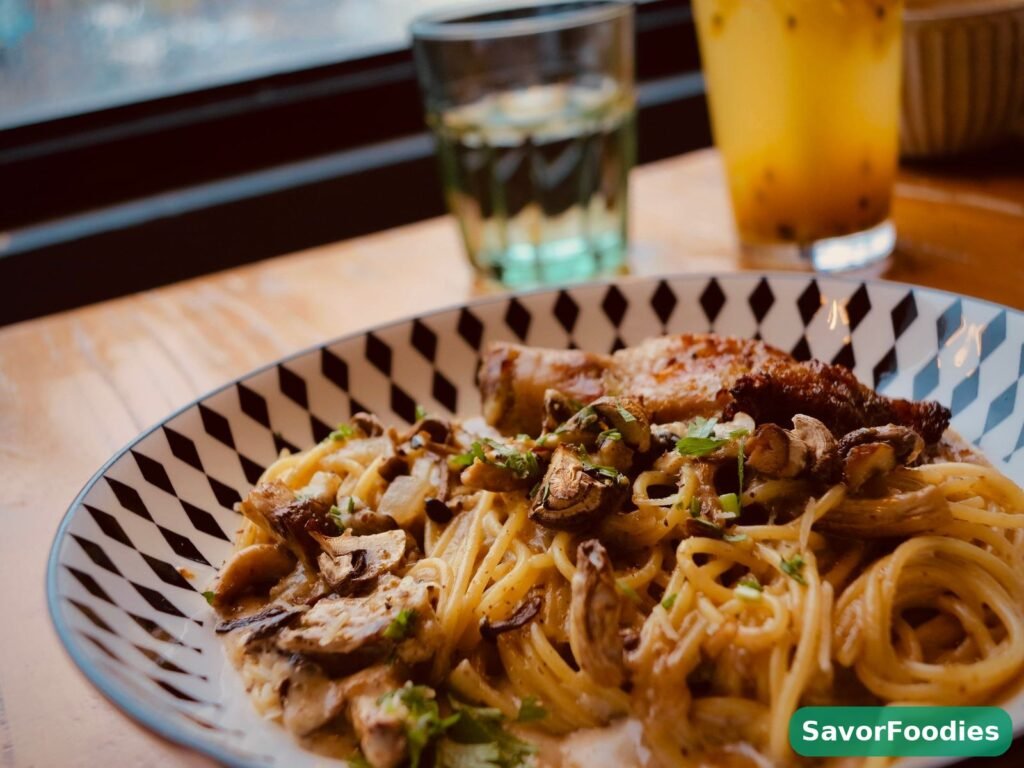
- Brown the mushrooms. Heat the olive oil in a large, deep skillet or sauté pan over medium-high heat. Add the mushrooms in a single layer and leave them alone for three to four minutes, until the undersides are deeply browned. Stir once, and cook for another three minutes until they have released their water and started to crisp at the edges. Season with a pinch of salt, then move them to a plate. Do not crowd the pan — if your pan is small, brown them in two batches. This step is worth the time.
- Sear the chicken. In the same pan, add a little more oil if needed and turn the heat up. Add the chicken pieces in a single layer, season with salt and pepper, and cook for four to five minutes, turning once, until browned on the outside. The chicken does not need to be cooked through yet — it will finish in the sauce. Move it to the plate with the mushrooms.
- Soften the aromatics. Turn the heat down to medium and add the butter. When it melts, add the onion and cook for three minutes until soft and translucent, scraping up the browned bits from the bottom of the pan as you go. Add the garlic and thyme and cook for one more minute, stirring constantly, until fragrant. Do not let the garlic brown — it turns bitter fast.
- Add the liquid and pasta. Pour in the chicken broth and cream, scraping the bottom of the pan to dissolve all the browned bits. Bring to a gentle simmer, then add the pasta and stir well so it is mostly submerged. The liquid will look like a lot at first, and that is fine — the pasta will absorb a good portion of it as it cooks.
- Simmer until the pasta is done. Return the chicken and mushrooms to the pan, stir, and cover loosely. Simmer over medium-low heat for twelve to fourteen minutes, stirring every few minutes so the pasta does not stick to the bottom. Check the pasta a minute or two before the packet time — you want it just tender, not mushy. If the sauce gets too thick before the pasta is done, add a splash of broth or water. If it is too thin at the end, simmer uncovered for two minutes.
- Finish with cheese and spinach. Take the pan off the heat and stir in the Parmesan a handful at a time until it melts into a glossy sauce. If you are using spinach, add it now and stir until it just wilts, which takes about a minute. Taste and adjust the salt and pepper. The sauce should coat the pasta thickly, not pool at the bottom of the pan.
- Rest and serve. Let the pan sit for five minutes before serving. The sauce thickens as it cools slightly, and the pasta finishes absorbing flavour. Serve in warm bowls with extra Parmesan, a scatter of parsley, and a lemon wedge on the side — a squeeze of lemon at the table lifts the whole dish and keeps the cream from feeling heavy.
Tips for the Best Result
The most important thing to get right in a one-pan pasta is the liquid ratio, and the honest truth is that it varies a little with your pan, your pasta, and your stove. The amounts here are tested and reliable, but if your pan is very wide, liquid evaporates faster and you may need an extra splash of broth. If your pan is deep and narrow, less evaporates and the sauce may need a minute uncovered at the end. Stir every few minutes, check the pasta early, and trust your eyes: the sauce should look like it is just barely enough to coat everything, because it thickens as it rests.
The second tip is about the mushrooms, and it bears repeating: do not crowd them. Mushrooms are mostly water, and if they are packed into the pan, that water has nowhere to go, so they steam instead of browning. A single layer, a hot pan, and patience — three minutes without touching them — is what gets you golden, flavourful mushrooms instead of grey, soggy ones. If you only remember one thing from this recipe, make it this.
One more practical note: use a pan with a lid, or a large sheet of foil if your skillet does not have one. The lid keeps the heat even and the liquid from evaporating too fast, which matters when pasta is cooking in sauce rather than in a pot of water. A 30 cm skillet with a lid is ideal for this quantity. If your only large pan has no lid, cover it loosely with foil and check the pasta a couple of minutes earlier than the recipe says.
What to Serve With It
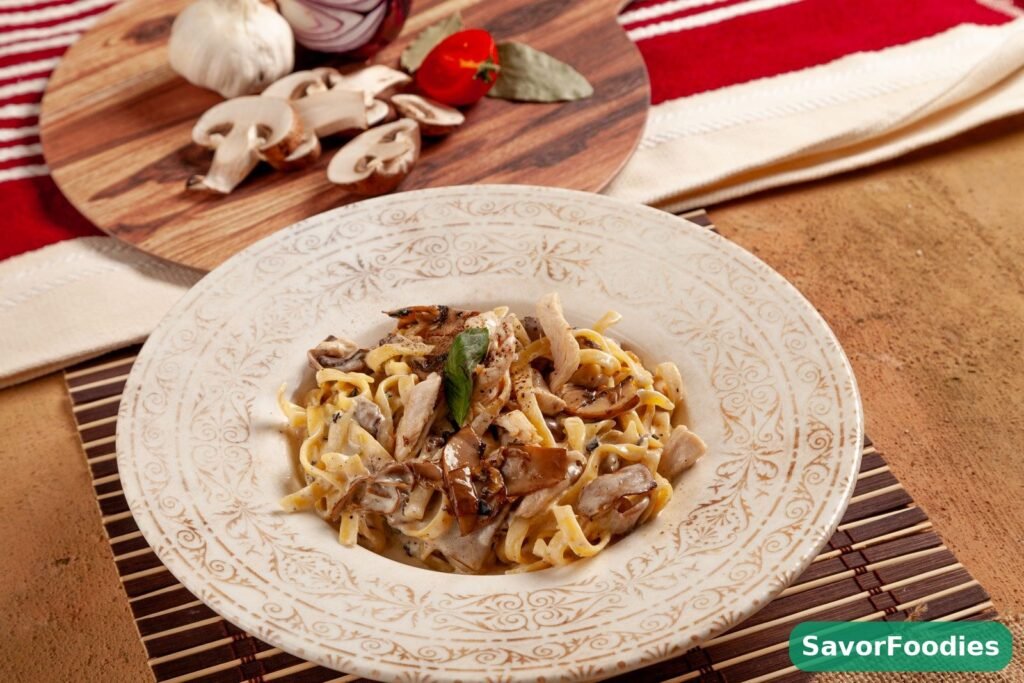
This pasta is a complete meal on its own, but a simple green salad alongside makes it feel like a proper dinner rather than a bowl of pasta eaten standing up. Peppery rocket with lemon and olive oil is my go-to — the sharpness cuts through the cream beautifully. A loaf of crusty bread is also welcome, though with pasta in the dish, bread is more of a luxury than a necessity. If you want a vegetable on the side, roasted broccoli or green beans both work, and they can go in the oven while the pasta simmers.
For a week of one-pan cooking, the same method shows up elsewhere too — this chicken and vegetables skillet without oven is another single-pan dinner in the same spirit, and the SavorFoodies homepage has more of this kind of cooking for busy nights. A glass of something cold and simple — sparkling water with lemon, or a light white wine if you drink — suits the creamy sauce better than anything heavy.
Storage and Reheating
Leftover pasta keeps in the fridge for up to three days in an airtight container. The sauce will thicken as it cools and the pasta will absorb more of it, so when you reheat, add a splash of cream, milk, or broth to loosen it. Warm it gently in a covered skillet over low heat, stirring occasionally, until it is hot all the way through. The microwave works too, but stop and stir every minute, because pasta in cream sauce heats unevenly and the edges can dry out while the middle is still cold.
This dish does not freeze particularly well, because cream sauces can separate when thawed and pasta goes soft. If you do freeze it, use it within a month, thaw overnight in the fridge, and reheat very gently with extra cream stirred in. Honestly, though, this is a dish best eaten fresh or as next-day leftovers, and it is quick enough that making a fresh batch is rarely a burden.
Frequently Asked Questions
Can I use a different pasta shape?
Yes, as long as it is a short shape that cooks in roughly twelve to fourteen minutes. Penne, fusilli, rigatoni, and farfalle all work well. Avoid very small shapes like orzo, which will overcook and turn to mush, and avoid long shapes like spaghetti, which do not sit well in a skillet and cook unevenly. If your pasta shape has a very different cooking time, adjust the simmering time and check early.
Why is my sauce too thin or too thick?
Too thin usually means the pasta was undercooked or the pan was covered too tightly and not enough liquid evaporated. Simmer uncovered for a few minutes and stir in a little extra Parmesan, which thickens the sauce as it melts. Too thick usually means the pan was too wide or the heat was too high. Add broth or water a splash at a time until it loosens. The sauce thickens as it rests, so aim for slightly looser than you think you want when you take it off the heat.
Can I make this without cream?
You can, but the sauce will be lighter and less silky. Half-and-half works as a direct swap, though you should simmer it more gently and be careful not to boil it. A mixture of whole milk with a tablespoon of flour whisked in is a workable fallback, though the flavour will be thinner. What I would avoid is skimmed milk on its own — it is much more likely to split and it never gives you the coating this dish is known for.
Can I add other vegetables?
Absolutely. A handful of peas stirred in with the cheese, a tin of drained sweetcorn, or some sliced courgette added with the mushrooms all work well. Keep additions modest, though — too many vegetables and the pan gets crowded, the liquid ratio changes, and the pasta does not cook evenly. One extra vegetable is plenty, and it should go in at the same stage as the mushrooms or with the spinach at the end, depending on how quickly it cooks.
Is this recipe gluten-free?
Not as written, because of the pasta, but it is an easy swap. Use a good gluten-free short pasta and check that your chicken broth is certified gluten-free, and the rest of the recipe is naturally fine. Gluten-free pasta can absorb liquid differently, so check it a minute or two earlier than the packet says and have extra broth ready. The sauce itself needs no changes.
Can I use leftover cooked chicken?
Yes, and it is a great way to use it up. Skip the searing step and add the cooked chicken with the mushrooms in step five, giving it just enough time to warm through in the sauce. Because the chicken is already cooked, it only needs about five minutes in the simmering liquid, so you can add it a little later if you want to be safe. Reduce the initial simmering time for the pasta accordingly, and check the pasta rather than the chicken for doneness.
That is the whole dish: one pan, half an hour, and a dinner that tastes like you put in far more effort than you did. It is the kind of recipe that earns a permanent place in a kitchen not because it is fancy, but because it is reliable. Make it on a tired night, make it when friends drop by unexpectedly, make it when the fridge is nearly empty and the cupboard has pasta and a tin of mushrooms. It will not let you down, and the washing up will not either.