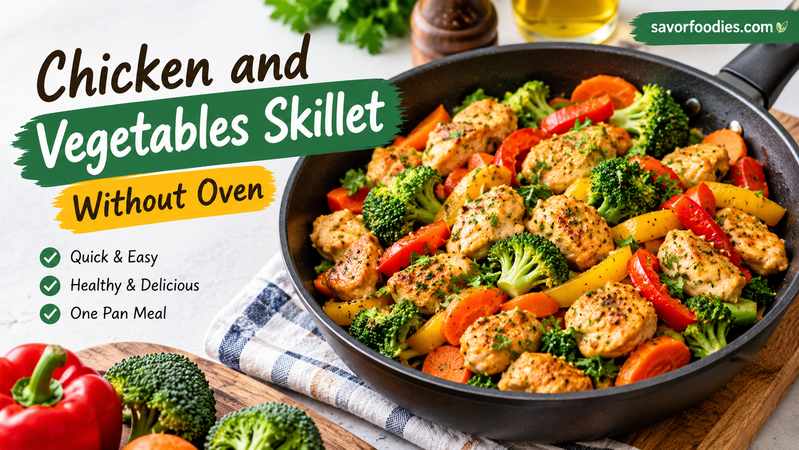
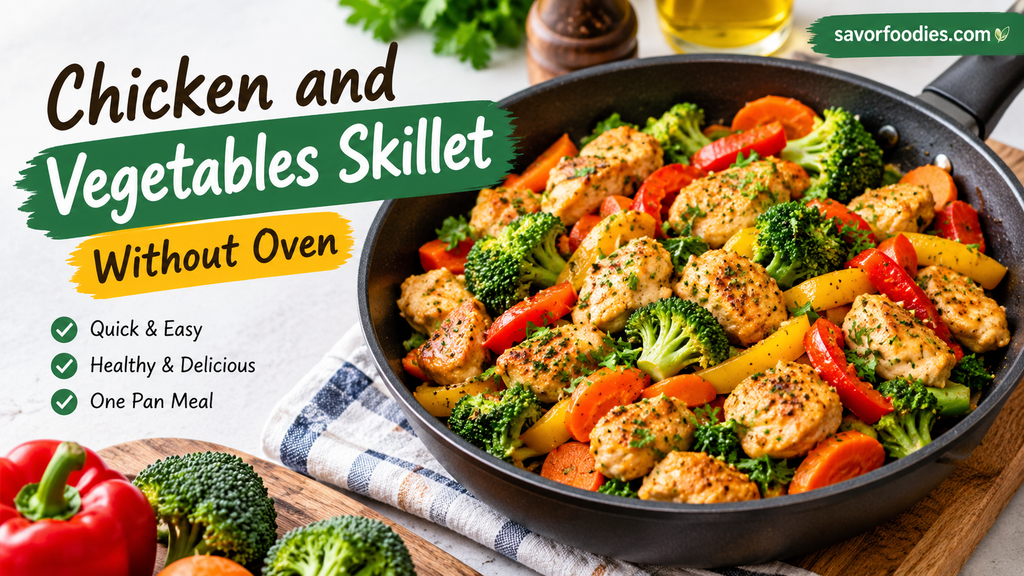
When you need a filling homemade meal but do not want to turn on the oven, this chicken and vegetables skillet without oven recipe is exactly the kind of dinner to keep in your back pocket. Everything cooks in one skillet on the stovetop, making it simple, practical, and perfect for busy weeknights.
Tender pieces of chicken are cooked with colorful vegetables and a flavorful blend of everyday seasonings. The result is a satisfying meal that feels fresh and homemade without requiring complicated ingredients or special cooking equipment.
This stovetop chicken skillet is also flexible. You can use fresh or frozen vegetables, swap the seasonings to match your taste, and serve it over rice, pasta, potatoes, or simply enjoy it on its own.
Why You Will Love This Chicken and Vegetables Skillet
There are plenty of reasons to make this easy chicken dinner. The biggest one is that you do not need an oven. A large skillet and a stovetop are all you need.
Here are a few more reasons this recipe works so well:
- One-pan meal: Chicken and vegetables cook together in one skillet.
- No oven required: It is completely cooked on the stovetop.
- Quick and easy: Most of the preparation is simple chopping and seasoning.
- Flexible vegetables: Use whatever vegetables you already have.
- Family-friendly: Mild seasonings make it easy to adjust for different tastes.
- Easy cleanup: Cooking everything in one pan means fewer dishes afterward.
- Great for meal prep: Leftovers can be refrigerated and reheated for another meal.
The combination of juicy chicken and tender vegetables makes this recipe hearty enough for dinner while still being simple enough for a regular weekday.
Ingredients You Need
You do not need a long shopping list for this chicken and vegetables skillet without oven recipe.
Chicken
Use boneless, skinless chicken breast or chicken thighs. Chicken breast is lean and cooks quickly, while chicken thighs tend to stay particularly juicy and flavorful.
Cut the chicken into small, evenly sized pieces. Keeping the pieces similar in size helps them cook at approximately the same rate.
Vegetables
You can choose almost any vegetables you enjoy. A simple combination includes:
- Bell peppers
- Carrots
- Broccoli
- Green beans
- Zucchini
- Onion
You can also use mushrooms, peas, corn, spinach, cabbage, or a frozen mixed vegetable blend.
Oil
A small amount of cooking oil helps brown the chicken and prevents sticking. Olive oil, avocado oil, canola oil, or another neutral cooking oil can work.
Seasonings
For a simple savory flavor, use:
- Garlic
- Paprika
- Black pepper
- Salt
- Onion powder
- Dried oregano or Italian seasoning
You can adjust the seasonings according to your preferences.
Optional Ingredients
For additional flavor, consider adding a splash of soy sauce, lemon juice, chili flakes, fresh parsley, or a little grated Parmesan cheese before serving.
How to Make Chicken and Vegetables Skillet Without Oven
The beauty of this recipe is that the cooking process is straightforward. You cook the chicken first, then add the vegetables and allow everything to finish together.
Step 1: Prepare the Chicken
Start by cutting the chicken into bite-sized pieces. Pat the chicken dry with paper towels if it has excess moisture.
Place it in a bowl and season with salt, black pepper, paprika, garlic powder, and onion powder.
Toss the chicken until every piece is lightly coated with the seasoning.
Step 2: Prepare the Vegetables
Wash and chop your vegetables into reasonably small pieces.
Hard vegetables such as carrots need more cooking time than zucchini or bell peppers, so keep that in mind when preparing them.
If you are using broccoli, cutting large florets into smaller pieces will help them cook more quickly.
Step 3: Heat the Skillet
Place a large skillet over medium-high heat. Add a little cooking oil and allow it to heat for a moment.
You want the skillet hot enough to brown the chicken, but not so hot that the outside burns before the inside cooks.
Step 4: Cook the Chicken
Add the seasoned chicken to the skillet in a single layer when possible.
Let the pieces cook for a few minutes without constantly moving them. This allows the chicken to develop a lightly browned exterior.
Stir or turn the pieces and continue cooking until the chicken is cooked through.
Transfer the chicken to a clean plate temporarily if necessary.
Step 5: Cook the Vegetables
Add the onion and firmer vegetables to the same skillet.
Cook them for several minutes, stirring occasionally. If the skillet becomes dry, add a small splash of water or broth.
Next, add quicker-cooking vegetables such as zucchini, bell peppers, broccoli, or frozen peas.
Continue cooking until the vegetables reach your preferred texture.
Some people like vegetables very soft, while others prefer them slightly crisp. Cooking time can be adjusted accordingly.
Step 6: Combine Everything
Return the cooked chicken to the skillet.
Add another pinch of seasoning if needed. You can also add a splash of soy sauce or lemon juice for extra flavor.
Stir everything together and cook for another few minutes so the flavors can combine.
Make sure the chicken is fully cooked before serving.
How Do You Know When the Chicken Is Done?
Chicken should be cooked thoroughly before eating. The safest approach is to check the thickest piece with a food thermometer.
The internal temperature should reach 165°F (74°C).
If you do not have a thermometer, cut into one of the larger pieces and check that the center is no longer raw. However, a food thermometer provides a more reliable measurement.
Avoid relying only on the outside appearance because chicken can brown before the center is fully cooked.
Best Vegetables for a Stovetop Chicken Skillet
One of the best things about this recipe is how easy it is to customize.
Bell Peppers
Bell peppers cook relatively quickly and add sweetness, color, and a pleasant crunch.
Use red, yellow, green, or orange peppers, or combine several colors.
Broccoli
Broccoli gives the skillet a hearty texture and pairs naturally with seasoned chicken.
Cut the florets into small pieces so they cook evenly.
Carrots
Carrots add sweetness and color. Because they are firm, slice them thinly or cook them earlier than softer vegetables.
Zucchini
Zucchini cooks quickly and becomes tender without needing much preparation.
Add it later in the cooking process so it does not become overly soft.
Green Beans
Fresh green beans are excellent in a chicken skillet. They retain a nice texture and make the meal feel substantial.
Frozen Mixed Vegetables
Frozen vegetables are one of the easiest shortcuts for busy nights.
There is no need to thaw them completely. Add them according to the package directions and allow a little additional cooking time if needed.
Can You Use Frozen Vegetables?
Absolutely. Frozen vegetables are a convenient option for this chicken and vegetables skillet without oven.
They are especially useful when you want to make dinner without making another trip to the grocery store.
A frozen mix containing carrots, peas, corn, and green beans works particularly well.
Because frozen vegetables can release water as they cook, avoid overcrowding the skillet. If there is too much liquid, continue cooking uncovered until some of it evaporates.
How to Keep Chicken Tender
Dry chicken can ruin an otherwise delicious skillet meal. Fortunately, a few simple habits can help.
First, avoid cutting the chicken into extremely tiny pieces. Bite-sized pieces are ideal.
Second, do not overcook the chicken. Once it reaches a safe internal temperature, remove it from excessive heat.
Third, avoid cooking the entire meal over very high heat. Medium-high heat is usually enough to brown the chicken while allowing the vegetables to cook properly.
Chicken thighs are another excellent option if you prefer naturally juicy meat.
Flavor Variations
You can make this basic recipe taste completely different simply by changing the seasoning.
Garlic Herb Chicken Skillet
Use garlic, oregano, thyme, black pepper, and a little lemon juice. Finish with fresh parsley.
Spicy Chicken and Vegetable Skillet
Add chili flakes, cayenne pepper, or your favorite hot sauce. Bell peppers and onions work particularly well with this version.
Soy Garlic Chicken Skillet
Add a small amount of soy sauce, garlic, ginger, and black pepper. This creates a savory flavor that works beautifully with broccoli, carrots, and bell peppers.
Lemon Pepper Chicken Skillet
Season the chicken with black pepper, garlic, and paprika. Finish the skillet with fresh lemon juice and a little lemon zest.
Creamy Chicken Skillet
For a richer version, stir in a small amount of cream or cream cheese toward the end of cooking. Add enough liquid to create a light sauce without making the vegetables soggy.
What to Serve With Chicken and Vegetables
This recipe can be served by itself, but adding a simple side can turn it into a more substantial dinner.
Rice
Steamed white rice, brown rice, or basmati rice is an easy choice. Spoon the chicken and vegetables over the rice and let the juices soak in.
Pasta
Toss the cooked chicken and vegetables with pasta for a quick stovetop dinner.
Potatoes
Serve the skillet with boiled, roasted, or pan-fried potatoes.
Bread
Warm bread, flatbread, or dinner rolls are useful for soaking up any flavorful juices left in the skillet.
Salad
If you want something lighter, serve the skillet with a fresh green salad.
Tips for Making the Best Chicken and Vegetable Skillet
A few small details can make a big difference.
Use a large skillet. Crowding the pan can cause the chicken and vegetables to steam rather than brown.
Cut ingredients evenly. Similar-sized pieces cook more consistently.
Add vegetables according to cooking time. Start with harder vegetables and finish with softer ones.
Season in layers. Season the chicken first and taste the vegetables before serving.
Do not overcook zucchini. It can become soft quickly.
Keep the skillet uncovered when appropriate. This allows excess moisture to evaporate and encourages browning.
Let the chicken rest briefly. If you remove the chicken before combining everything, allowing it to sit for a few minutes can help retain moisture.
Can I Make This Recipe Without Oil?
Yes, you can prepare a version of this chicken and vegetables skillet without oven using little or no oil.
Use a good nonstick skillet and add a small amount of water or low-sodium broth when needed to prevent sticking.
Keep the heat moderate and stir regularly.
The chicken may not develop the same browned exterior as it would with oil, but the dish can still be flavorful because the vegetables, garlic, herbs, and spices provide plenty of taste.
Can I Use Chicken Thighs Instead of Chicken Breast?
Definitely.
Chicken thighs contain more fat than chicken breast, which can make them especially tender and flavorful.
Trim excess fat and cut boneless, skinless thighs into bite-sized pieces.
Because different cuts and sizes of chicken can cook at different speeds, always check the internal temperature before serving.
Can I Make This Recipe Ahead of Time?
Yes. This skillet is suitable for meal preparation.
Cook the chicken and vegetables, allow the food to cool appropriately, and store it in an airtight container in the refrigerator.
When reheating, use a skillet or microwave until the food is heated thoroughly.
If the vegetables seem dry, add a tablespoon or two of water or broth before reheating.
For the best texture, avoid repeatedly reheating the same portion.
How to Store Leftovers
Place leftovers in an airtight container and refrigerate them promptly.
For food safety, cooked leftovers should generally be refrigerated within two hours of cooking, or within one hour if the surrounding temperature is particularly hot.
Use refrigerated leftovers within a few days and reheat them thoroughly before eating.
If you know you will not eat the leftovers soon, freezing portions can be a convenient option. Keep in mind that some vegetables, especially zucchini, may become softer after freezing and thawing.
Common Mistakes to Avoid
Even an easy recipe can go wrong if a few basic steps are skipped.
Overcrowding the Pan
Putting too much chicken into a small skillet lowers the pan temperature and prevents proper browning.
Cook in batches if necessary.
Adding All Vegetables at Once
Different vegetables require different amounts of cooking time. Adding everything simultaneously can leave carrots undercooked while zucchini becomes too soft.
Using Excessive Heat
Very high heat can burn garlic and spices while leaving chicken undercooked inside.
Medium to medium-high heat is generally easier to control.
Overcooking the Chicken
Chicken breast can become dry if cooked far beyond the point of doneness.
Use a thermometer when possible.
Forgetting to Taste
Seasonings vary in strength, so taste the finished dish and adjust salt, pepper, lemon juice, herbs, or spice as needed.
Frequently Asked Questions
Can I make chicken and vegetables skillet without oven?
Yes. This recipe is specifically designed for stovetop cooking. A large skillet, stovetop, and basic ingredients are all you need.
What is the best chicken for this recipe?
Boneless chicken breast and boneless chicken thighs both work well. Breast is leaner, while thighs are generally more forgiving and juicy.
Can I use frozen chicken?
It is better to thaw chicken safely before cutting it into pieces and cooking it in a skillet. This helps the chicken cook more evenly.
What vegetables go well with chicken?
Broccoli, carrots, bell peppers, onions, zucchini, green beans, mushrooms, peas, and corn all pair well with chicken.
Can I make this chicken skillet spicy?
Yes. Add chili flakes, cayenne pepper, fresh chilies, or hot sauce according to your preferred heat level.
Can I add cheese?
Yes. A small amount of Parmesan, cheddar, mozzarella, or another melting cheese can be added near the end of cooking.
Is this recipe good for meal prep?
Yes. Divide the cooled cooked meal into individual containers and refrigerate for convenient lunches or dinners.
Final Thoughts
A chicken and vegetables skillet without oven is one of those recipes that can make busy evenings much easier. You get tender chicken, colorful vegetables, and plenty of flavor without complicated preparation or a long list of kitchen equipment.
The recipe is also easy to make your own. Change the vegetables based on what is available, experiment with herbs and spices, or serve the skillet over rice, pasta, or potatoes.
Whether you are cooking for your family or preparing meals for yourself, this simple stovetop chicken dinner is a practical option when you want something warm, satisfying, and homemade.
Once you learn the basic method—brown the chicken, cook the vegetables according to their texture, combine everything, and season to taste—you can create countless variations from the same simple formula.
The next time you need a quick dinner and do not want to use the oven, reach for a skillet. This easy combination of chicken and vegetables may become one of the most useful recipes in your weeknight rotation.