

There is a smell that can stop you in your tracks on a busy street, and it is usually shawarma. Warm spices, charred edges, garlic sauce — it is the kind of food that makes you hungry even when you were not planning to eat. For years I assumed that flavour belonged to restaurants with vertical spits and serious equipment, and that a home version would be a pale imitation. Then I started cooking it in a skillet, and I realised the spit is not the point. The point is the spice mix, the high heat, and the char, and all three of those live happily in an ordinary pan.
This one-pan chicken shawarma skillet is my weeknight answer to that craving. Strips of chicken, coated in a warm, earthy spice blend, seared hard in a hot pan until the edges darken, then tossed with peppers and onions that pick up all the flavour left behind. A creamy garlic sauce drizzled over the top ties the whole thing together, and the entire meal — chicken, vegetables, sauce — comes out of a single skillet, with warm flatbread on the side for scooping. It is on the table in about thirty minutes, and it tastes like something you went out for.
If you have never cooked with shawarma spices before, this is a friendly place to start. The blend is made from spices you probably already own, the method is just searing and tossing, and the result is forgiving in the way good skillet cooking always is. Even if your chicken is a little unevenly cut, the spices and sauce carry it. By the second time you make it, you will have your own version — maybe a little more cumin, maybe a pinch more heat — and that is exactly how it should be.
Why This Recipe Works
The reason shawarma tastes so distinctive is not one spice but the combination, and the balance between them. Cumin gives earthiness, coriander gives a citrusy warmth, turmeric gives colour and a gentle bitterness, paprika gives sweetness and smoke, and cinnamon — just a little — gives a background warmth that people cannot quite place but always notice when it is missing. Mixed together and bloomed in hot oil, they create a flavour that is much bigger than any single ingredient. The background on shawarma is worth a read if you are curious about where the dish comes from, though you do not need history to cook it well.
The second reason it works is the sear. Shawarma from a spit gets its character from edges that are dark and slightly crisp, and a ripping-hot skillet is the home cook’s way to the same place. The trick is not crowding the pan and not moving the chicken too much. Let it sit, let it darken, then flip it once. That patience gives you char, and char gives you the flavour that makes this taste like shawarma rather than just spiced chicken. The vegetables go in after, so they cook in the spiced oil and pick up everything the chicken left behind, which means nothing is wasted.
There is also the practical side. This is a genuine one-pan meal in the sense that matters: the chicken, the vegetables, and the finish all happen in the same skillet, and the garlic sauce takes two minutes in a small bowl while the pan does its work. You will find the same one-pan logic across the SavorFoodies one-pan and skillet meals, and on the SavorFoodies homepage you will see that same approach — food meant for real weeknights, not just special occasions.
Ingredients You Need
For the chicken, thighs are my first choice here. They stay juicy over high heat, they forgive a minute too long in the pan, and their slightly richer flavour suits the spice blend beautifully. Breasts work too, but slice them a little thicker than you might for a stir-fry, and watch the timing more carefully, because they dry out faster. Either way, slice the chicken into even strips, about a centimetre thick, so they cook at the same speed.
For the spice blend and the rest, gather:
- 700 g boneless, skinless chicken thighs (or breasts), sliced into even strips
- 2 teaspoons ground cumin
- 2 teaspoons ground coriander
- 1 teaspoon smoked or sweet paprika
- 1/2 teaspoon turmeric
- 1/2 teaspoon garlic powder
- 1/2 teaspoon onion powder
- 1/4 teaspoon ground cinnamon
- 1/4 teaspoon cayenne pepper, or more to taste
- 1 teaspoon kosher salt, plus more to taste
- 1/2 teaspoon black pepper
- 3 tablespoons olive oil, divided
- Juice of 1 lemon, plus wedges for serving
- 1 large red pepper, sliced
- 1 large yellow pepper, sliced
- 1 medium red onion, sliced
- 3 cloves garlic, thinly sliced
- For the garlic sauce: 1/2 cup mayonnaise, 1/4 cup plain yoghurt, 2 cloves garlic finely grated, 1 tablespoon lemon juice, salt to taste
- Warm flatbread, for serving
- Fresh parsley, chopped, for serving
A note on the spice blend, because it is the heart of the dish. If your spices have been sitting in the cupboard for more than a year, they have lost much of their punch, and this is the recipe where you will notice. Cumin and coriander fade fastest. If in doubt, buy fresh ones — it is a small cost for a large difference. And on the garlic sauce: the classic version is made with oil and garlic alone, but the mayonnaise-and-yoghurt shortcut here is creamy, stable, and honestly delicious. If you want to know more about the traditional sauce, the background on garlic sauce is a good rabbit hole, though this quick version will not let you down.
As for the vegetables, peppers and onions are the classic pairing, but this skillet is flexible. A handful of mushrooms, a sliced courgette, or a pile of cherry tomatoes halved and tossed in at the end all work. The rule is simple: anything that benefits from high heat and a little char belongs here, and anything delicate should go in last so it does not turn to mush.
How to Make It
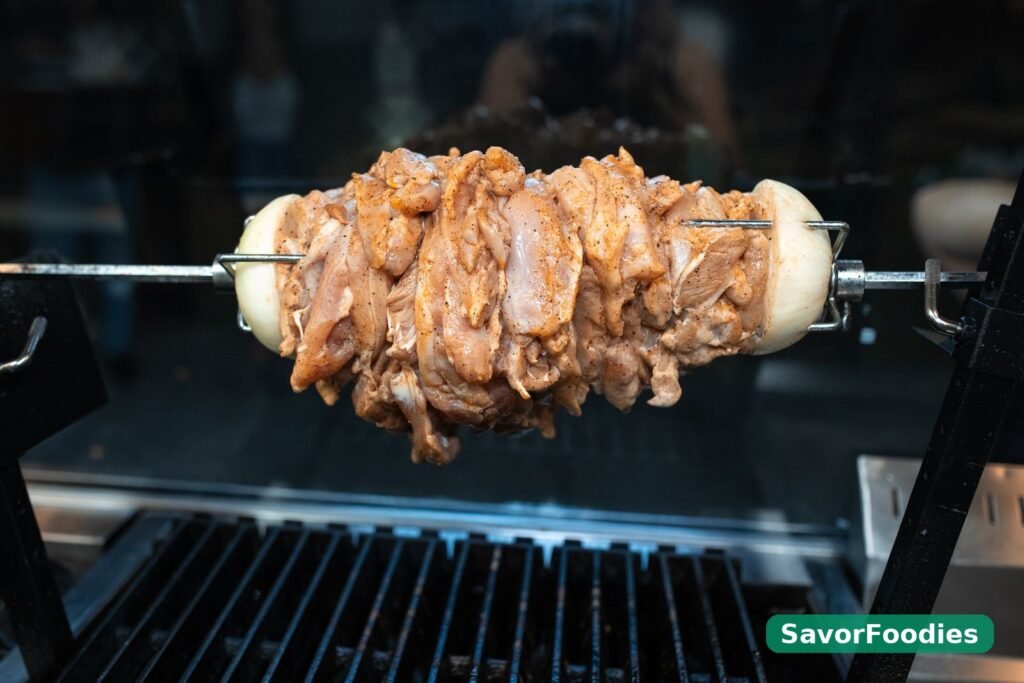
- Marinate the chicken. In a large bowl, mix the cumin, coriander, paprika, turmeric, garlic powder, onion powder, cinnamon, cayenne, salt, and pepper. Add the chicken strips, two tablespoons of the olive oil, and half the lemon juice, and toss until every strip is evenly coated. Leave it for at least 15 minutes at room temperature, or up to a few hours in the fridge if you have the time. The longer it sits, the deeper the flavour, but even 15 minutes makes a real difference, because the spices bloom against the chicken rather than just sitting on the surface.
- Make the garlic sauce. While the chicken marinates, whisk together the mayonnaise, yoghurt, grated garlic, lemon juice, and a good pinch of salt in a small bowl. Taste it — it should be garlicky and bright, not flat. If it tastes dull, it usually needs more lemon or more salt, not more garlic. Set it aside. It will keep in the fridge for a few days, and it is good on almost anything, from roast vegetables to sandwiches, so making a little extra is never a mistake.
- Sear the chicken. Heat a large skillet — cast iron if you have it — over high heat until it is genuinely hot. Add the remaining tablespoon of oil. Lay the chicken strips in a single layer, leaving space between them, and do not touch them for three to four minutes. You want a deep, dark sear on the underside, not a pale steam. If the pan is crowded, cook in two batches; crowding is the fastest way to grey, steamed chicken, and no amount of spice fixes that. Flip the strips and sear the other side for another two to three minutes, until cooked through. Move the chicken to a plate.
- Char the vegetables. In the same pan, without wiping it out, add the peppers and onion. The spiced oil and browned bits left behind are free flavour, and the vegetables will pick all of it up. Cook over high heat for four to five minutes, stirring occasionally, until the peppers are softened at the edges but still have bite, and the onions are starting to char in spots. Add the sliced garlic in the last minute, stirring constantly — garlic burns fast over high heat, and burnt garlic will flavour the whole pan.
- Bring it together. Return the chicken to the pan along with any juices from the plate. Toss everything together for a minute, so the chicken warms through and the vegetables and spices mingle. Squeeze over the remaining lemon juice, taste, and adjust the salt. The lemon at the end matters more than people think — it lifts the whole dish and keeps the warm spices from feeling heavy. Scatter with parsley, drizzle generously with garlic sauce, and serve straight from the pan with warm flatbread.
Tips for the Best Result
The most important thing in this recipe is heat, and I mean real heat. A pan that is merely warm will steam the chicken instead of searing it, and you will lose the char that makes this taste like shawarma. Let the pan get hot before the chicken goes in — you should hear a strong sizzle the moment a strip touches the surface — and resist the urge to move the pieces around. Patience at this stage is what separates a good version from a great one, and it is a skill that transfers to almost every skillet dish you will ever make.
Another tip: slice the chicken evenly. Uneven strips cook unevenly, and the thin ones will dry out while the thick ones are still pink in the middle. Taking two minutes with a sharp knife at the start saves you from that entirely. If you are working with breasts, slice them slightly on the diagonal, which gives you wider strips that sear better. And if your pan is small, cook in batches without apology — two well-seared batches beat one crowded, steamed one every single time.
A few more things I have learned the hard way. Do not skip the rest after searing — even two minutes on the plate lets the juices redistribute, and the chicken will be noticeably juicier. If your spice blend tastes flat, it is almost always stale spices or not enough salt; taste the raw blend on your fingertip before it goes on the chicken, and adjust there. And if you want more heat, add it at the table with hot sauce or chilli flakes rather than loading the whole pan, so everyone can find their own level. The same one-pan thinking applies elsewhere too, like in this one-pot chicken and rice without soup, where a single pan and a little patience do most of the work.
What to Serve With It
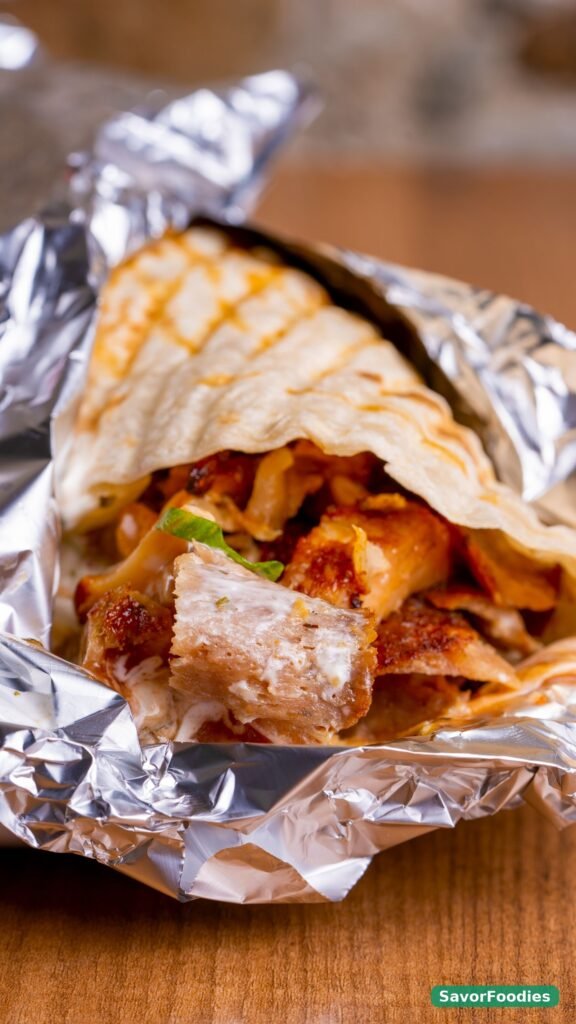
Warm flatbread is the obvious partner, and for good reason. It scoops, it wraps, it soaks up the garlic sauce, and it turns a skillet of chicken and vegetables into something you eat with your hands, which always feels more fun. Warm the bread in a dry pan or directly over a low flame for a few seconds per side, and keep it wrapped in a clean tea towel so it stays soft while you finish the skillet. Pita works just as well, and rice is a fine alternative if you would rather have a fork dinner.
For something fresh alongside, a simple salad is the answer. Shredded cabbage with lemon and salt, a cucumber and tomato salad with a little vinegar, or a pile of pickled red onions all cut through the warmth of the spices and keep the plate balanced. Pickled onions are especially good here — their sharpness is the perfect contrast to the rich garlic sauce, and they take ten minutes to make if you have vinegar and a red onion. A handful of olives on the side never hurts either.
If you are building a whole meal around this skillet for guests, a few small plates make it feel generous without much extra work. Hummus, olives, a simple salad, and the shawarma skillet in the middle of the table, with bread for everyone to help themselves — that is a dinner party that cooks itself, more or less, and it is the kind of meal people remember. The skillet itself is the star; everything around it should be easy enough to make while the chicken marinates. The same one-pan logic works with vegetables too, like in this chicken and vegetables skillet without oven, where a pile of vegetables gets the same high-heat treatment.
Storage and Reheating
Leftovers keep well in the fridge for up to three days, stored in an airtight container with the chicken and vegetables together. Keep the garlic sauce separate, because it stays fresher that way and you can use it for other things. For the freezer, the chicken and vegetables freeze fine for up to a month, though the peppers will be softer after thawing — still good, just not as bright. Thaw overnight in the fridge before reheating.
Reheating is best done back in the skillet. A hot pan, a splash of water or stock to loosen things up, and two to three minutes of tossing brings back most of the original character, including a little fresh char on the edges. The microwave works in a pinch, but it softens the vegetables further and you lose the texture that makes this dish special. If the chicken looks dry after reheating, a fresh squeeze of lemon and a new drizzle of garlic sauce fixes it instantly.
Frequently Asked Questions
Can I use chicken breasts instead of thighs?
Yes, though thighs are more forgiving. Breasts dry out faster over high heat, so slice them a little thicker, watch the timing closely, and pull them the moment they are cooked through — an instant-read thermometer reading 74°C (165°F) is your friend. If you are nervous about it, a quick brine (salt water for 30 minutes) before marinating adds a useful safety net. The flavour will still be excellent either way.
How spicy is this dish?
As written, it is warmly spiced rather than hot — the cayenne gives background heat, not a burn. If you like things fiery, double the cayenne or add a chopped fresh chilli with the vegetables. If you are cooking for children or anyone sensitive to heat, leave the cayenne out entirely; the other spices carry plenty of flavour on their own. Heat is easiest to add at the table, so when in doubt, keep the pan mild and let people season their own plates.
Can I make the spice blend ahead of time?
Absolutely, and I recommend it. Mix a double or triple batch of the dry spices and keep it in a sealed jar away from light and heat. It will stay potent for about three months, and having it ready turns this into a fifteen-minute dinner on nights when you have no patience for measuring. Label the jar, because an unlabelled spice mix in a busy cupboard is a mystery nobody enjoys solving.
What if I do not have a cast iron skillet?
Any large, heavy pan will work — stainless steel is a good second choice, because it sears well and the browned bits (the fond) are easy to work with. What I would avoid is a thin nonstick pan over very high heat, because it will not hold its temperature well and the coating can suffer. Whatever pan you use, the rules are the same: get it hot, do not crowd it, and let the chicken sit until it is properly seared.
Is this recipe gluten-free?
Yes, as long as you check the bread you serve with it. The chicken, spices, vegetables, and garlic sauce are all naturally gluten-free. Serve it with rice or gluten-free flatbread, and the whole meal stays safe. If you are buying spice blends rather than mixing your own, check the label — some commercial blends contain anti-caking agents or flour, though a homemade blend like this one avoids that entirely.
Can I add other vegetables?
Of course. Mushrooms are a natural addition — add them with the peppers and give them time to brown. Courgette, aubergine, or cherry tomatoes all work too, though tomatoes should go in last so they do not collapse. The rule is simple: anything that benefits from high heat and a little char belongs here. Just keep the total volume sensible, or the pan will crowd and steam instead of sear, which is the one mistake that undoes this dish.
This is the kind of dinner that makes a normal evening feel like a small trip somewhere warmer. One pan, a spice blend that smells like a street stall, chicken with properly charred edges, and a garlic sauce that ties it all together. Make it once exactly as written, then make it yours — a little more cumin, a pinch more heat, mushrooms if you love them, or a different side depending on what is in the cupboard. That is how a recipe earns a permanent place in a home kitchen: not by being perfect the first time, but by being good enough that you want to cook it again next week, and the week after that.