

There is a particular kind of dinner that does not announce itself, and one-pan sausage and peppers is the best of them. No marinade, no side dish strategy meeting, no second pan — just sausage browning in a skillet, peppers and onions softening in the fat, and thirty-five minutes later a meal that tastes like it took all evening. The peppers go sweet and slightly charred at the edges, the onions melt into something almost jammy, and the sausage, sliced and returned to the pan, soaks up everything around it. It is the dinner I make when I want to feel competent without trying hard.
I learned this dish from a neighbour who cooked it on Friday nights with the radio on and a glass of something in hand, and she never measured a single thing. Her rule was simple: brown the sausage properly, do not crowd the peppers, and let the pan do the work. I have since learned the science behind her rules — browning builds flavour, crowding makes steam, patience makes sweetness — but the spirit is the same. This is cooking at its most forgiving, and it is the reason the dish has survived in my kitchen through every phase of busyness, from new parenthood to deadline weeks.
If you are new to one-pan cooking, this is the ideal starting point. There is one pan, a handful of ingredients, and almost nothing that can go seriously wrong. Even if the peppers go a little soft, even if the sausage is a little more browned than planned, the result still tastes like dinner at a good Italian-American restaurant. By the second time you make it, you will have your own version — hot sausage instead of sweet, a splash of wine, a handful of spinach at the end — and that is exactly how a recipe earns its place in a home kitchen.
Why This Recipe Works
The whole dish is built on one idea: cook everything in the same fat, in the right order, so each ingredient flavours the next. The sausage goes first, and as it browns, it leaves behind rendered fat and browned bits stuck to the pan — and those bits are pure flavour. The onions go in next and pick up that fat, softening and sweetening in it. Then the peppers, which cook in the same seasoned fat, and finally the sausage returns to finish in the vegetables’ juices. Nothing is wasted, nothing is washed away, and the final dish tastes layered in a way that belies how little effort went into it.
Order matters more than timing here. If you throw everything in together, the peppers steam the sausage instead of letting it brown, and you end up with grey sausage and soggy peppers. Browning the sausage alone, in a hot pan with space, gives you the caramelised exterior that carries the dish. Cooking the vegetables in the same pan, without cleaning it, means they inherit all that flavour. It is a small discipline — one ingredient at a time, in the right sequence — and it is the difference between a pan of cooked things and a dish that tastes composed. The background on sausage is worth a read if you are curious about the ingredient’s history, though you do not need it to brown one well.
There is also the practical side, which is where this recipe quietly wins week after week. One pan to wash, thirty-five minutes start to finish, ingredients that keep for days in the fridge, and a dish that works in a roll, over pasta, over rice, or on its own with bread. You will find the same one-pan thinking across the SavorFoodies one-pan and skillet meals, and on the SavorFoodies homepage you will see the same approach — food meant for real weeknights, not just special occasions.
Ingredients You Need
For the sausage, Italian sausage — sweet or hot — is the classic choice, and it is classic for a reason: the fennel and garlic in the seasoning are made for peppers and onions. Pork is traditional, but chicken or turkey Italian sausage works beautifully too, and it is a little lighter. What matters most is that the sausage is fresh, not pre-cooked, because you want it to brown and render in the pan.
For the rest, gather:
- 450 g Italian sausage links (sweet, hot, or half and half)
- 1 tablespoon olive oil, only if needed
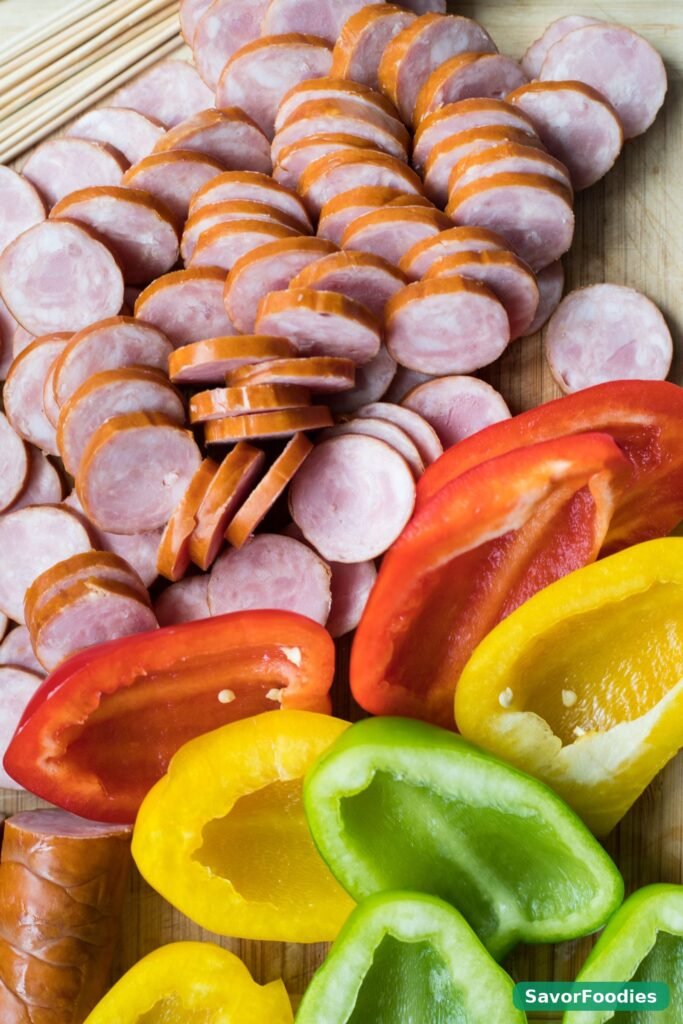
- 3 large bell peppers — a mix of red, yellow, and green — sliced into strips
- 2 medium onions, halved and sliced into strips
- 4 cloves garlic, thinly sliced
- 1 teaspoon dried oregano
- 1/2 teaspoon dried basil (optional)
- A pinch of chilli flakes (optional, especially with sweet sausage)
- 1 tablespoon tomato paste (optional, for a richer sauce)
- 60 ml chicken stock or water, for deglazing
- Salt and black pepper, to taste
- Fresh parsley or basil, chopped, for serving
- Crusty rolls, pasta, or rice, for serving
A note on the peppers, because the mix matters. Red peppers are the sweetest, yellow are mild and sunny, and green are slightly bitter and grassy — together they give the dish a range that a single colour cannot. If you can only find one colour, red alone is the best substitute, but try for at least two. Slice them into strips about a centimetre wide, and keep the strips roughly the same size so they cook evenly. The background on bell pepper explains why the colours taste different — they are the same fruit at different stages of ripeness — and that difference is exactly what makes the mix interesting. And on the onions: yellow onions are ideal here, because they sweeten more than red ones do, and sweetness is what this dish is built on.
How to Make It
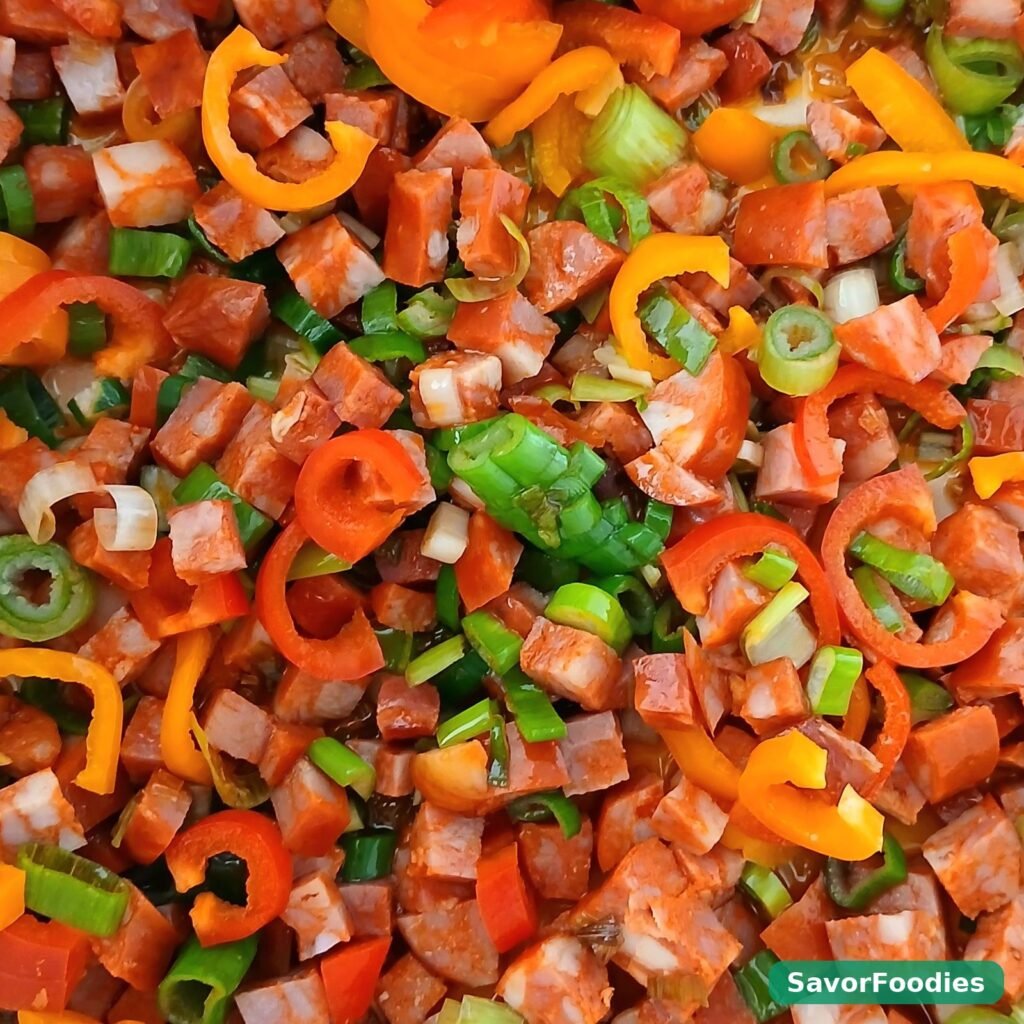
- Brown the sausage. Heat a large, heavy skillet over medium-high heat — cast iron is perfect if you have it. If your sausage is lean, add a drizzle of oil; if it is pork, the pan alone will do. Add the sausage links with space between them and cook undisturbed for 2 to 3 minutes per side, turning to brown all over, about 8 to 10 minutes total. The sausage does not need to be cooked through yet — it will finish later. Transfer to a plate and leave every drop of fat and every browned bit in the pan. That residue is the foundation of the dish, and cleaning the pan now would be throwing flavour away.
- Soften the onions and peppers. Reduce the heat to medium and add the onions to the same pan, with a pinch of salt. Stir to coat them in the sausage fat and cook for 3 to 4 minutes, until they start to soften and pick up colour. Add the peppers and cook for another 6 to 8 minutes, stirring now and then, until they are softened but still have a little bite — you want them tender, not collapsed. If the pan looks dry at any point, add a small splash of oil, but do not add water yet; you want the vegetables to fry, not steam.
- Add garlic, herbs, and tomato paste. Push the vegetables to the sides of the pan and add the garlic to the centre, stirring for one minute until fragrant. Sprinkle over the oregano, basil if using, and chilli flakes, and stir everything together. If you are using tomato paste, add it now and fry it for two minutes, stirring, until it darkens — this gives the finished dish a richer, more saucy character, though the dish is excellent without it too.
- Deglaze and finish. Slice the browned sausage into thick coins, about 1 cm each, and return them to the pan. Pour in the chicken stock or water and scrape up all the browned bits from the bottom — this is deglazing, and it turns those bits into sauce. Reduce the heat to low, cover, and simmer for 10 to 12 minutes, until the sausage is cooked through and the peppers are completely tender. Uncover for the last few minutes if you want the juices to thicken slightly. Taste and adjust the salt and pepper — the sausage is already salty, so you may need less salt than you expect.
- Rest and serve. Take the pan off the heat and let it sit for 3 minutes, which lets the flavours settle and the juices thicken a touch. Scatter with parsley or basil and serve straight from the pan, with whatever you have chosen alongside. The dish should be glossy and generous, with the sausage nestled among the peppers rather than sitting on top of them.
Tips for the Best Result
The single biggest improvement you can make is browning the sausage properly, and that means two things: a hot pan and patience. If you move the sausage around too much, it never browns — it just steams in its own juices. Let it sit undisturbed until it releases easily and has a deep golden crust, then turn it. The crust is not cosmetic; it is where the flavour lives, and it is what separates this dish from a pan of boiled sausage and peppers. A heavy pan helps enormously here, because it holds its heat when the cold sausage goes in.
Another tip: do not crowd the vegetables. If your pan is small, cook the peppers in two batches rather than piling them in, because a crowded pan traps steam and steams peppers into softness without any of the sweet charring that makes them good. The peppers should have room to touch the pan, not just each other. If you only have a small pan, this is the recipe that justifies buying a bigger one — a 30 cm skillet changes weeknight cooking more than almost any other purchase.
A few more things I have learned the hard way. If the dish tastes flat, it almost always needs salt or a splash of vinegar, not more spice — a teaspoon of red wine vinegar at the end lifts the whole pan. If the peppers are still firm after simmering, they were cut too thick; slice them thinner next time, or give them a few more minutes before the sausage goes back in. And if you are using hot sausage, taste before adding chilli flakes — hot sausage varies wildly, and some batches are already fiery enough. The same respect for browning pays off elsewhere too, like in this chicken and vegetables skillet without oven, where a hot pan and patience produce the same kind of deeply flavoured result.
What to Serve With It
Crusty rolls are the classic, and for good reason: piling sausage and peppers into a roll, with the juices soaking into the bread, is one of the great sandwiches, and it needs nothing else. Toast the rolls lightly, add a slice of provolone if you like, and let the pan juices do the rest. Over pasta, the dish becomes a different meal entirely — toss short pasta through the pan with a splash of pasta water, add Parmesan, and you have a dinner that tastes like it came from a trattoria.
Over rice, it is a quieter, more everyday meal, and that is no bad thing — the rice catches the juices and the whole thing eats like a stew. On its own, with a green salad and bread, it is the lightest version, and the one I make most often in summer. For a crowd, I put the pan in the middle of the table with rolls, pasta, and a salad, and let people build their own plates — it is the easiest way to feed eight people without cooking eight meals. The same crowd-friendly logic works in this easy chicken dinner with frozen vegetables, where one pan and a little planning feed everyone without fuss.
Storage and Reheating
Leftovers keep well in the fridge for up to four days, stored in an airtight container, and they are one of those dishes that genuinely improves overnight, as the peppers soften further into the juices. For the freezer, this dish freezes very well for up to three months; freeze it in portions without the bread or pasta, and thaw overnight in the fridge before reheating. The peppers will be softer after freezing, but in a roll or over pasta, nobody minds.
Reheating is best done back in the skillet. Warm the sausage and peppers over medium heat, stirring now and then, until hot through, and add a splash of stock or water if the pan looks dry. The microwave works too, but it softens the peppers further and can make the sausage rubbery at the edges if overheated — use short bursts and stir between them. If the reheated dish looks dull, a fresh scattering of parsley and a squeeze of lemon wakes it right up, and it tastes freshly made.
Frequently Asked Questions
Sweet or hot sausage — which is better?
Both, honestly, and half and half is my usual answer. Sweet sausage lets the peppers’ sweetness shine and suits children and cautious eaters. Hot sausage brings a warmth that builds through the dish and suits adults who like a kick. If you are cooking for a mixed table, use sweet sausage and put chilli flakes on the table for those who want heat — that way everyone gets their version from one pan.
Can I use pre-cooked sausage?
You can, but the dish loses something important. Pre-cooked sausage does not render fat or leave browned bits in the pan, and those bits are the foundation of the flavour. If pre-cooked is what you have, brown it well in oil first to get some colour, and add a spoonful of tomato paste and a splash of stock to make up for the missing juices. It will be good, but it will not be quite the same dish — fresh sausage earns its place here.
Do I need to peel the peppers?
No, and please do not. Pepper skin softens as it cooks and adds nothing unpleasant, and peeling peppers is a fiddly job that adds twenty minutes for no benefit. If you are roasting peppers whole over a flame, charring and peeling makes sense, but in a skillet dish like this, the skins are part of the texture. Slice them, cook them, and move on — nobody at the table will wish you had peeled them.
Can I add other vegetables?
Absolutely. Mushrooms are the best addition — add them after the onions and let them brown before the peppers go in. Courgette works too, though it releases water, so cook it hot and fast. Spinach or kale, stirred through at the very end until just wilted, adds green and freshness. Just keep the total volume sensible, or the pan will crowd, and add anything delicate only at the end. The rule is simple: hard vegetables early, soft vegetables late, and enough space for everything to fry rather than steam.
Can I make this in a slow cooker?
You can, but you will miss the browning, which is the point. If you must use a slow cooker, brown the sausage and soften the onions and peppers in a pan first, then transfer everything to the cooker with the stock and cook on low for 3 to 4 hours. It will be a good stew, but it will not be the same dish — the charred edges and the pan sauce are what make this version special, and a slow cooker cannot make them. For this recipe, the skillet is worth the ten minutes of attention.
What if my peppers are still crunchy at the end?
They were probably cut too thick, or the pan was too crowded. Give them a few more minutes covered on low heat, with a splash more stock, and they will soften. Next time, slice them a little thinner — about a centimetre — and cook them in a single layer if you can. Peppers should be tender with a little bite, not raw and not collapsed, and the window between those states is wider than you think once the pan is hot enough.
This is the dinner that taught me a pan, a little patience, and good sausage are enough. Brown properly, cook in order, let the pan do the work, and serve it however the night demands — in a roll, over pasta, over rice, or straight from the skillet with bread. Make it once exactly as written, then make it yours — hot sausage, a splash of wine, spinach at the end, depending on the night. That is how a recipe earns a permanent place in a home kitchen: not by being perfect the first time, but by being good enough that you want to cook it again next week, and the week after that.