

Brussels sprouts have a reputation problem, and most of it is undeserved. Ask someone who dislikes them, and they will usually describe a grey, boiled, faintly sulphurous thing from childhood — and they are right to dislike that thing, because it is terrible. But roasted Brussels sprouts are a different vegetable entirely: crispy at the edges, tender in the middle, nutty and sweet, with a balsamic glaze that adds a tangy shine. Put a pan of these on the table and watch the sceptics reach for seconds before they remember they were supposed to dislike them.
I was a sceptic myself, for years, until a friend roasted a pan of them at high heat and tossed them in balsamic while I was not paying attention. The leaves at the edges had gone dark and crisp, almost like crisps, and the centres were sweet and soft. I ate half the pan standing up in her kitchen and asked for the recipe, which turned out to be embarrassingly simple: halved sprouts, hot oven, oil, salt, and a glaze whisked in two minutes. The vegetable I had avoided for a decade became a weekly side, and I have never quite forgiven boiled sprouts for the years they cost me.
If you have never roasted a vegetable before, this is a kind place to start. There is no complicated technique, the timing is forgiving, and the result is hard to ruin badly. Even if your sprouts are unevenly cut, the glaze covers a multitude of sins, and the darkest, crispiest leaves are usually the first ones eaten. By the second time you make them, you will have your own version — maybe a little honey, maybe some Parmesan — and that is exactly how a recipe earns its place in a home kitchen.
Why This Recipe Works
Roasting transforms Brussels sprouts for the same reason it transforms every vegetable: high, dry heat caramelises their natural sugars and crisps their outer leaves, creating flavours that boiling and steaming simply cannot produce. Boiled sprouts release sulphur compounds into the water and into the air, which is where that dreaded smell comes from. Roasted sprouts, cooked fast and hot, develop nutty, sweet notes instead, and the outer leaves — the parts that would go limp in water — turn into crisp, savoury chips. It is the same vegetable, cooked by a method that flatters it instead of punishing it.
The balsamic glaze is the other half of the equation, and it works because sprouts, like all brassicas, have a faint bitterness that needs balancing. Balsamic vinegar is both sweet and acidic, and that combination cuts through the earthiness while amplifying the caramelisation. Reducing it briefly with a little honey turns it from a thin vinegar into a syrup that clings to every sprout, and the glaze goes on at the end, not during roasting, so it never burns in the oven. The background on Brussels sprout is worth a read if you are curious about the vegetable, though you do not need it to roast them well.
There is also the practical side. This is a side dish that looks after itself in the oven while you cook everything else, it scales from two people to a crowd without any extra skill, and the loose outer leaves that fall off in preparation become the crispiest bits in the pan — waste turned into the best part. You will find the same low-effort, high-reward thinking across the SavorFoodies sides and vegetables, and on the SavorFoodies homepage you will see the same approach — food meant for real weeknights, not just special occasions.
Ingredients You Need
For the sprouts, look for small to medium ones, firm and bright green, with tight leaves. Large sprouts can be woody in the middle, and loose, yellowing leaves mean they are past their best. If you can find them still on the stalk, they are usually fresher and sweeter, but loose sprouts from a bag are perfectly fine. About 700 g serves four as a side.
For the rest, gather:
- 700 g Brussels sprouts, trimmed and halved lengthwise
- 3 tablespoons olive oil
- 1 teaspoon kosher salt, plus more to taste
- 1/2 teaspoon black pepper
- 3 cloves garlic, thinly sliced (optional, but lovely)
- 60 ml balsamic vinegar
- 1 tablespoon honey
- 1 teaspoon Dijon mustard
- A pinch of chilli flakes (optional)
- 30 g Parmesan, finely grated, for serving (optional)
- Fresh parsley, chopped, for serving
A note on the balsamic, because quality matters more here than in most recipes. You do not need an aged, expensive bottle — a decent mid-range balsamic, thick enough to coat a spoon slightly, is ideal. Very thin, cheap balsamic is mostly coloured vinegar and water, and it will not reduce into a proper glaze; if that is what you have, reduce it for longer and add a little more honey. The background on balsamic vinegar explains why the real thing behaves so differently from imitations, and in a glaze with only three ingredients, that difference shows. And on the garlic: slice it, do not mince it, because minced garlic burns at roasting temperatures while slices soften and sweeten alongside the sprouts.
How to Make It
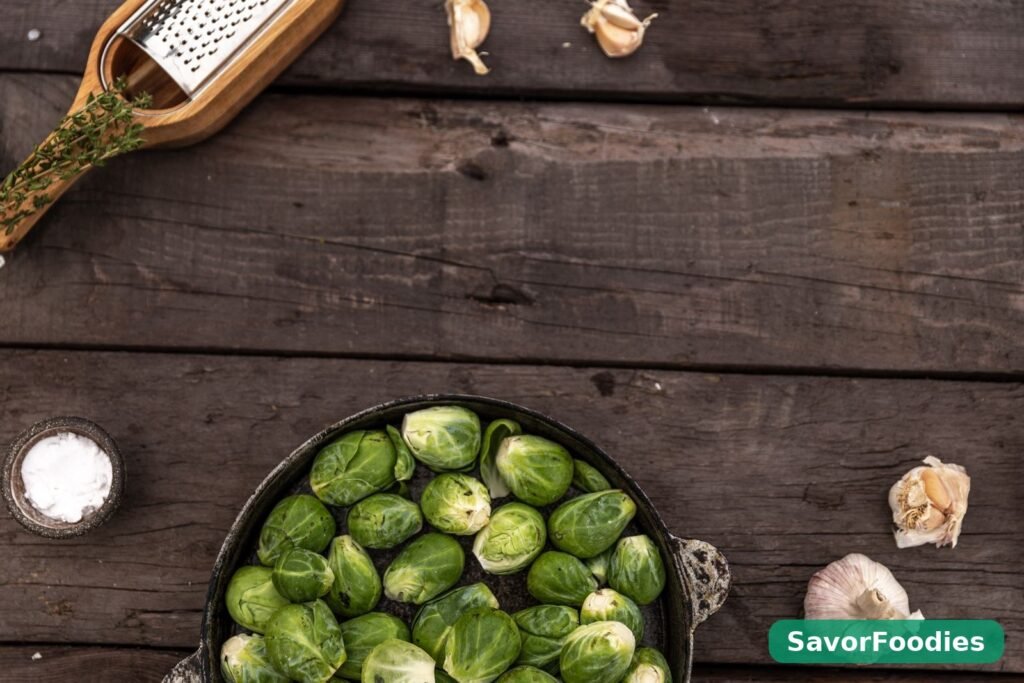
- Prepare the sprouts and oven. Heat the oven to 220°C (425°F) and line a large rimmed sheet pan with parchment paper. Trim the woody stem end from each sprout and peel away any yellowed outer leaves — keep the loose green leaves that fall off, because they become the crispiest bits. Halve each sprout lengthwise through the stem, so the halves stay together, and quarter any very large ones. Try to keep the pieces similar in size, because uneven sprouts cook unevenly, and the small ones will burn while the large ones are still hard in the middle.
- Toss and spread. Put the sprouts in a large bowl with the olive oil, salt, and pepper, and toss until every piece is evenly coated. Add the sliced garlic if you are using it and toss again. Tip them onto the prepared sheet pan and spread them in a single layer, cut side down, with space between the pieces. This is the rule that matters most: if the sprouts touch, they steam instead of roast, and you lose the crisp edges that make this dish special. Use two pans if you have to — a crowded pan is the fastest way to soft, pale sprouts, and no amount of glaze fixes that.
- Roast until crisp at the edges. Slide the pan into the oven and roast for 20 to 25 minutes, without turning, until the cut sides are deeply golden and the outer leaves are dark and crisp at the edges. Resist the urge to stir them halfway — leaving them cut side down lets that side caramelise properly, and turning them interrupts it. Start checking at 20 minutes: you want some leaves properly dark, almost charred at the tips, because those are the best ones, and they are not burnt, they are caramelised. If your sprouts are browning too fast, drop the temperature by 10 degrees and give them a few more minutes.
- Make the glaze. While the sprouts roast, whisk the balsamic vinegar, honey, and Dijon mustard in a small saucepan. Simmer gently over low heat for 3 to 4 minutes, stirring now and then, until the mixture has reduced by about a third and coats the back of a spoon. It will thicken further as it cools, so take it off the heat while it still looks slightly thin — if it goes too far, it turns to toffee, and while balsamic toffee is not a disaster, it is not what you want here. Stir in the chilli flakes if you are using them.
- Glaze and serve. Take the sprouts out of the oven and tip them into a large bowl. Pour over the warm glaze and toss gently until every sprout is coated and glossy. Taste and adjust the salt — the glaze is sweet and tangy, and a little extra salt sharpens it. Scatter with Parmesan and parsley if you are using them, and serve immediately, while the edges are still crisp. The glaze softens the crispness slightly as it sits, so serve within a few minutes of tossing for the best texture.
Tips for the Best Result
The single biggest improvement you can make is giving the sprouts space, and I cannot stress it enough. A single layer, cut side down, with gaps between the pieces, is a rule, not a suggestion. In a small oven, that might mean two pans, and that is fine — the sprouts will roast better on two uncrowded pans than on one crowded one, every single time. Crowding traps steam, and steam is the enemy of caramelisation. If you have ever wondered why restaurant roasted vegetables taste better, space and high heat are most of the answer.
Another tip: do not glaze during roasting. Honey and balsamic both burn at high temperatures, and a glaze added at the start will be bitter and black by the time the sprouts are done. The glaze goes on at the end, tossed through the hot sprouts off the heat, where it warms and clings without ever scorching. This order — roast first, glaze last — is the difference between a glossy, sweet-tangy coating and a burnt, bitter one, and it costs nothing but patience.
A few more things I have learned the hard way. Do not cover the pan with foil while roasting — trapped steam again, and you will end up with boiled sprouts in their own juices. If your sprouts are very large, quarter them rather than halving them, so the centres cook through before the edges burn. And if the glaze looks thin after tossing, do not worry — tip the pan juices over the sprouts when you serve them, because that sticky, tangy liquid is the best part. The same roasting logic applies to other vegetables too, like in these crispy potatoes without breadcrumbs, where space, heat, and patience produce the same kind of magic.
What to Serve With It
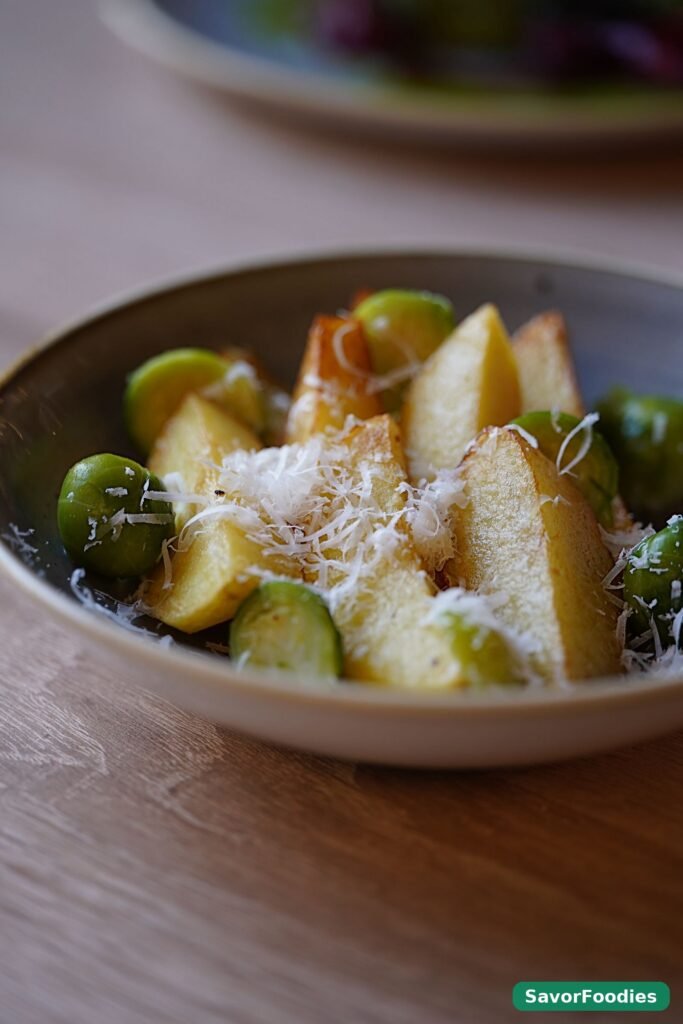
These sprouts sit happily next to almost any roast, and that is their great strength. Roast chicken is the classic partner — the glaze echoes the savoury juices, and the sprouts catch everything that runs off the bird if they share a pan for the last twenty minutes. Roast pork, lamb, or a simple grilled steak all work just as well, and for a vegetarian main, they are wonderful next to a grain dish like couscous or a lentil stew, where their sweetness balances something earthy.
For a weeknight meal, I like them with something simple from the stove — a pan-fried chicken breast, a piece of fish, or even just eggs and toast on a lazy evening, where the sprouts turn an ordinary supper into something that feels considered. A green salad alongside keeps the plate balanced, and a crusty loaf for the pan juices is never a mistake. The sprouts are flavourful enough to carry a modest main, so do not feel you need to cook something elaborate to justify them. The same weeknight logic works in these crispy potatoes in the air fryer without oil, where a little planning turns ordinary vegetables into something people actually look forward to.
Storage and Reheating
Leftovers keep well in the fridge for up to four days, stored in an airtight container, though they will lose their crispness — that is unavoidable, and it is the price of reheating a roasted vegetable. They are still excellent cold, sliced into a salad with shaved Parmesan and lemon, or chopped into a grain bowl where their flavour matters more than their texture. For the freezer, I would not bother — thawed sprouts go soft in a way that no reheating fixes, so freeze the raw sprouts instead and roast them fresh.
Reheating is best done back in the oven. Spread the sprouts on a sheet pan and warm them at 220°C (425°F) for 8 to 10 minutes, until hot through and the edges crisp up again. A hot skillet works too, and it has the advantage of re-caramelising the glaze a little. The microwave works in a pinch, but it softens everything and you lose the texture that makes this dish special. If the sprouts look dry after reheating, a fresh drizzle of balsamic and a little olive oil tossed through the hot pan fixes it instantly.
Frequently Asked Questions
Why do my sprouts taste bitter?
Usually, they were boiled or steamed rather than roasted, or they were overcooked at too low a temperature. Boiling releases the sulphur compounds that taste bitter, while high-heat roasting converts them into sweet, nutty flavours. If your roasted sprouts still taste bitter, they may have been very large and woody — choose smaller, tighter sprouts next time, and make sure the oven is genuinely hot. The balsamic glaze also helps enormously, because sweetness and acidity both counter bitterness.
Can I make these in the air fryer?
Yes, and they are excellent — arguably even crispier, because the air circulation is so strong. Halve the sprouts, toss them in oil and salt, and cook at 200°C (400°F) for 12 to 15 minutes, shaking the basket halfway through, until the edges are dark and crisp. Work in batches if your basket is small, because crowding is still the enemy. Toss in the glaze afterwards, exactly as in the oven version. The air fryer is a fine substitute here, and for a small batch, it is actually my preferred method.
Should I cut the sprouts in half or leave them whole?
Halve them, always, unless they are genuinely tiny. Halving creates a flat cut side that caramelises against the pan, which is where most of the flavour lives, and it lets the heat reach the centre faster so the middle cooks through before the outside burns. Whole sprouts roast unevenly — burnt outside, hard inside — and no glaze fixes that. Quarter very large ones. The extra minute of cutting is the best minute you will spend on this recipe.
Can I add bacon or cheese?
Both are wonderful additions. Bacon, diced and scattered over the sprouts before roasting, renders and crisps alongside them, and its saltiness pairs beautifully with the glaze — add it raw, so it cooks with the sprouts. Parmesan, grated over the hot glazed sprouts, melts slightly and adds a savoury depth. Feta, crumbled over at the end, adds a salty tang that works with the balsamic. Just do not add cheese before roasting, or it will burn — cheese always goes on after, with the glaze.
Can I make the glaze ahead of time?
Yes, and it keeps well. Whisk and reduce the glaze, let it cool, and keep it in a sealed jar in the fridge for up to two weeks. It will thicken in the cold, so warm it gently before tossing — a few seconds in the microwave, or a minute in a small pan, until it flows again. Having glaze ready in the fridge turns roasted sprouts into a five-minute side on the nights when even a simple vegetable feels like effort, and it is equally good on roasted carrots, sweet potatoes, and green beans.
What if my sprouts are still hard in the middle?
They were probably too large, or the oven was not hot enough. Next time, quarter large sprouts, check that your oven is genuinely at 220°C, and give them a few more minutes — hard centres just need time, and the outer leaves can take more colour than you think before they burn. If you are in a hurry, parboil the halved sprouts for three minutes before roasting, which evens out the cooking, though you will lose a little of the crispness. Patience and high heat solve this problem more reliably than any shortcut.
This is the side dish that turned a vegetable I avoided into one I cook every week. Halve them, give them space, roast them hot, and glaze them at the end — that is the whole recipe, and it has converted more sceptics at my table than any other dish I make. Make them once exactly as written, then make them yours — a little honey, some Parmesan, bacon if you like it, depending on the night. That is how a recipe earns a permanent place in a home kitchen: not by being perfect the first time, but by being good enough that you want to cook it again next week, and the week after that.