

There is a particular kind of weeknight dinner that makes everyone show up on time. It is not the fancy one, and it is not the one that took all afternoon. It is the one that smells like a restaurant the moment the pan hits the table. Chicken fajitas are exactly that dinner. The chicken comes off the heat still sizzling, the peppers are soft at the edges and a little charred, and the whole lot lands in the middle of the table with warm tortillas and a few bowls of toppings, and suddenly dinner feels like an occasion instead of a chore.
I learned to make fajitas properly not from a cookbook but from ordering them too many times and then trying to work out why mine never tasted the same at home. The answer turned out to be embarrassingly simple: I was cooking everything too gently, in a pan that was too full, with chicken that had been marinated for about four minutes. Once I fixed those three things — a properly hot pan, room for the food to actually sear, and a marinade that gets at least half an hour — the gap closed almost completely. This version is the result of that learning curve, and it is now one of the most requested meals in my house.
The other reason I love fajitas is that they are forgiving in a way most quick dinners are not. The chicken can be thighs or breasts. The peppers can be whatever colours are on offer. The toppings can be as simple as a jar of salsa and a lime, or as elaborate as you feel like making them. And everyone builds their own, which means the picky eaters and the adventurous ones both leave happy. If you have thirty-five minutes and a decent skillet, you can make this tonight.
Why This Recipe Works
A fajita lives or dies on heat. The chicken needs a hard sear to get those browned, slightly crisp edges, and the peppers need enough heat to soften and char at the same time instead of steaming into a soggy pile. That is why this recipe cooks the chicken and the vegetables separately, in the same pan, one after the other. It takes five extra minutes and it makes all the difference. Cooked together in a crowded pan, everything releases water and simmers. Cooked in two batches, everything actually fries, and you get the flavour that makes fajitas taste like fajitas.
The marinade does the second half of the work. Lime juice, oil, garlic, cumin, and smoked paprika do not just add flavour — the acid gently loosens the surface of the chicken so the seasoning gets in, and the oil helps it brown. Thirty minutes is enough to notice a real difference, and two hours is even better. You do not need overnight marinating, and you definitely do not need a packet of seasoning mix. The homemade version costs less, tastes fresher, and lets you control the salt, which matters more than people think, because most packet mixes are salt first and flavour second.
There is also a practical reason this dish belongs in a weeknight rotation. It is fast, it uses one pan, and it scales without any fuss. Double the chicken and you have lunch for tomorrow. Halve it and you have a quiet dinner for two, in the same spirit as this easy chicken dinner for two with simple ingredients, which is worth keeping in mind when you do not want a fridge full of leftovers. And because the toppings are cold and the filling is hot, the whole meal comes together without any last-minute juggling of pots.
Ingredients You Need
For the chicken, boneless thighs are my first choice. They stay juicy even if you overshoot by a minute, and their slightly richer flavour stands up to the smoky seasoning. Breasts work perfectly well too, but slice them a little thinner and watch the timing more closely. Either way, you want about 700 g of chicken for four people, which sounds like a lot until you remember that everyone goes back for a second tortilla.
For the marinade and filling, gather:
- 700 g boneless, skinless chicken thighs or breasts
- 3 tablespoons olive oil, divided
- Juice of 2 limes, plus extra wedges for serving
- 4 cloves garlic, finely minced
- 1 teaspoon ground cumin
- 1 teaspoon smoked paprika
- 1/2 teaspoon chilli powder
- 1/2 teaspoon dried oregano
- 1 teaspoon kosher salt
- 1/2 teaspoon black pepper
- 1 teaspoon honey (optional, but it helps the chicken caramelise)
- 3 bell peppers, mixed colours, sliced into strips
- 1 large red onion, sliced into strips
- 8 flour tortillas, warmed
- Fresh coriander, chopped, for serving
For toppings, keep it to what you actually like. Salsa, sour cream, guacamole, and shredded cheese cover most people. A quick pico de gallo — diced tomato, onion, coriander, lime, and salt — takes five minutes and tastes noticeably fresher than anything from a jar, though a good jarred salsa is absolutely fine on a busy night. If you are curious about where this dish comes from, the background on fajitas is a short and interesting read, and it explains why the sizzling platter presentation became part of the whole experience.
A note on the peppers, since they are half the dish: use at least two colours, not because it looks pretty, though it does, but because red, yellow, and green peppers actually taste different. Red is sweetest, yellow is mellow, green is a little sharper and more savoury. That mix is what makes the filling taste layered instead of one-note. Bell peppers are also one of the few vegetables that genuinely improve with a bit of char, so do not be afraid of dark edges — that is flavour, not burning.
How to Make It
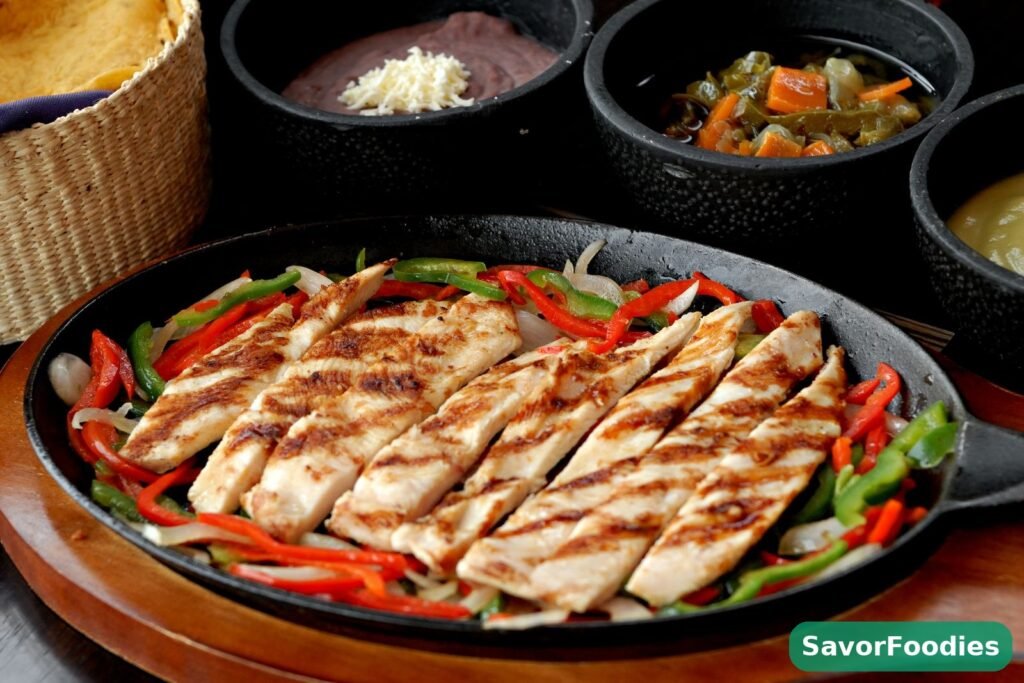
- Slice the chicken. Cut the chicken across the grain into strips about 1 cm wide. Even strips matter here, because thin pieces cook in minutes and thick ones stay raw in the middle while the thin ones dry out. If you are using breasts, slice them horizontally first into thinner cutlets, then into strips. Put the strips in a bowl or a zip-top bag.
- Marinate. Whisk together two tablespoons of the olive oil, the lime juice, garlic, cumin, smoked paprika, chilli powder, oregano, salt, pepper, and honey if you are using it. Pour it over the chicken and mix well so every strip is coated. Cover and refrigerate for at least thirty minutes, or up to two hours. Any longer than that and the lime juice starts to change the texture of the chicken surface, which you do not want.
- Prepare the vegetables and toppings. While the chicken marinates, slice the peppers and onion into even strips. Set out your toppings in small bowls so you are not scrambling later. Warm the tortillas now or later, whichever suits you — wrapped in foil in a low oven works, or thirty seconds each in a dry pan, or a quick zap in the microwave under a damp paper towel.
- Sear the chicken. Heat a large cast-iron or stainless skillet over high heat until it is genuinely hot — a drop of water should sizzle and vanish immediately. Add the remaining tablespoon of oil. Lift the chicken out of the marinade, letting the excess drip off, and lay the strips in the pan in a single layer. Do not crowd it; cook in two batches if you need to. Leave the chicken alone for three to four minutes until the underside is deeply browned, then flip and cook for another two to three minutes until cooked through. Move it to a plate and cover loosely with foil.
- Cook the peppers and onion. Without wiping the pan, add the peppers and onion to the same skillet, still over high heat. Let them sit for a minute or two before stirring, so they pick up some char. Then stir occasionally for five to six minutes, until they are softened at the edges but still have a bit of bite. You want them tender-crisp, not limp. If the pan looks dry, add a splash of water to loosen the browned bits from the chicken — that liquid is pure flavour and it coats the vegetables beautifully.
- Bring it together. Slice the rested chicken, if any pieces are large, and return it to the pan with the vegetables. Toss everything together for one minute over the heat, squeezing over a little extra lime juice as you go. Taste and adjust the salt. The filling should taste bright, smoky, and savoury all at once, with the lime lifting it rather than dominating it.
- Serve sizzling. Pile the filling onto a warm platter or straight into the skillet, scatter over the coriander, and bring it to the table with the tortillas and toppings. Let everyone build their own. The best fajita is the one people make exactly how they like it, and half the fun is watching a table full of people argue about whether guacamole or sour cream goes on first.
Tips for the Best Result
The single biggest upgrade you can make to this recipe is pan temperature. Most home fajitas fail because the pan is not hot enough, and the chicken ends up grey and steamed instead of browned and crisp at the edges. Let the pan heat for a good two or three minutes before the chicken goes in, and do not be nervous about the smoke. A little smoke is normal when you sear at high heat. If your smoke alarm is sensitive, open a window before you start, and keep the extractor fan on.
Cutting the vegetables evenly matters more than it seems. If half your pepper strips are thick and half are thin, the thin ones burn while the thick ones are still raw. Aim for strips about the same width as the chicken, and slice the onion from pole to pole so the strips hold together in the pan instead of falling apart into little shreds. That structure is what makes the filling look and eat like a proper fajita rather than a stir-fry that lost its way.
One more thing worth knowing: the chicken rests while the vegetables cook, and that rest is doing real work. The juices redistribute, the meat relaxes, and when you slice it and toss it back through the hot vegetables, it warms through without overcooking. If you skip the rest and slice straight from the pan, those juices end up on the cutting board instead of in the chicken. Five minutes of patience here is worth more than any extra seasoning.
What to Serve With It
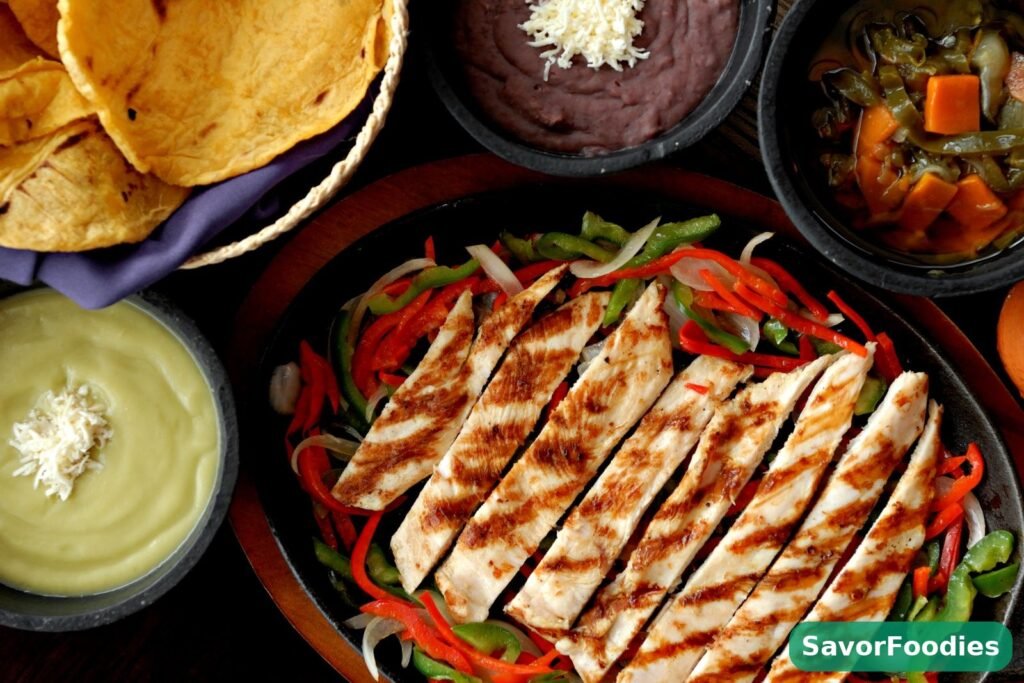
The toppings are half the meal, so give them a little thought. A simple spread — salsa, sour cream, guacamole, shredded cheese, and lime wedges — covers everyone. If you want to go further, a quick pickled red onion (sliced onion in lime juice and salt for twenty minutes) adds a sharp, pink crunch that cuts through the richness beautifully, and a pot of Mexican rice turns the whole thing into a proper feast. Refried beans are another easy addition, and they make the meal stretch further when you have extra mouths to feed.
For drinks, keep it casual. A cold lager, a lime-spiked sparkling water, or a simple margarita all fit the mood. And if you are planning a week of chicken dinners, the same quick-cooking logic shows up in other places too — this easy chicken pasta without cream uses a similar fast-sear approach for a lighter night, while the SavorFoodies chicken recipes collection has more of the same weeknight thinking. The SavorFoodies homepage is a good place to browse when you want something that fits the same thirty-minute window.
Storage and Reheating
Leftover fajita filling keeps well in the fridge for up to three days in an airtight container. Store the filling, tortillas, and toppings separately, or the tortillas will go soggy and the whole lot turns into a sad pile. Reheat the filling in a hot skillet for three to four minutes until it is steaming all the way through — the microwave works, but the skillet brings back some of the char and keeps the vegetables from going soft.
The filling also freezes surprisingly well. Cool it completely, pack it into freezer bags in single-meal portions, and it will keep for up to two months. Thaw overnight in the fridge and reheat in a skillet as above. The peppers will be a little softer after freezing, but the flavour holds up, and it makes a genuinely useful emergency dinner. Tortillas freeze well too, stacked with a sheet of baking paper between each one so you can peel off exactly how many you need.
Frequently Asked Questions
Can I use chicken breasts instead of thighs?
Yes, absolutely. Slice breasts thinner than you would thighs — about half a centimetre — and cook them for a minute less per side. The key with breasts is not to overcook them, because they dry out faster. Pull them from the pan the moment they are cooked through, and let the rest in the vegetables finish the job. A thermometer helps: 74°C (165°F) in the thickest part is the number to hit.
How long should I marinate the chicken?
Thirty minutes is the minimum for real flavour, and two hours is the sweet spot. The lime juice works quite fast, so you do not need to marinate overnight, and going past four hours can actually make the surface of the chicken a little mushy. If you are short on time, even fifteen minutes with the marinade massaged in well is better than nothing, though the flavour will be milder.
Can I cook the chicken and vegetables together?
You can, but I would not recommend it if you want that proper fajita char. Together in one pan, the vegetables release water and the chicken steams instead of searing. If you are truly in a rush, cook the chicken first, remove it, cook the vegetables, and combine — that order takes only a few minutes longer and tastes noticeably better. The separate cooking is the whole trick of this recipe.
What tortillas are best for fajitas?
Flour tortillas are the classic choice, because they are soft, pliable, and do not crack when folded. Warm them properly — cold tortillas tear and taste like cardboard. Corn tortillas work too and taste wonderful, but they need warming in a dry pan until they are soft and flexible, or they will split. If you are gluten-free, corn tortillas are the natural swap, and the rest of the recipe is already gluten-free as written.
How do I keep the tortillas warm at the table?
Wrap the stack in a clean tea towel, then in foil, and they will stay warm for twenty minutes or so. A tortilla warmer, if you have one, does the same job more neatly. The microwave trick also works: stack them, cover with a damp paper towel, and heat for thirty seconds. Whatever method you use, do not leave them uncovered on the table, or they dry out in minutes.
Can I make fajitas ahead for a party?
Yes, and they are a great party food for exactly that reason. Marinate the chicken the morning of, prep all the vegetables and toppings, and keep everything in the fridge. When guests arrive, the cooking takes about fifteen minutes, and the sizzling skillet on the table does the entertaining for you. Set up a topping station and let people build their own — it is less work for the host and more fun for everyone else.
That is really all there is to it. Hot pan, good marinade, vegetables with a bit of bite, and a table full of toppings. Make it once, and you will find yourself reaching for it on all those nights when you want dinner to feel like a small celebration rather than another thing to get through. And once you have the method down, the variations are endless — swap the chicken for steak or prawns, change up the spice mix, or add a tin of black beans to the vegetables for a heartier filling. The pan and the heat stay the same; everything else is yours to play with.