

Some dinners announce themselves before they reach the table. This is one of them. The butter hits the hot pan and foams up around the edges, the garlic goes in and turns fragrant in about thirty seconds, and suddenly everyone in the house wanders into the kitchen asking what is cooking. That is the whole charm of a creamy garlic butter chicken skillet: it smells like a restaurant meal, it looks like something you fussed over for hours, and it is honestly done in about forty minutes, with one pan to wash at the end.
I first started making a version of this on nights when I had chicken in the fridge, a carton of cream that needed using, and not much patience left. Over time it stopped being a fallback and became a dish I plan for. The trick is not a secret ingredient. It is giving each step its proper moment — a properly hot pan for the sear, garlic that is watched rather than walked away from, and a sauce that simmers gently instead of boiling hard. Get those three things right and the rest almost takes care of itself.
If you are new to skillet cooking, this is a forgiving place to start. The sauce covers a multitude of small sins, the chicken finishes in the pan so you are not juggling a separate pot, and the recipe scales up or down without any drama. Keep a loaf of crusty bread nearby, because you will want it for the sauce, and trust me on that.
Why This Recipe Works
A good skillet dinner works because the pan does more than one job. First it sears the chicken, and that browning is where most of the flavour comes from. Those golden bits left in the pan are not mess to be scrubbed away; they are the base of the sauce. When you pour in the broth a minute later, they dissolve straight into it, and the whole dish tastes deeper for it. That is why I never reach for a nonstick pan here. Stainless steel or cast iron gives you a better crust and better fond, and the fond is free flavour.
The sauce itself is deliberately simple. Butter and garlic carry the aroma, cream gives it body, and a handful of Parmesan pulls it together so it coats a spoon instead of running off the plate. Nothing in it needs to be reduced for ages or thickened with a roux. It thickens on its own as it simmers for a few minutes, and a squeeze of lemon at the end keeps it from feeling heavy. It is rich, yes, but it is not the kind of rich that sits in your stomach like a brick.
There is also the practical side. This is a genuine one-pan meal in the sense that matters: the chicken, the sauce, and the finish all happen in the same skillet. You will find more ideas in the same spirit over at SavorFoodies chicken recipes, where skillet dinners are a regular feature, because weeknights do not leave room for a sink full of pots. On the SavorFoodies homepage you will see the same approach across the board — food that is meant to be cooked on a normal Tuesday, not just photographed on a Sunday.
Ingredients You Need
You do not need anything fancy for this, and I would rather you spend your money on decent chicken than on a long list of extras. Four boneless, skinless chicken breasts, or about six thighs if you prefer darker meat, will feed four people comfortably. Thighs are actually more forgiving here, because they stay juicy even if you overshoot the cooking time by a minute or two, while breasts need a little more attention. If you are curious about how widely chicken is cooked around the world, the background on chicken as food is a surprisingly good rabbit hole, though you do not need it to cook this well.
For the rest, gather:
- 4 boneless, skinless chicken breasts (about 700 g), or 6 boneless thighs
- 1 teaspoon kosher salt, plus more to taste
- 1/2 teaspoon black pepper, freshly ground if you have it
- 1/2 teaspoon paprika, sweet rather than smoked
- 2 tablespoons all-purpose flour, for a light dusting
- 2 tablespoons olive oil
- 3 tablespoons unsalted butter, divided
- 6 cloves garlic, thinly sliced or finely minced
- 1 small shallot or 1/4 of a small onion, finely chopped
- 1/2 cup low-sodium chicken broth
- 1 cup heavy cream
- 1/2 cup freshly grated Parmesan cheese
- 1 teaspoon Dijon mustard
- 1/2 teaspoon dried Italian seasoning
- A pinch of red pepper flakes (optional, but I like it)
- Juice of half a lemon
- 2 tablespoons fresh parsley, chopped, for serving
A note on the garlic, since it is half the name of the dish: use fresh cloves, not the jarred kind. Jarred garlic works in a pinch, but it has a flat, slightly sharp edge that never quite melts into butter the way fresh garlic does. Garlic has been cooked with butter for about as long as anyone has had both in the kitchen, and the reason is simple — sliced thin, it softens into sweetness in under a minute, while minced garlic gives a stronger punch. I slice mine for this recipe, because I like finding soft little ribbons of it in the sauce, but either way works. Just do not buy pre-minced if you can avoid it, and do not burn it, which brings me to the method.
How to Make It
- Dry and season the chicken. Take the chicken out of the fridge fifteen minutes before cooking so it is not ice-cold in the middle. Pat each piece very dry with paper towels — this matters more than people think, because wet chicken steams instead of browning. Season both sides with salt, pepper, and paprika, then dust lightly with flour, shaking off the excess. You want the thinnest possible coat, just enough to help the crust along. If your breasts are very thick, slice them horizontally into two thinner cutlets first; they will cook more evenly, and you will not end up with a dry edge and a raw centre.
- Sear the chicken. Heat the olive oil and one tablespoon of the butter in a large skillet over medium-high heat. When the butter stops foaming and the oil shimmers, lay the chicken in with a little space between pieces. Do not crowd the pan — if it does not all fit, cook in two batches. Leave it alone for five to six minutes. You will hear a steady sizzle, not an angry spatter; if it is spitting everywhere, the heat is too high. Flip when the underside is deep golden, not pale blonde, and cook the other side for another four to five minutes. The chicken does not need to be fully cooked yet. Move it to a plate and pour any juices that collect back into the pan later.
- Soften the shallot. Turn the heat down to medium and add the remaining butter. When it melts, add the shallot and cook for two minutes, stirring with a wooden spoon, until it turns translucent and soft. Scrape at the bottom of the pan as you go — those browned bits are already starting to loosen, and that is exactly what you want.
- Add the garlic. This is the step to stand over. Add the garlic and stir constantly for thirty to forty-five seconds, just until it smells warm and nutty. The moment it turns golden, move on. Garlic goes from perfect to bitter in about ten seconds, and burnt garlic will flavour the whole sauce, so if you are unsure, pull the pan off the heat for a moment. Nobody will know, and your sauce will thank you.
- Deglaze with broth. Pour in the chicken broth. It will hiss and steam, and that is normal. Scrape the bottom of the pan firmly for a minute until the browned bits have dissolved and the liquid has reduced by about a third. This step takes almost no time and it is where the sauce gets its savoury backbone, so do not skip it or rush it.
- Build the cream sauce. Stir in the cream, Dijon mustard, and Italian seasoning. Bring it to a gentle simmer — you want lazy bubbles around the edges, not a rolling boil, which can make cream separate and look grainy. Let it bubble quietly for three to four minutes until it thickens enough to coat the back of a spoon. Then shower in the Parmesan a little at a time, stirring until each handful melts before you add the next. Taste it now, before the chicken goes back in, and adjust the salt. It should taste rich and garlicky but still bright.
- Finish the chicken in the sauce. Slide the chicken back into the pan along with every drop of juice from the plate. Spoon sauce over the top, lower the heat, and cover loosely. Simmer for five to eight minutes, until the thickest part of the chicken reads 74°C (165°F) on an instant-read thermometer. If you do not have a thermometer, cut into the thickest piece — the juices should run clear and there should be no pink left. Do not let the sauce boil hard at this point; a gentle simmer keeps the chicken tender.
- Rest, lemon, and serve. Take the pan off the heat and let it sit for five minutes. This rest matters: the chicken relaxes, the sauce thickens a touch more, and everything settles. Squeeze over the lemon juice, sprinkle with parsley and the red pepper flakes if you are using them, and taste once more. A final pinch of salt here, if it needs it, makes a surprising difference. Serve straight from the skillet if you like — it looks wonderful on the table, and it saves washing a serving dish.
Tips for the Best Result
The difference between a good version of this dish and a great one usually comes down to heat control. Too hot, and the garlic burns and the cream splits. Too cool, and the chicken never browns properly and the sauce stays thin. Medium-high for the sear, medium for the aromatics, and low-to-medium for the simmer is the rhythm to remember. If your stove runs hot, do not be shy about nudging the dial down a notch earlier than the recipe says; every hob is a little different, and yours is the one you are cooking on.
Use a pan that is big enough. A 30 cm skillet is ideal for four breasts, because the chicken can sit in a single layer with room for the sauce to bubble around it. In a small pan, the chicken steams in its own juices, the crust goes soft, and the sauce has nowhere to go. If your only large pan is cast iron, that is perfect, though it will hold its heat longer, so take it off the burner a minute earlier when you are finishing the sauce.
A few more things I have learned the hard way. Grate your own Parmesan if you can — the pre-grated kind has anti-caking agents that can make a cream sauce slightly grainy. If the sauce gets thicker than you like while the chicken rests, loosen it with a splash of warm broth or cream, a tablespoon at a time. And if you are cooking for a smaller table, this recipe halves beautifully; you will find a similar small-batch approach in this easy chicken dinner for two with simple ingredients, which is worth a look when you do not want leftovers hanging around for days.
What to Serve With It
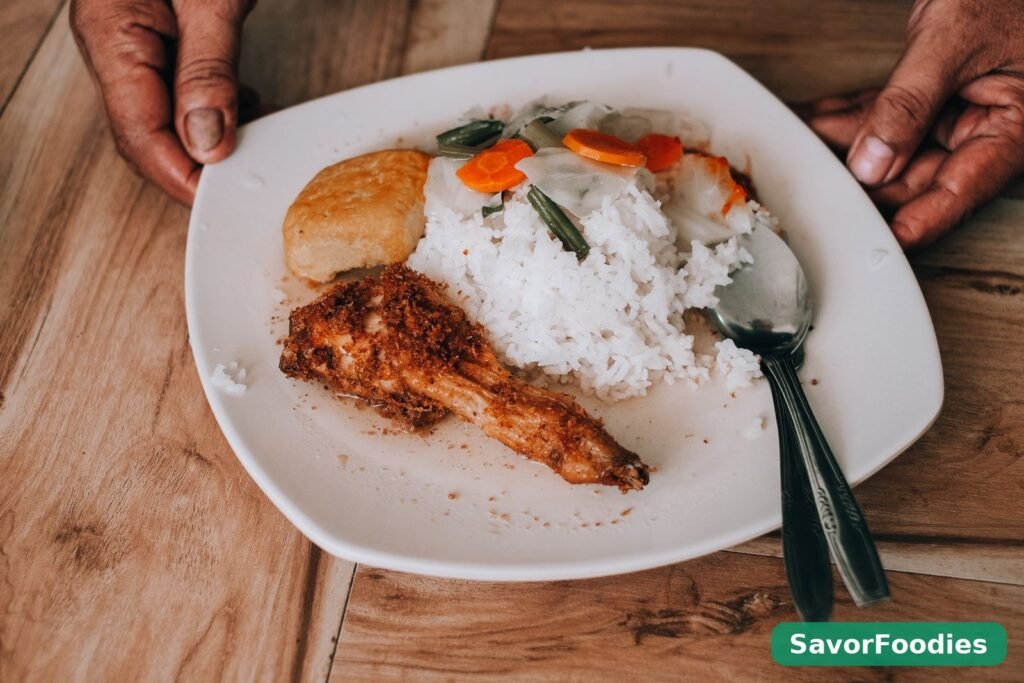
This sauce was made for scooping, so start with something that can do the job. Fluffy white rice is my default — the grains soak up the sauce without competing with it, and a pot of rice on the side means dinner is on the table with almost no extra effort. Buttered mashed potatoes are a close second, especially on a cold night, and they turn the whole meal into something that feels like a Sunday dinner. If you want bread instead, a warm crusty loaf or a few slices of garlic bread are not just acceptable, they are arguably the correct choice.
For vegetables, keep it simple and green. Steamed green beans with a little butter, roasted broccoli with crisped edges, or a handful of baby spinach wilted straight into the pan in the last two minutes all work, and none of them fight the garlic butter for attention. A sharp little salad helps too — peppery rocket or mixed leaves with lemon and olive oil cuts through the richness and keeps the plate from feeling too heavy. That contrast is what makes people go back for seconds without feeling weighed down.
If you are building a whole week of skillet meals around this idea, the same one-pan logic applies elsewhere, like in this chicken and vegetables skillet without oven, which pairs the same kind of weeknight cooking with a pile of vegetables. For a lighter night, though, I would keep this dish as it is and let a simple side do the supporting work. The chicken is the star here; everything else is there to make it shine.
Storage and Reheating
Leftovers keep well, which is one of the reasons I often make the full batch even when there are only two of us eating. Cool the chicken and sauce completely, then store them together in an airtight container in the fridge for up to three days. Keeping the chicken in the sauce stops it drying out, which is the main risk with reheated breast meat. For the freezer, this dish is decent but not perfect — the cream sauce can separate slightly when thawed. If you do freeze it, use it within a month, thaw it overnight in the fridge, and reheat it very gently, stirring often.
Reheating is where most people undo a good sauce, so go low and slow. Warm it in a covered skillet over low heat with a splash of cream or milk, turning the chicken once, until it is hot all the way through. The microwave works in a pinch, but use half power and stop to stir every minute, because a cream sauce that boils in the microwave can split in seconds and there is no real way back from that. If the sauce does look a little thin after reheating, a small handful of Parmesan stirred in off the heat will usually pull it back together.
Frequently Asked Questions
Can I use chicken thighs instead of breasts?
Yes, and honestly, thighs might be the better choice if you are nervous about overcooking. Boneless, skinless thighs stay juicy over a wider range of cooking times, and their slightly richer flavour suits a butter sauce beautifully. Sear them the same way, then give them an extra two or three minutes in the sauce, until they are tender all the way through. Bone-in thighs work too, but they need longer — closer to ten minutes in the sauce — and a thermometer is your friend there.
How do I stop the cream sauce from splitting?
Keep the heat gentle once the cream goes in. A rolling boil is the usual culprit, along with adding cold cream straight from the fridge into a very hot pan. Let the pan cool slightly after the garlic step, pour the cream in slowly, and keep the sauce at a lazy simmer. If it does split a little, take the pan off the heat, whisk in a splash of warm cream, and stir in a little Parmesan — that fixes most cases, though it will not rescue a sauce that has been boiled hard for several minutes.
Can I make this ahead of time?
You can cook it a few hours ahead and keep it covered in the fridge, then reheat it gently as described above. I would hold back the lemon juice and parsley until you are ready to serve, because lemon added too early can dull in reheating, and parsley loses its colour. The sauce will thicken as it cools, so have a little extra cream or broth ready to loosen it. I would not recommend making it a full day ahead for guests, though — it is at its best within a few hours of cooking.
What if I do not have heavy cream?
Half-and-half will work, but the sauce will be thinner and a little less luxurious, so simmer it a couple of minutes longer and be extra careful not to boil it. A mixture of whole milk with a tablespoon of flour whisked in is a workable fallback, though the flavour will be lighter. What I would avoid is low-fat cream or skimmed milk on their own; they are much more likely to split and they never quite give you that silky coating this dish is known for.
Is this recipe gluten-free?
Almost, but not quite as written, because of the light flour dusting on the chicken. Swap the all-purpose flour for a gluten-free flour blend or cornstarch, and check that your chicken broth and Dijon mustard are certified gluten-free, and the rest of the recipe is naturally fine. The flour is only there to help the crust, so leaving it off entirely is also an option — the chicken will still brown, just a little less evenly.
Can I add mushrooms or spinach to the skillet?
Absolutely. Sliced mushrooms are a natural addition: cook them after the shallot and before the garlic, giving them four or five minutes until they release their water and start to brown. A couple of big handfuls of baby spinach can go in right at the end, stirred through the sauce until they just wilt, which takes about a minute. Both additions soak up the garlic butter beautifully, and neither one changes the cooking time for the chicken in any meaningful way.
This is the kind of dinner I come back to when I want the kitchen to feel calm rather than chaotic. One pan, a sauce that practically makes itself once you understand the rhythm, and a plate that looks like you tried much harder than you did. Make it once exactly as written, then make it yours — a little more garlic, a pinch more chilli, mushrooms if you love them, or a different side depending on what is in the cupboard. That is how a recipe earns a permanent place in a home kitchen: not by being perfect the first time, but by being good enough that you want to cook it again next week, and the week after that.