

There is a particular disappointment that comes with a side dish that promises crispiness and delivers softness. Sweet potato wedges are the worst offenders. They sound like they should be easy — cut, season, roast — but they so often come out of the oven limp, steaming, and vaguely sweet in a way that feels more like baby food than a side dish. I made limp wedges for years before I worked out what was going wrong, and the fix turned out to be a combination of three small things: a hotter oven than I was using, wedges cut evenly, and a light dusting of cornstarch that nobody tells you about but everyone who makes great wedges seems to know.
Once those three things are in place, sweet potato wedges become one of the best side dishes in my rotation. Golden and crisp at the edges, soft and almost creamy in the middle, smoky from the paprika and fragrant from the rosemary. They go with almost everything — roast chicken, grilled fish, a fried egg, a bowl of beans — and they are the rare side dish that people actually ask about. They are also, quietly, very good for you, which makes them an easy choice on nights when you want dinner to feel both indulgent and sensible.
The other thing I like about wedges is how little attention they need once they are in the oven. Thirty minutes, one flip halfway through, and they are done. No stirring, no watching, no last-minute panic. While they roast, you can cook the main dish, set the table, or just sit down for five minutes, which on a busy night is a genuine gift.
Why This Recipe Works
Sweet potatoes are tricky to crisp because they are full of sugar and moisture. The sugar wants to burn before the outside crisps, and the moisture wants to steam the wedges from the inside out. That is why the usual approach — moderate oven, a drizzle of oil, hope for the best — so often fails. This recipe tackles both problems directly. A hot oven, 220°C, drives moisture off the surface quickly. A thin coating of cornstarch absorbs surface moisture and crisps up in the heat, giving you a golden crust that the potato alone struggles to form. And cutting the wedges evenly means they all finish at the same time, instead of half of them burning while the other half are still raw in the middle.
The seasoning does the rest of the work. Smoked paprika gives a warm, almost bacon-like depth that suits the natural sweetness of the potato. Rosemary adds a piney, savoury note that keeps the whole thing from tasting like dessert. And a good pinch of salt, added before roasting rather than after, draws out a little surface moisture and seasons the potato all the way through, not just on the outside. It is a simple combination, but it is the right one, and it is what makes these wedges taste like a deliberate dish rather than an afterthought.
There is also the practical side. Sweet potatoes are cheap, they keep for weeks in a cool cupboard, and they are one of the most nutritious vegetables you can buy — high in fibre, rich in vitamin A, and naturally sweet without any added sugar. Sweet potatoes have been a staple food in many parts of the world for centuries, and it is easy to see why: they are filling, versatile, and they store well. A side dish that is cheap, healthy, and genuinely delicious is a rare combination, and it is worth having in your regular rotation.
Ingredients You Need
You want about 800 g of sweet potatoes for four people as a side dish, which is usually two large or three medium potatoes. Choose ones that feel firm and heavy for their size, with no soft spots or sprouting eyes. The skin colour does not matter much — orange-fleshed are the most common and the sweetest, but white and purple varieties work too, though purple ones stain everything they touch, so be warned.
For the wedges and dip, gather:
- 800 g sweet potatoes, scrubbed (peeling optional)
- 2 tablespoons olive oil
- 1 tablespoon cornstarch
- 1 teaspoon smoked paprika
- 1/2 teaspoon garlic powder
- 1/2 teaspoon onion powder
- 1 teaspoon kosher salt
- 1/2 teaspoon black pepper
- 1 tablespoon fresh rosemary leaves, chopped (or 1 teaspoon dried)
- 150 g plain yogurt or sour cream, for dipping
- 1 tablespoon lemon juice
- 1 small clove garlic, grated, for the dip
- A pinch of salt and pepper, for the dip
- Fresh parsley or extra rosemary, for serving
A note on the cornstarch, because it is the ingredient people question: it is not there to coat the wedges thickly or to make them taste starchy. A single tablespoon, tossed evenly over the wedges, absorbs surface moisture and crisps in the hot oven, giving you a thin, golden crust. Without it, the wedges are noticeably softer. With too much, they taste chalky. One tablespoon is the tested amount, and it is worth measuring rather than guessing.
For the rosemary, fresh is better if you have it, because dried rosemary can stay woody and sharp even after roasting. If you only have dried, use a third of the amount and crush it between your fingers first to break it down. Roasting is one of the oldest cooking methods there is, and it works because dry, high heat concentrates flavour and creates crisp surfaces — which is exactly what this recipe is trying to do, and why the oven temperature matters so much.
How to Make It
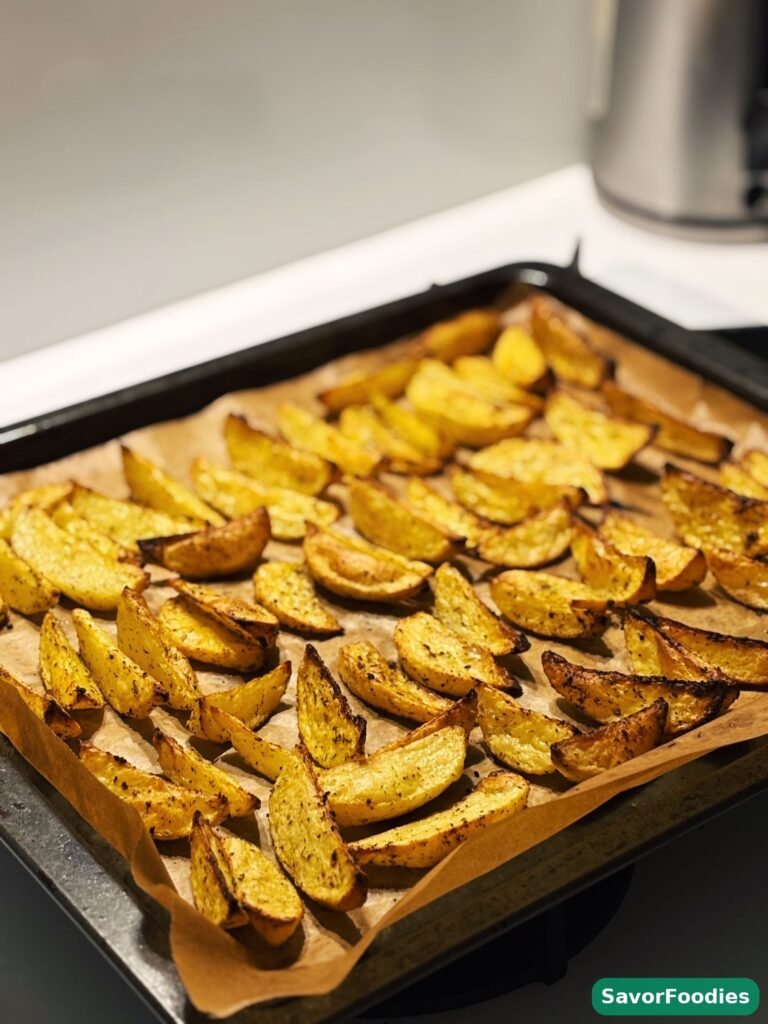
- Preheat the oven properly. Set the oven to 220°C (425°F) and put a large baking tray inside to heat up. A preheated tray is the second secret to crisp wedges, after the cornstarch — the wedges start sizzling the moment they touch the hot metal, instead of slowly warming up and steaming. Let the tray heat for at least ten minutes while you prepare the potatoes.
- Cut the wedges evenly. Scrub the sweet potatoes well. Peeling is optional — the skin crisps up nicely and adds fibre, so I usually leave it on, but peel if you prefer. Cut each potato in half lengthways, then cut each half into three or four wedges, depending on the size of the potato. Aim for wedges that are roughly the same size and thickness, about 2 cm at the widest point. Even wedges cook evenly, and uneven wedges are the main reason half a tray burns while the other half is underdone.
- Season and coat. Put the wedges in a large bowl and toss with the olive oil until every piece is lightly coated. Sprinkle over the cornstarch, smoked paprika, garlic powder, onion powder, salt, and pepper, and toss again until the wedges are evenly coated. The coating should look thin and even, not clumpy. If you see white patches of cornstarch, toss a little more — it will disappear into the oil as the wedges roast.
- Arrange on the hot tray. Carefully take the hot tray out of the oven and arrange the wedges on it in a single layer, with space between each one and the cut sides facing down where possible. Crowding is the enemy here, just as it is with any roasting — if the wedges are touching, they steam instead of crisping. Use two trays if you need to; it is better than one crowded tray. Scatter over the rosemary.
- Roast, then flip. Roast for fifteen minutes, then take the tray out and flip each wedge. They should already be starting to colour at the edges. Return to the oven for another twelve to fifteen minutes, until the wedges are deep golden at the edges, crisp on the outside, and tender all the way through when pierced with a knife. If some wedges are done before others, take those off and let the rest finish.
- Make the dip while they roast. Stir together the yogurt or sour cream, lemon juice, grated garlic, and a pinch of salt and pepper. Taste and adjust — it should be bright and garlicky, a cool contrast to the hot, smoky wedges. If you want a little heat, a pinch of chilli flakes or a dash of hot sauce stirred in works well.
- Serve hot. Tip the wedges onto a warm platter or straight onto plates, scatter over fresh parsley or extra rosemary, and serve immediately with the dip. Wedges lose their crispness as they cool, so do not let them sit around. If you need to hold them for a few minutes, keep them in a single layer in a low oven rather than piling them on a plate, where they will steam each other soft.
Tips for the Best Result
The single biggest upgrade for this recipe is oven temperature, and it is worth being honest about: most people roast sweet potatoes too cool. At 180°C, the wedges cook through before the outside has a chance to crisp, and the sugar starts to caramelise unevenly. At 220°C, the outside crisps quickly while the inside stays soft, and the sugar caramelises into golden edges rather than burning. If your oven runs cool, or if the wedges are not colouring after twenty minutes, bump the temperature up a little and check more often. Every oven is different, and yours is the one you are cooking in.
The second tip is about the tray. A preheated tray makes a real difference, because the wedges start cooking from below the moment they touch it. If you put cold wedges on a cold tray into a hot oven, the first ten minutes are spent warming up, and that is ten minutes of steaming instead of crisping. A heavy baking tray holds heat better than a thin one, and lining it with baking paper is fine — the paper does not stop the heat transfer much, and it makes cleaning up much easier. What I would avoid is a silicone mat here, because it insulates the base and the wedges will not crisp underneath.
One more practical note: do not soak sweet potato wedges in water before roasting, the way you might with regular potatoes. Soaking is meant to remove starch from white potatoes, but sweet potatoes need their surface starch, and soaking just adds water that you then have to drive off in the oven. A good scrub, an even cut, and straight into the seasoning bowl is the right approach. If your wedges are wet from washing, pat them dry with a tea towel before oiling them.
What to Serve With It
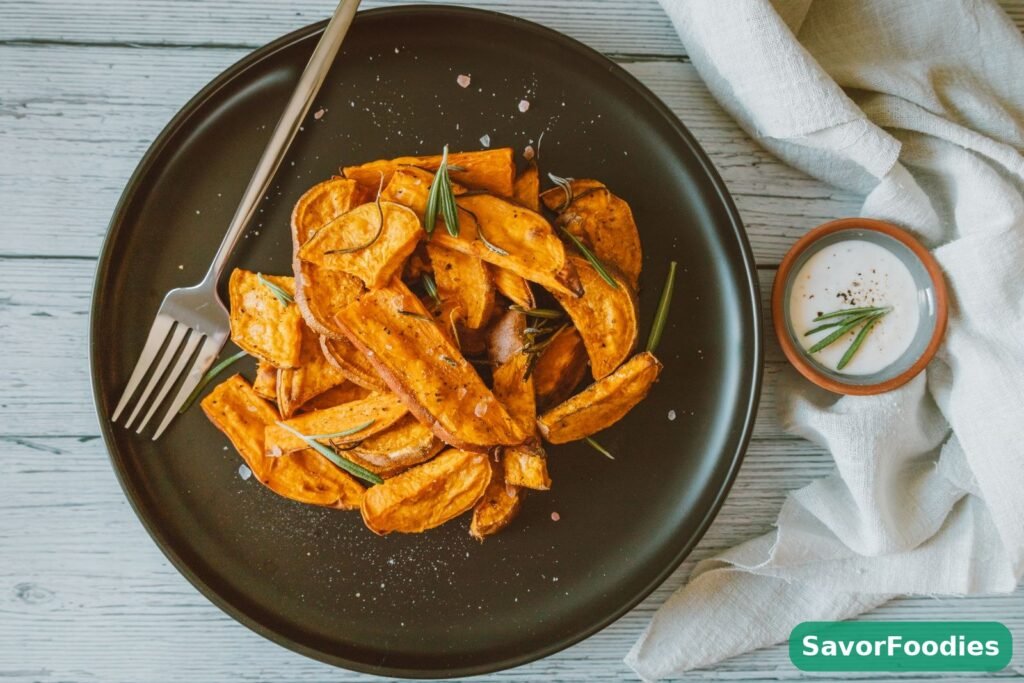
These wedges go with almost everything, which is why they are so useful. With roast chicken or grilled fish, they are a straightforward, satisfying side. With a fried egg and a salad, they make a light, meat-free dinner that still feels substantial. With burgers, they are a step up from regular fries, and the yogurt dip doubles as a burger sauce if you are feeling efficient. For a fuller spread, add a green salad and a bowl of beans, and you have a meal that covers all the bases without much effort.
If you are building a week of vegetable sides, the same roasting logic applies elsewhere — this crispy potatoes without breadcrumbs uses a similar high-heat approach for regular potatoes, and this crispy potatoes in the air fryer without oil is the air fryer version of the same idea. The SavorFoodies sides and vegetables collection has more of this kind of cooking, and the SavorFoodies homepage is a good place to browse when you want a side that fits the main dish you already have planned.
Storage and Reheating
Leftover wedges keep in the fridge for up to three days in an airtight container, but they will lose their crispness — that is unavoidable, because the moisture redistributes as they cool. The good news is that you can bring most of the crunch back. Reheat them in a single layer in a hot oven, 220°C, for eight to ten minutes, or in an air fryer at 200°C for five minutes. Both methods work well, and the air fryer is slightly better if you have one. The microwave will heat them, but it will also make them soft, so I would avoid it for wedges.
For the freezer, wedges freeze reasonably well if you freeze them in a single layer on a tray first, then bag them once solid. They keep for up to two months. Reheat from frozen in a hot oven for twelve to fifteen minutes, and they come out surprisingly crisp, though not quite as good as fresh. The dip does not freeze well, so make that fresh when you need it — it takes two minutes and it is worth it.
Frequently Asked Questions
Why are my wedges soggy instead of crispy?
Almost always, it is one of four things: the oven was not hot enough, the tray was not preheated, the wedges were crowded, or they were cut unevenly. Check all four before you change anything else. A hot oven, a hot tray, space between wedges, and even cuts will fix most soggy wedge problems. The cornstarch helps too, but it cannot rescue wedges that are steaming in a crowded, cool oven.
Should I peel sweet potatoes for wedges?
It is up to you, and both ways work. Leaving the skin on gives you more fibre, a slightly rustic texture, and a skin that crisps up nicely. Peeling gives you a smoother, more uniform wedge that some people prefer, especially for children. If you leave the skin on, scrub the potatoes well first. If you peel, the wedges may cook a minute or two faster, so check them a little earlier.
Can I make these in an air fryer?
Yes, and they work very well in one. Toss the seasoned wedges as usual, arrange them in the basket in a single layer, and cook at 200°C for fifteen to eighteen minutes, shaking the basket halfway through. You will probably need to cook in two batches, depending on the size of your air fryer. The air fryer version is slightly crisper than the oven version, because the circulating air dries the surface faster.
What dips go well with sweet potato wedges?
The yogurt and garlic dip in this recipe is my default, but there are plenty of good options. A chipotle mayonnaise — mayonnaise mixed with a little chipotle paste and lime juice — is smoky and rich. A simple tahini and lemon sauce is nutty and bright. Even a good ketchup works, though it is a little plain next to the smoky paprika. The best dip is the one you already have in the fridge, honestly — wedges are forgiving that way.
Can I use different seasonings?
Absolutely. The smoked paprika and rosemary combination is my favourite, but the method works with almost any seasoning. Try cumin and coriander for a warmer, earthier flavour, or Cajun seasoning for heat, or a simple salt, pepper, and garlic powder mix if you want the potato flavour to shine. Keep the cornstarch and the oil the same regardless of seasoning, because those are doing the crisping work, and the seasoning is just flavour on top.
How do I cut sweet potatoes safely?
Sweet potatoes are dense and can be awkward to cut, so use a large, sharp knife and a stable cutting board. Cut the potato in half lengthways first, which gives you a flat side to rest it on, then cut each half into wedges. If the potato is very large, cut it into rounds first and then into wedges. Keep your fingers tucked away from the blade, and do not force the knife — if it sticks, rock it gently rather than pushing hard. A sharp knife is safer than a blunt one here, because a blunt knife slips.
That is the whole recipe, and it is one of those rare side dishes that earns its place not by being fancy, but by being consistently good. Hot oven, even cuts, a little cornstarch, and the right seasoning — that is all it takes to turn a humble sweet potato into something people actually get excited about. Make them once, and you will find yourself reaching for sweet potatoes more often, because now you know how to make them properly. And once you have the method down, the variations are endless — different seasonings, different dips, different main dishes alongside. The wedges stay the same; everything else is yours to play with.