
There are some side dishes that quietly steal the meal, and roasted carrots with garlic butter and honey are one of them. You put them on the table intending them to be the supporting act, and then everyone is reaching past the main course for another carrot, because the edges have gone caramelised and slightly crisp, the centres are sweet and tender, and the glaze has turned into something that tastes far more complicated than it is. It is the kind of side dish that makes people ask for the recipe, and then look surprised when you tell them how simple it was.
I started making these on nights when the main course was already decided and the vegetable felt like an afterthought. A bag of carrots, a knob of butter, a spoonful of honey, and forty minutes in the oven — that was the whole plan, and it worked so well that the afterthought became the part I plan first. The oven does almost all of the work, the glaze takes two minutes, and the result is the rare vegetable side that children will eat without negotiation and adults will fight over. If you have a bag of carrots sitting in the fridge, this is what they were waiting for.
If you are new to roasting vegetables, this is a kind place to start. There is no complicated technique, the timing is forgiving, and the result is hard to ruin badly. Even if your carrots are a little unevenly cut, the honey glaze covers a multitude of sins, and the ones that get extra dark at the edges are usually the first ones eaten. By the second time you make them, you will have your own version — maybe a little more garlic, maybe a pinch of chilli — and that is exactly how it should be.
Why This Recipe Works
The reason roasted carrots taste so much better than boiled or steamed ones is caramelisation. When carrots roast at high heat, their natural sugars concentrate and brown, and that browning creates flavours that simply do not exist in a boiled carrot. Honey accelerates this beautifully — it adds its own sugars to the surface, which caramelise faster and deeper, giving you those dark, sticky edges that are the best part of the dish. The background on carrot is worth a quick read if you are curious about the vegetable, though you do not need it to roast them well.
The garlic butter is the other half of the equation. Butter carries flavour in a way oil does not, and it browns alongside the carrots, adding a nutty richness. Garlic, added at the right moment, infuses the butter without burning — and that timing matters, because burnt garlic is bitter and there is no hiding it. The combination of sweet honey, savoury garlic, and rich butter hits all three notes at once, which is why a simple carrot suddenly tastes like something from a restaurant. If you want to know more about the sweetener itself, the background on honey is a good rabbit hole, though any runny honey from the cupboard will do the job.
There is also the practical side. This is a side dish that looks after itself in the oven while you cook everything else, it scales from two people to a crowd without any extra skill, and it is one of those rare recipes where the leftovers are almost as good as the first serving. You will find the same low-effort, high-reward thinking across the SavorFoodies sides and vegetables, and on the SavorFoodies homepage you will see that same approach — food meant for real weeknights, not just special occasions.
Ingredients You Need
For the carrots, medium ones are ideal — not the tiny baby carrots from a bag, which are often just cut-down large carrots and can be woody, and not enormous ones, which can be fibrous in the middle. If you can find bunched carrots with their tops still on, they look beautiful on the table and tend to be sweeter, but ordinary loose carrots work perfectly well. Peel them, or scrub them well if the skins are thin and clean — peeling gives a more even glaze, scrubbing keeps a little more character.
For the rest, gather:
- 800 g carrots, peeled and cut into even batons or halved lengthwise
- 3 tablespoons unsalted butter, melted
- 3 cloves garlic, finely grated or minced
- 2 tablespoons runny honey
- 1 tablespoon olive oil
- 1 teaspoon kosher salt, plus more to taste
- 1/2 teaspoon black pepper
- 1 teaspoon fresh thyme leaves, or 1/2 teaspoon dried thyme
- A squeeze of lemon juice, for finishing
- Fresh parsley, chopped, for serving
- Flaky sea salt, for finishing (optional, but lovely)
A note on the honey, because it matters more than you might expect. Runny honey is what you want — set honey will not coat evenly, and it is harder to mix into the butter. Any variety works: a mild blossom honey keeps the flavour clean, while a darker honey adds a deeper, almost caramel note. If your honey has crystallised, warm the jar briefly in a bowl of hot water until it flows again. And on the garlic: grate it rather than chopping it, because grated garlic melts into the butter and coats every carrot, while chopped pieces can burn in spots and turn bitter.
As for the thyme, fresh is nicer if you have it, but dried is completely fine — use half the amount, and add it to the butter mixture so it has time to soften. If you do not have thyme at all, rosemary works too, though it is stronger, so use a little less. The herbs are there to add a background note, not to compete with the honey and garlic, which are the stars here.
How to Make It
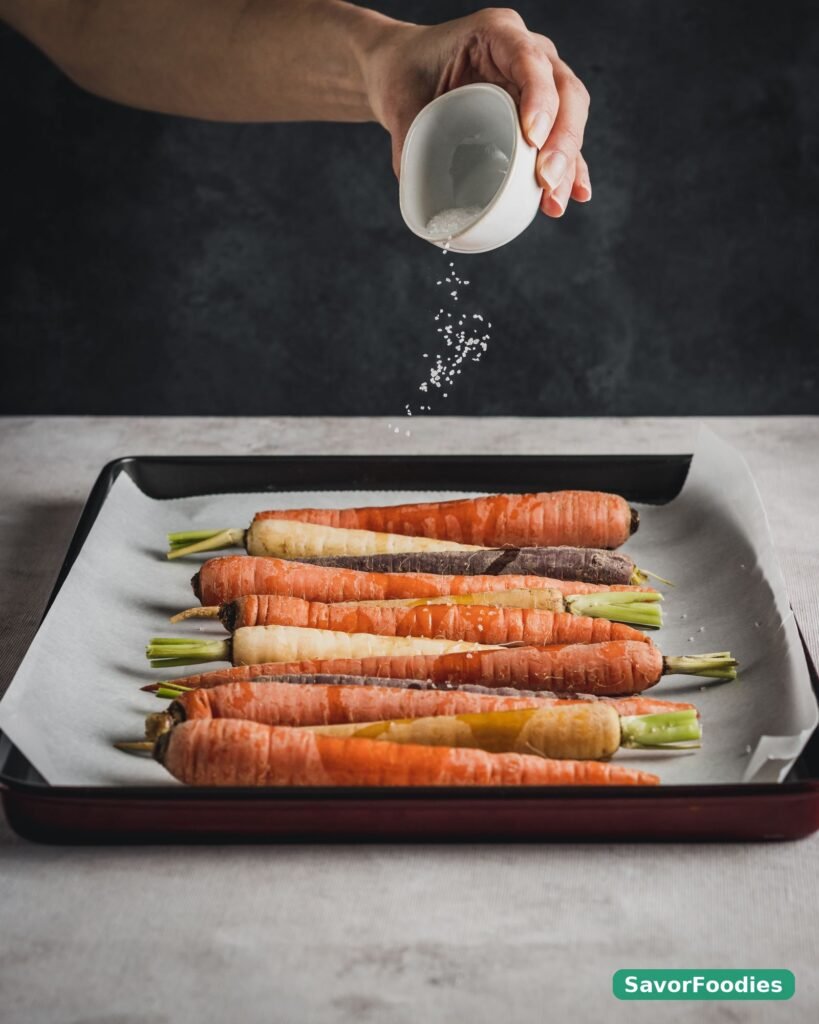
- Prepare the carrots and oven. Heat the oven to 200°C (400°F) and line a large rimmed sheet pan with parchment paper. Peel the carrots and cut them into even pieces — if they are thin, halve them lengthwise; if they are thick, quarter them lengthwise into batons about 1 cm thick. Try to keep the pieces similar in size, because uneven carrots cook unevenly, and the thin ones will burn while the thick ones are still hard in the middle. This is the one prep step that matters, and it takes five minutes.
- Make the garlic butter glaze. In a small bowl or jug, mix the melted butter, grated garlic, honey, and olive oil until combined. The mixture will look a little separated at first — that is fine, it comes together when it hits the hot carrots. Season with the salt, pepper, and thyme. Taste it if you like; it should be sweet, garlicky, and rich, with the thyme in the background. If it tastes flat, it usually needs more salt, not more honey.
- Toss and spread. Put the carrots in a large bowl, pour over the glaze, and toss until every piece is evenly coated. Tip them onto the prepared sheet pan and spread them in a single layer, with space between the pieces. This is the rule that matters most after even cutting: if the carrots touch, they steam instead of roast, and you lose the caramelised edges that make this dish special. Use two pans if you have to — a crowded pan is the fastest way to soft, pale carrots, and no amount of honey fixes that.
- Roast until caramelised. Slide the pan into the oven and roast for 30 to 40 minutes, turning the carrots once halfway through, until they are tender when pierced with a knife and deeply golden at the edges. The exact time depends on how thick your carrots are and how hot your oven runs, so start checking at 30 minutes. You want some pieces properly dark at the tips — those are the best ones, and they are not burnt, they are caramelised. If your carrots are browning too fast, drop the temperature by 10 degrees and give them a few more minutes.
- Finish and serve. Take the pan out of the oven and immediately squeeze a little lemon juice over the carrots — the acidity lifts the whole dish and keeps the honey from feeling too sweet. Taste and adjust the salt. Scatter with parsley and a pinch of flaky sea salt if you are using it, and serve straight from the pan or tipped onto a warm serving dish. They are at their best hot, while the glaze is still sticky and the edges are still crisp, though they hold their warmth for a good ten minutes under a loose tent of foil.
Tips for the Best Result
The single biggest improvement you can make to this recipe is giving the carrots space, and I cannot stress it enough. A single layer with gaps is a rule, not a suggestion. In a small oven, that might mean two pans, and that is fine — the carrots will roast better on two uncrowded pans than on one crowded one, every single time. Crowding traps steam, and steam is the enemy of caramelisation. If you have ever wondered why restaurant roasted vegetables taste better, space and high heat are most of the answer.
Another tip: do not add the garlic too early in a different way. In this recipe the garlic goes on with the glaze from the start, which works because the butter protects it and the temperature is moderate. But if your oven runs very hot, or your garlic is very finely grated, it can darken too fast. If you have had burnt garlic trouble before, hold back half the garlic and toss it through the carrots for the last ten minutes instead. You will still get the flavour, without the risk. Every oven has its own personality, and yours is the one you are cooking in.
A few more things I have learned the hard way. Do not cover the pan with foil while roasting — trapped steam again, and you will end up with boiled carrots in honey water. If your carrots are very thick, give them a head start by parboiling for five minutes before glazing and roasting, which evens out the cooking. And if the glaze looks thin after roasting, do not worry — tip the pan juices over the carrots when you serve them, because that sticky, buttery liquid is the best part. The same roasting logic applies to other vegetables too, like in these crispy potatoes without breadcrumbs, where space, heat, and patience produce the same kind of magic.
What to Serve With It
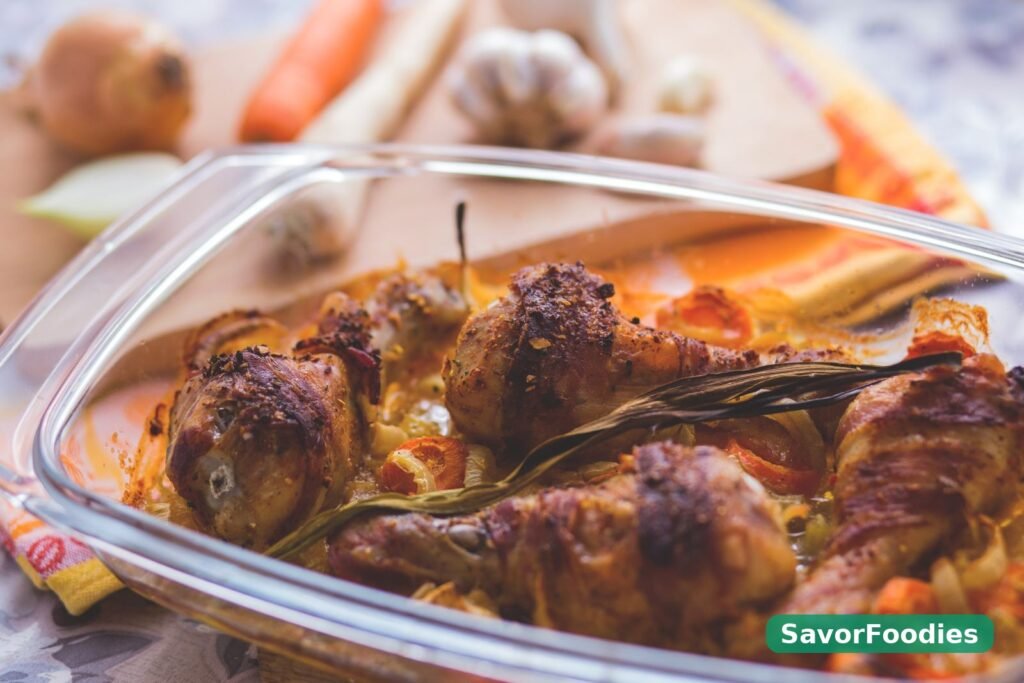
These carrots sit happily next to almost any roast, and that is their great strength. Roast chicken is the classic partner — the honey glaze echoes the savoury juices, and the carrots catch everything that runs off the bird if they share a pan for the last twenty minutes. Roast pork, lamb, or a simple grilled steak all work just as well, and for a vegetarian main, they are wonderful next to a grain dish like couscous or a lentil stew, where their sweetness balances something earthy.
For a weeknight meal, I like them with something simple from the stove — a pan-fried chicken breast, a piece of fish, or even just eggs and toast on a lazy evening, where the carrots turn an ordinary supper into something that feels considered. A green salad alongside keeps the plate balanced, and a crusty loaf for the pan juices is never a mistake. The carrots are rich enough to carry a modest main, so do not feel you need to cook something elaborate to justify them.
If you are building a whole meal around these carrots for guests, a few easy sides make it feel generous without much extra work. A pile of roast potatoes, a simple salad, and the carrots in the middle of the table, with the main course alongside — that is a dinner that looks like you spent all afternoon, when the carrots themselves took ten minutes of actual effort. And if you are planning a week of vegetable sides generally, the same approach works across the board, like in these easy chicken recipes with frozen vegetables, where a little planning turns ordinary vegetables into something people actually look forward to.
Storage and Reheating
Leftovers keep well in the fridge for up to four days, stored in an airtight container. The glaze will firm up in the cold, which is normal — it loosens again when reheated. For the freezer, these carrots freeze reasonably well for up to a month, though they will be softer after thawing, so I would use frozen ones in soups or mashes rather than as a standalone side. Thaw overnight in the fridge before reheating.
Reheating is best done back in the oven. Spread the carrots on a sheet pan and warm them at 200°C (400°F) for 10 to 12 minutes, until hot through and the edges crisp up again. A hot skillet works too, and it has the advantage of re-caramelising the glaze a little. The microwave works in a pinch, but it softens the edges and you lose the texture that makes this dish special. If the carrots look dry after reheating, a fresh drizzle of honey and a knob of butter tossed through the hot pan fixes it instantly.
Frequently Asked Questions
Can I use baby carrots?
You can, though they are not my first choice. Bagged baby carrots are often cut from larger carrots and can be a little woody, and because they are already small, they cook faster and can go soft before they caramelise. If you do use them, cut any thick ones in half, reduce the roasting time by about ten minutes, and check them early. Whole bunched baby carrots with their tops on are a different matter — they are sweet, they look beautiful, and they roast wonderfully, so use those whenever you find them.
Why did my carrots go soft instead of caramelised?
Almost always, it is one of three things: the pan was crowded, the oven was not hot enough, or the carrots were covered. Spread them in a single layer with space, use a genuinely hot oven (200°C / 400°F, not lower), and never cover the pan. If you did all three and they are still soft, your carrots may have been very thick — cut them thinner next time, or parboil for five minutes first. Caramelisation needs dry heat and room, and it will not happen in a steamy, crowded pan.
Can I make these ahead of time?
You can peel and cut the carrots a day ahead and keep them in water in the fridge, and you can mix the glaze ahead too. But roast them as close to serving as you can, because they are at their best hot from the oven, while the edges are still crisp. If you must roast ahead, undercook them by five minutes, then finish them in a hot oven just before serving — that last blast brings back most of the texture, and nobody will know they were not freshly made.
Is this recipe very sweet?
It is sweet, but balanced. The honey is there to caramelise, not to make dessert, and the garlic, salt, and lemon at the end keep it firmly in savoury territory. If you are nervous about sweetness, use a little less honey — one and a half tablespoons instead of two — and add an extra squeeze of lemon at the end. The carrots themselves are naturally sweet when roasted, so the honey is amplifying something already there, not imposing a flavour that does not belong.
What if I do not have fresh thyme?
Dried thyme works fine — use half the amount, and add it to the glaze so it has time to soften. Rosemary is a good substitute too, though it is stronger, so use a little less and chop it finely. If you have neither, the carrots are still excellent with just garlic, butter, and honey — the herbs are a background note, not the main event, and leaving them out is better than using something stale from the back of the cupboard.
Can I add other vegetables?
Absolutely. Parsnips are the classic addition — they roast at the same rate and their earthy sweetness pairs beautifully with honey. Sweet potato chunks, cut to a similar size, work too, though they need a few minutes longer. Just keep the total volume sensible, or the pan will crowd, and add anything delicate, like green beans, for the last 15 minutes only. The rule is simple: similar size, similar cooking time, and enough space for everything to roast rather than steam.
This is the kind of side dish that quietly becomes a habit. A bag of carrots, a knob of butter, a spoonful of honey, and forty minutes in the oven — and suddenly everyone is reaching past the main course for another one. Make them once exactly as written, then make them yours — a little more garlic, a pinch of chilli, parsnips mixed in if you love them, or a different main course depending on the night. That is how a recipe earns a permanent place in a home kitchen: not by being perfect the first time, but by being good enough that you want to cook it again next week, and the week after that.