

There is a particular kind of tired that only a weeknight can produce. Not the dramatic kind, just the flat, end-of-the-day kind where you open the fridge, stare for a solid minute, and quietly hope dinner will somehow suggest itself. On those nights, I do not want a recipe with three pans, a marinade that needed starting yesterday, or a sauce that requires a blender and a prayer. I want one pan, a handful of things I already own, and something that smells so good halfway through cooking that I stop feeling quite so tired. This is that dinner.
One-pan honey garlic chicken and broccoli has become my default answer to that exact moment, and not because it is fashionable. It is because it works in real kitchens, on real evenings, with a pan that has seen better days and chicken that came out of the fridge only ten minutes ago. The chicken sears until the edges catch a little colour. The broccoli goes in right after, soaking up the garlicky pan juices while it stays bright and just barely crisp. Then the honey garlic sauce hits the hot pan, bubbles up, thickens in about a minute, and coats everything in a glossy, sticky glaze that is sweet without being dessert-like. Thirty minutes, start to finish, and the only thing to wash is the skillet and whatever you ate from.
If you like the way we cook here at SavorFoodies — straightforward food, honest seasoning, no fuss for the sake of fuss — this one fits right in. It is the kind of meal you can make the first time following the steps closely, and the second time mostly from memory while you are also answering a text and setting the table. That is the real test of a weeknight recipe, as far as I am concerned: not how impressive it looks on a plate, but whether you actually want to make it again next Tuesday.
Why This Recipe Works
The first reason is heat, and how it moves through one pan. When you sear chicken in a skillet that is properly hot, you get browning, and browning is where most of the flavour lives. The outside turns golden, the edges get a little crisp, and the juices that stay behind in the pan become the start of your sauce instead of something you scrub off later. If you crowd the pan or keep the heat too low, the chicken just steams in its own moisture and turns pale and a bit sad. A big skillet, a bit of patience, and not moving the pieces around every ten seconds — that is most of the battle, honestly.
The second reason is timing. Chicken and broccoli do not cook at the same speed, so this recipe does not pretend they do. The chicken goes in first, gets its colour, and comes out to rest. The broccoli goes into that same flavourful pan next, where it cooks fast in a splash of water and the leftover juices. By the time the sauce goes in, both are nearly done, and the final minute together is just about coating, not cooking from scratch. Nothing overcooks while something else catches up, which is usually where one-pan recipes fall apart.
Then there is the sauce itself, which is deliberately simple: honey, garlic, soy sauce, and a little vinegar and chilli to keep the sweetness in check. Honey on its own can make a dish taste flat and one-note, especially if it caramelises too far. The garlic gives it savouriness, the soy gives it salt and depth, and the vinegar lifts the whole thing at the end so it tastes bright rather than heavy. You can read more about honey if you are curious about why it thickens and darkens the way it does in a hot pan, but in practice all you need to know is this: keep the heat at medium when the sauce goes in, and watch it. It goes from loose to glossy to too thick in about ninety seconds.
Finally, this recipe belongs to a very useful family of dinners. If you enjoy this style of cooking, our one-pan skillet recipes are built around the same idea — one pan, proper browning, and a sauce made from what is already in the pan. The less you have to wash up, the more likely you are to cook again tomorrow, and that matters more than any single ingredient.
Ingredients You Need
You do not need anything exotic here. If your kitchen has soy sauce and honey in it, you are most of the way there. Buy the broccoli fresh if you can — the florets should feel firm, the colour should be deep green, and the stems should snap rather than bend. Limp broccoli will still cook, but it will never get that bright, just-tender bite that makes this dish work.
- 600 g boneless, skinless chicken thighs or breasts, cut into bite-sized pieces
- 1 teaspoon salt, plus a little more to taste
- 1/2 teaspoon black pepper
- 1/2 teaspoon garlic powder
- 2 tablespoons olive oil or any neutral cooking oil
- 4 large heads of broccoli, about 500 g, cut into small florets
- 4 cloves garlic, thinly sliced or finely minced
- 3 tablespoons honey
- 3 tablespoons soy sauce
- 1 tablespoon rice vinegar or apple cider vinegar
- 1 teaspoon chilli flakes, or less if you prefer it mild
- 1 tablespoon water, for the broccoli
- 1 teaspoon sesame seeds, for serving
- 2 spring onions, thinly sliced, for serving
A quick note on the chicken. Thighs are more forgiving than breasts here — they stay juicy even if you overshoot the timing by a minute, and they brown beautifully. Breasts work perfectly well too, just cut them a touch larger so they do not dry out, and pull them out the moment they are cooked through. Either way, pat the pieces dry with kitchen paper before they go in the pan. Wet chicken steams. Dry chicken sears. That one small step changes the whole dish.
On the broccoli, cut the florets smaller than you think you need to. Big, tree-like pieces look lovely but cook unevenly, and the thick stems stay raw while the tops go soft. Aim for pieces roughly the size of a walnut, with a bit of stem attached — the stem is sweet and tender once it cooks, and it holds the sauce nicely. And yes, broccoli is one of those vegetables that rewards a hot pan rather than a long boil: a few minutes in a skillet keeps it green, keeps a bit of bite, and stops it smelling like a school canteen.
How to Make It
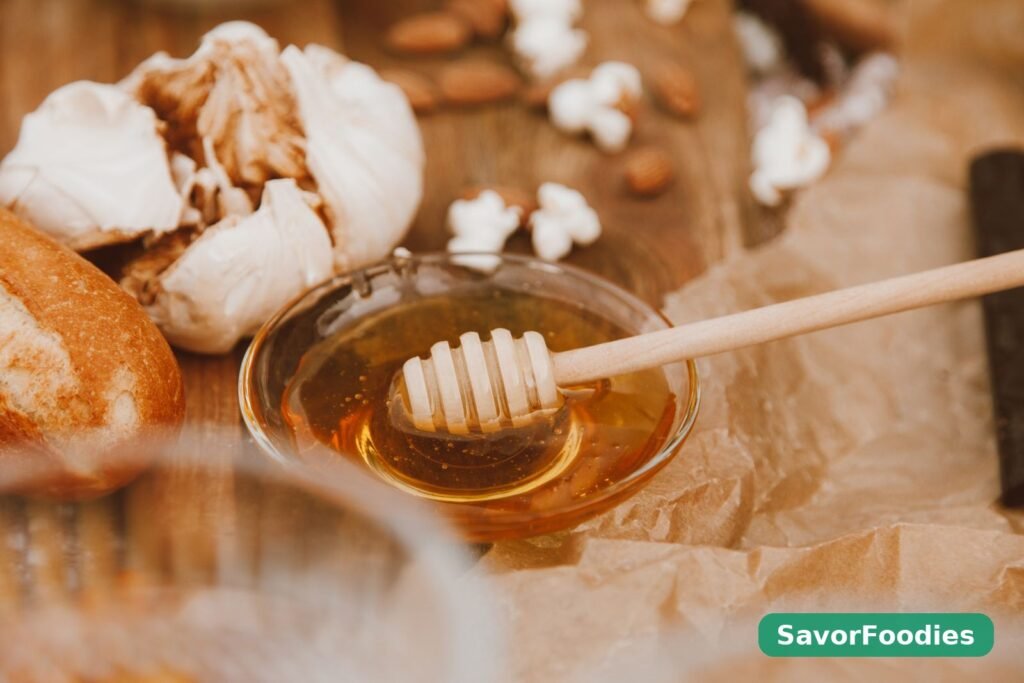
Start by getting everything ready before the pan goes on. This is a fast recipe once it starts moving, and you do not want to be mincing garlic while the chicken is already browning. Cut the chicken, cut the broccoli, slice the garlic, and stir the honey, soy sauce, vinegar, and chilli flakes together in a small bowl. Set the sauce by the stove. That two minutes of prep saves you from the panicked scramble later, and it is the difference between a calm cook and a chaotic one.
- Season the chicken. Put the chicken pieces in a bowl, sprinkle over the salt, pepper, and garlic powder, and toss with your hands until every piece is coated. Let it sit while you heat the pan — even five minutes at room temperature helps it cook more evenly than fridge-cold chicken does.
- Heat the pan. Put your largest skillet over medium-high heat and add the oil. Wait until the oil shimmers and moves easily when you tilt the pan, almost like water. If it is smoking hard, the pan is too hot — turn it down a notch and wait thirty seconds. You want hot, not furious.
- Sear the chicken. Lay the chicken pieces in the pan in a single layer, leaving a little space between them. Now leave them alone. Do not stir, do not poke, do not check underneath every few seconds. After about three to four minutes, you should hear a steady sizzle and see golden colour creeping up the sides. Flip the pieces and cook another three minutes, until they are golden on both sides and cooked through. If your pan is small, do this in two batches — crowded chicken steams instead of browning, and you will taste the difference.
- Take the chicken out. Transfer the chicken to a plate and set it aside. Do not wipe the pan. Those browned bits stuck to the bottom are not burnt mistakes; they are concentrated flavour, and the broccoli and sauce are about to pick them all up.
- Cook the broccoli. Turn the heat down to medium, add the broccoli to the same pan with a tablespoon of water, and put a lid on — a baking tray works if you do not have a lid that fits. Let it steam for three minutes. Lift the lid and look: the broccoli should be bright green, tender enough to bite through easily, but still with a little resistance in the stem. If it is still too firm, give it one more minute with the lid on.
- Add the garlic. Push the broccoli to the edges of the pan, add the sliced garlic to the middle, and stir it for about thirty seconds. You will smell it almost immediately — warm, savoury, slightly sweet. That smell is your cue. Garlic burns fast, and burnt garlic turns bitter in a way that no amount of honey will fix, so have the sauce ready in your hand before you start this step.
- Pour in the sauce and bring it all together. Tip the chicken back into the pan, pour the honey soy mixture over everything, and toss to coat. The sauce will bubble up straight away. Keep tossing for one to two minutes while it thickens and turns glossy, clinging to the chicken and settling into the nooks of the broccoli. If it gets too thick and sticky, splash in a tablespoon of water and toss again. Taste one piece — add a pinch of salt or an extra drop of vinegar if it needs lifting.
- Serve straight away. Scatter the sesame seeds and spring onions over the top and bring the pan to the table if you like, or spoon everything into bowls. This dish is at its best hot, when the sauce is still glossy and the broccoli still has its bite.
Tips for the Best Result
The single biggest improvement you can make to this recipe costs nothing: use a pan big enough for the job. A 30 cm skillet is ideal. In a small pan, the chicken releases moisture faster than it can evaporate, the temperature drops, and you end up braising instead of searing. If all you have is a smaller pan, cook the chicken in two batches and keep the first batch warm on a plate. It takes three extra minutes and it is worth every second.
Watch the honey. Honey goes from golden to dark very quickly in a hot pan, and dark here does not mean better — it means bitter and burnt. That is why the sauce goes in after you turn the heat down, and why you keep tossing rather than walking away to set the table. The sauce should look shiny and coat the back of a spoon, not sit in a dark, sticky puddle at the bottom of the pan. If it does darken too much, a splash of water and a quick toss will usually rescue it, but prevention is easier: medium heat, constant movement, ninety seconds.
Cut the broccoli evenly, or accept that some pieces will be perfect and others will be either raw or mushy. I keep a small paring knife by the board for this and trim the bigger florets in half through the stem. It feels fussy for about thirty seconds and then you forget about it, but the even cooking is noticeable on the plate.
Do not skip resting the chicken, even briefly. The few minutes it spends on a plate while the broccoli cooks let the juices settle back through the meat instead of running out the moment you cut or bite into it. This is also why the chicken goes back in only at the very end: it warms through in the sauce without getting a second full round of cooking, so it stays tender rather than tightening up and drying out.
Finally, taste before you serve, every single time. Soy sauces vary a lot in saltiness, honeys vary in sweetness, and the same recipe can taste slightly different from one bottle to the next. A pinch of salt, a squeeze of lemon, or a few extra chilli flakes at the end can adjust a sauce that is almost right into one that is exactly right. Cooking is not about following numbers blindly; it is about noticing what is in front of you and fixing it.
What to Serve With It
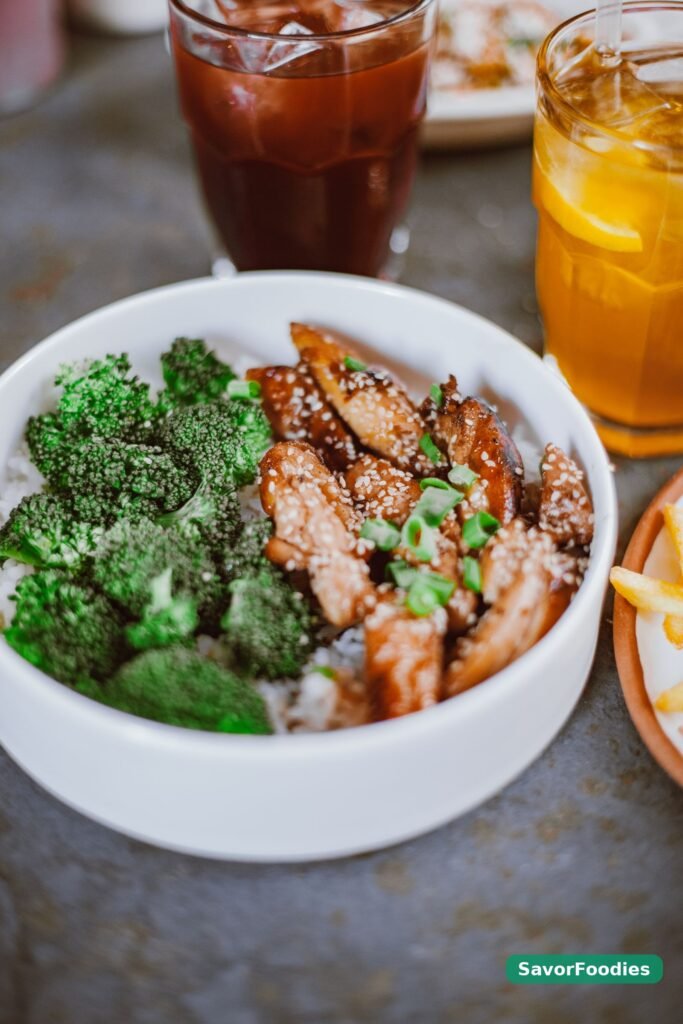
On a busy night, this dish does not need much beside it. Steamed jasmine rice is my usual choice — it soaks up the extra sauce beautifully, and a pot started before the chicken goes in will be ready at the same moment the pan comes off the heat. If you are short on time, microwave rice works just as well and nobody at the table will mind. Noodles are another good option: toss hot, cooked noodles straight into the pan at the end, with a splash of water to loosen the sauce, and you have a complete one-pan noodle dinner without a second pot.
If you want the meal to feel a little more substantial, a simple cucumber salad on the side does a lot of work. Thinly sliced cucumber with rice vinegar, a pinch of sugar, and a little salt, left for ten minutes while you cook, gives you something cool and sharp against the warm, sticky chicken. A pile of steamed edamame, a quick miso soup, or even just a loaf of crusty bread for mopping up the sauce all work, depending on what you already have in the kitchen.
For a lighter plate, skip the rice altogether and serve the chicken and broccoli over a bed of shredded cabbage or a big handful of baby spinach — the heat from the pan wilts the greens just enough. And if you are cooking for people with different appetites, this recipe scales well: the same pan, double the chicken, cooked in batches, and everyone serves themselves from the pan. That kind of relaxed, help-yourself serving suits this dish. It was never meant to be plated with tweezers.
If you are looking for another dinner in the same no-fuss spirit, our one-pot chicken and rice without soup is a good next cook — same idea of chicken and a starchy base sharing one pot, different texture and a little more comfort-food energy. And if you want to keep the skillet theme going, the chicken and vegetables skillet without oven is worth a look too, especially on nights when you do not want to heat the oven at all.
Storage and Reheating
Leftovers keep well, which is one of the reasons I often make a little extra on purpose. Cool the chicken and broccoli to room temperature — do not leave it sitting out for hours, an hour at most — then store it in an airtight container in the fridge for up to three days. The sauce will thicken and set a bit in the cold; that is normal, and it loosens again as soon as it warms.
To reheat, a skillet is better than a microwave if you have the time. Put the leftovers in a pan over medium heat with a tablespoon of water, cover, and warm for three to four minutes, tossing once halfway through. The water steams the broccoli back to life and loosens the sauce without making it gluey. In the microwave, use a covered dish, heat in one-minute bursts, and stir between each one — the broccoli will be softer than it was fresh, but the flavour holds up well, and it makes a very good packed lunch the next day.
For longer storage, freeze the chicken and broccoli in a flat freezer bag or container for up to two months, but leave the sauce a little looser than usual before freezing, since it thickens further when thawed. Thaw overnight in the fridge and reheat in a pan as above. The broccoli will never be quite as crisp after freezing, so if texture matters to you, freeze the chicken in its sauce and cook fresh broccoli to go with it — that takes five minutes and gives you the best of both.
Frequently Asked Questions
Can I use frozen broccoli for this recipe?
Yes, and on a night when fresh broccoli is not in the fridge, frozen is a perfectly sensible swap. Do not thaw it first — tip it straight into the hot pan from frozen, add the tablespoon of water, and give it an extra minute or two under the lid. The texture will be softer than fresh broccoli, and it will release a bit more water, so let that water bubble off before you add the garlic and sauce. Otherwise the sauce can end up thinner than you want. The flavour is still good, and the convenience is hard to argue with.
Will the sauce be very sweet?
It should taste balanced rather than sugary, thanks to the soy sauce, vinegar, and chilli flakes pulling against the honey. If you are sensitive to sweetness, start with two tablespoons of honey instead of three and add the third only after tasting. You can also add an extra teaspoon of vinegar at the end — acid is the quickest way to make a sweet sauce taste brighter without changing anything else. Taste as you go, and trust your own palate over the numbers on the page.
Can I make this without soy sauce?
You can, though the sauce will taste a little different. Tamari is the closest swap and works one-for-one. Coconut aminos are sweeter and less salty, so use the same amount but taste before adding any extra honey. If you use a low-sodium soy sauce, you may need a pinch more salt at the end. What you should not do is leave the salty element out entirely — without it, the honey has nothing to balance against and the dish tastes flat.
How do I know the chicken is cooked through?
The most reliable way is a meat thermometer: 74°C in the thickest part means it is done. Without one, cut the largest piece in half and check that the meat is white all the way through with clear juices, not pink. Chicken thighs are more forgiving than breasts if you overshoot slightly, which is another reason I lean towards thighs for a weeknight. When in doubt, give it one more minute in the pan — a minute of extra cooking is far better than serving undercooked chicken.
Can I add other vegetables to the pan?
Absolutely, as long as you respect their cooking times. Sliced carrots or green beans need to go in with the broccoli, or even a minute before, since they take a little longer. Mushrooms cook fast and soak up sauce nicely — add them after the broccoli has had a minute. Peppers go soft quickly, so add them in the last minute or two. The rule is simple: hard vegetables early, soft vegetables late, and do not overload the pan or nothing will brown properly.
Is this recipe good for meal prep?
Yes, it is one of the better ones for it. Cook a double batch on Sunday, portion it into containers with rice, and you have lunches for three days that actually reheat well. Keep the sesame seeds and spring onions separate and sprinkle them on after reheating, so they stay fresh and crunchy. The broccoli softens a little each day, but by day three it is still perfectly good — just a touch more tender, which some people prefer anyway.
This is a dinner I come back to not because it is clever, but because it is reliable. One pan, half an hour, ingredients that are already in most kitchens, and a sauce that makes plain chicken and broccoli taste like something you chose on purpose rather than something you settled for. Make it once, adjust the sweetness and heat to your own taste, and then let it become one of those recipes you do not need to look up anymore. The best weeknight dinners are not the ones you admire — they are the ones you actually cook, again and again, on nights when cooking feels like the last thing you want to do and the first thing that makes the evening feel normal again.