

There is a salad I make when the weather turns warm and I want something that tastes like the garden without spending an hour over a hot stove, and this garden herb quinoa salad with lemon is it. It started the way most of my favourite recipes do, which is to say it was not planned at all. I had a bag of quinoa in the cupboard, a bunch of parsley that was about to go limp, half a cucumber, and two lemons rolling around in the fruit bowl. I cooked the quinoa, chopped everything I had, squeezed the lemons over the top, and what came out of the bowl was so much better than the sum of its parts that I have been making it ever since, usually once a week from spring right through to the end of summer.
What I like about it is how it manages to be light and filling at the same time. The quinoa gives you something substantial to chew on, the cucumber and celery stay crisp, and the lemon dressing ties the whole thing together with a brightness that makes the herbs taste even greener. It is the kind of salad that sits happily next to grilled chicken or a piece of fish, but it is also perfectly fine on its own for lunch, straight from the container, standing in front of the fridge. I have taken it to picnics, to a neighbour’s barbecue, and to more than one potluck where I was asked for the recipe before I had even finished serving myself.
The other reason I keep coming back to it is that it forgives almost everything. Forgot to buy mint? Use more parsley. Only have one lemon? It will still work. Cooked the quinoa a little too soft? Let it cool completely and the grains firm up enough to hold the dressing. This is not a fussy salad. It is a practical one, built from things you probably already have, and it tastes like you tried much harder than you did. That combination is exactly why it belongs in our sides and vegetables collection, where the best recipes are the ones you actually make again.
Why This Recipe Works So Well
The first thing to understand about this salad is that the quinoa does most of the work, so it has to be cooked properly. Quinoa is a seed, not a grain, and when it is cooked well each little seed opens into a tiny spiral and turns light and fluffy. When it is cooked badly it turns to mush, and no amount of lemon or herbs can save a mushy base. The trick is simple: rinse it well, use a little less water than the packet suggests, and whatever you do, leave it alone once the lid goes on. Ten minutes of steaming off the heat, untouched, is what separates fluffy quinoa from porridge. I learned this the hard way after peeking at the pot one too many times and ending up with a salad that looked more like risotto.
The second reason the salad works is the lemon dressing, and the key detail is that the dressing goes on while the quinoa is still warm. Warm quinoa drinks up flavour in a way that cold quinoa simply does not. When you pour the lemon, olive oil and garlic over the warm grains, the quinoa absorbs the dressing instead of letting it pool at the bottom of the bowl, so every bite tastes seasoned rather than just the top layer. Then, once it has cooled, you add the herbs and the cucumber, which stay fresh and crisp because they never meet the heat. It is a small bit of timing, warm grains first, cold things second, and it makes the whole salad taste like it was seasoned from the inside out.
The third reason is the herbs themselves. This is not a salad where the herbs are a garnish sprinkled on top for colour. They are a real ingredient here, in the same quantities as the vegetables. A big handful of flat-leaf parsley, a smaller handful of mint, and a scattering of dill if you have it, all chopped fine, give the salad a flavour that is hard to describe as anything other than green and fresh. The lemon brings the brightness and the herbs bring the depth, and together they make a bowl of plain quinoa taste like something you would happily pay for at a cafe. Fresh herbs also mean the salad smells wonderful when you lift the lid, which is half the pleasure of eating it.
Finally, there is the texture. A good salad needs contrast, and this one has it in every forkful. The quinoa is soft and slightly nutty, the cucumber and celery are crisp and cool, the toasted pine nuts or almonds add a little crunch, and the crumbled feta, if you use it, brings a creamy saltiness that ties it all together. Nothing in the bowl is doing the same job twice. That is why the salad never gets boring halfway through, and why people go back for a second helping even when they thought they were only going to have a little taste.
Ingredients You Need
Before you start, read through the list and check what you have. The salad is flexible, but there are a few things worth getting right. Use a fine-mesh sieve to rinse the quinoa, because the grains are small enough to slip straight through a regular colander, and that is a mess you only make once. You will also want a large bowl, bigger than you think you need, because tossing a salad in a bowl that is too small is how half of it ends up on the counter.
For the salad:
- 1 cup uncooked quinoa, any colour, rinsed well
- 1 and 3/4 cups water or light vegetable stock
- 1/2 teaspoon fine salt, plus more to taste
- 1 large English cucumber, diced small
- 2 stalks celery, sliced thin
- 1 cup cherry tomatoes, halved
- 1/2 small red onion, diced very fine
- 1 cup flat-leaf parsley leaves, finely chopped
- 1/2 cup fresh mint leaves, finely chopped
- 2 tablespoons fresh dill, chopped (optional but lovely)
- 1/2 cup crumbled feta cheese (optional)
- 1/3 cup toasted pine nuts or sliced almonds
For the lemon dressing:
- 1/4 cup good olive oil
- Juice of 2 lemons, about 1/4 cup, plus the zest of 1 lemon
- 1 small garlic clove, finely grated
- 1 teaspoon honey
- 1/2 teaspoon Dijon mustard
- 1/4 teaspoon black pepper
A note on the quinoa colour, since people ask about it every time. White quinoa is the mildest and fluffiest, and it is what I use most often for this salad. Red quinoa holds its shape a little more firmly and looks beautiful against the green herbs, though it has a slightly earthier taste. Tri-colour quinoa, the mixed bag, gives you the best of both and looks lovely in the bowl. Any of them will work here, so use whatever is in your cupboard. Just avoid the pre-seasoned packets, because the dressing in this recipe is doing the seasoning and you do not want to fight with a packet of salty flavouring.
On the subject of lemons, use fresh ones. Bottled lemon juice will work in a pinch, but it tastes flat and slightly bitter compared with a lemon you have just squeezed, and in a salad where lemon is the main flavour, that difference matters. Lemon zest is the other half of the trick. The juice gives you the sharp brightness, but the zest gives you the fragrant, almost floral lemon flavour that lingers. Zest the lemon before you cut it in half, because zesting a squeezed half is a fiddly, thankless job. A microplane is ideal, but the fine side of a box grater will do.
The feta is optional, and I go back and forth on it depending on the occasion. With feta, the salad is richer and a little saltier, and it holds up better as a main dish for lunch. Without it, the salad is lighter, dairy-free, and the herbs and lemon come forward more clearly. Both versions are good. If you are taking the salad to a gathering where someone might be avoiding dairy, leave the feta out and put a small bowl of it on the side instead, so everyone can add their own.
How to Make It
1. Rinse and cook the quinoa. Put the quinoa in a fine-mesh sieve and rinse it under cold running water for a good thirty seconds, rubbing the grains gently with your fingers. This washes away the natural coating on the seeds, which can taste bitter if you skip this step. Tip the rinsed quinoa into a medium saucepan with the water or stock and the salt. Bring it to a boil over medium-high heat, then turn the heat down to the lowest setting, put the lid on, and cook for fifteen minutes. Do not lift the lid. When the time is up, take the pan off the heat and leave it, lid still on, for ten more minutes. Then take the lid off and fluff the quinoa gently with a fork. You should see the little spirals and the grains should be separate, not stuck together.
2. Make the dressing. While the quinoa cooks, whisk the dressing together in a small bowl or shake it in a jar with a lid. Combine the olive oil, lemon juice and zest, grated garlic, honey, Dijon mustard and black pepper, and whisk until it looks slightly thickened and the oil and lemon juice are no longer sitting in separate layers. Taste it. It should be bright and a little sharp, because it will mellow once it meets the quinoa. If it tastes too sharp, add a tiny bit more honey. If it tastes flat, add another squeeze of lemon. This is your chance to adjust it before it goes on the salad.
3. Dress the warm quinoa. Tip the warm, fluffed quinoa into your large bowl and pour the dressing over it straight away. Toss it gently with a fork or a large spoon until every grain looks lightly coated. Now leave it alone for at least fifteen minutes to cool to room temperature. This is the step that makes the whole salad work, so do not rush it. The warm grains absorb the dressing, and by the time it has cooled, the flavour is in the quinoa itself, not just sitting on the surface.
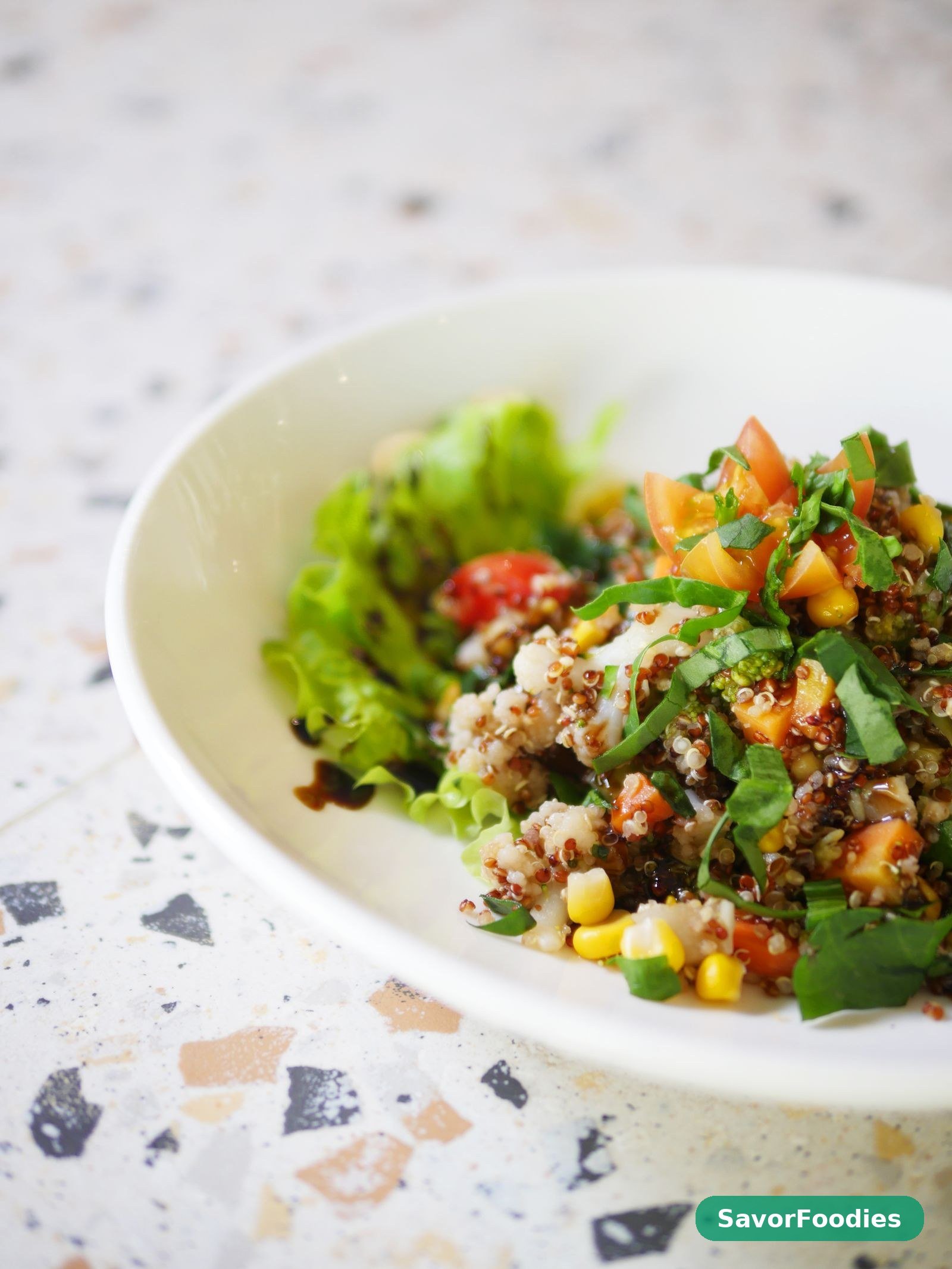
4. Chop everything while it cools. While the quinoa cools, do the chopping. Dice the cucumber small, about the size of a pea, so it mixes evenly through the salad instead of sitting in big chunks. Slice the celery thin. Halve the cherry tomatoes. Dice the red onion as finely as you can, because raw onion in big pieces overpowers everything it touches. Chop the parsley and mint, and the dill if you are using it. Keep the herbs in a separate pile from the vegetables for now, because they go in last.
5. Toast the nuts. Put the pine nuts or sliced almonds in a small dry pan over medium heat and shake the pan every twenty seconds or so. They will go from pale to golden very quickly, usually in two to three minutes, and they can burn in the time it takes to answer the door, so stay with the pan. Tip them onto a plate as soon as they smell nutty and look lightly golden. Toasting is a small step, but it changes the nuts completely. Raw pine nuts are soft and a little bland, toasted ones are crisp and taste like something worth eating.
6. Mix the salad. Once the quinoa is at room temperature, add the cucumber, celery, cherry tomatoes and red onion, and toss gently. Then add the chopped herbs and toss again, just enough to distribute them. The salad should look green and flecked with herbs all the way through. Now add the feta, if you are using it, and the toasted nuts, and give it one last gentle toss. Taste it and adjust the salt, and add another squeeze of lemon if it needs more brightness. Serve it straight away, or cover it and chill it for later.
The Herbs: What to Use and When
Parsley is the backbone of this salad, and it is worth using flat-leaf parsley rather than curly. Flat-leaf parsley has a stronger, cleaner flavour and a softer texture, while curly parsley can taste a little grassy and tends to sit in the salad in stiff little pieces. You want a full cup of chopped leaves, which sounds like a lot until you see how quickly a big bunch disappears once it is chopped. Do not be shy with it. The parsley is not a garnish here, it is a main ingredient, and the salad tastes thin and under-seasoned if you skimp on it.
Mint is the second herb, and it needs a lighter hand than the parsley. Half a cup of chopped mint is plenty. More than that and the salad starts to taste like a mojito, which is not what we are aiming for. The mint’s job is to add a cool, fresh note at the back of each bite, a little lift that you notice without quite being able to name it. If you only have dried mint, skip it rather than substituting. Dried mint tastes dusty and flat in a fresh salad, and the parsley and lemon can carry the flavour on their own.
Dill is the optional third herb, and I add it whenever I have it because it gives the salad a slightly different character, a little more savoury and a little more interesting. Two tablespoons is enough. It pairs particularly well with the feta, and if you are serving the salad with fish, the dill makes the whole plate feel like it belongs together. If you do not like dill, leave it out. The salad does not need it, and it will not miss it.
One thing that matters with all of the herbs is when you chop them. Chop them just before you add them to the salad, not an hour ahead, because chopped herbs start to darken and lose their fragrance once they are cut. And chop them with a sharp knife rather than tearing them by hand, because torn herbs bruise and go dark at the edges, while a clean cut keeps them bright green. It is a small detail, but it is the difference between a salad that looks fresh when you serve it and one that looks tired before it even reaches the table.
Tips for the Best Result
The single most important tip is the one I have already mentioned, and it is worth repeating because it is where this salad succeeds or fails. Do not skip the resting time for the quinoa. Fifteen minutes off the heat with the lid on, then dressing it while it is still warm, is what makes the grains fluffy and flavourful. If you rush the quinoa, or dress it when it is stone cold, the salad will taste under-seasoned and the dressing will sit at the bottom of the bowl. Patience here costs you nothing and gives you everything.
The second tip is about the dressing balance. Lemons are not all the same size or the same sharpness, and a dressing that was perfect last week can be too sharp or too flat this week depending on the fruit. Always taste the dressing before it goes on the quinoa, and always taste the finished salad before you serve it. The right amount of lemon is the amount that makes the salad taste bright without making your mouth pucker. If you are unsure, start with a little less lemon juice and add more at the end. It is easy to add lemon and impossible to take it out.
The third tip is about the onion. Raw red onion can be harsh, and in a salad that sits for a while it can take over the whole bowl. Dicing it very fine helps, but if you know the salad will sit for a few hours, or if you are sensitive to raw onion, soak the diced onion in cold water for ten minutes and drain it before adding it. This takes the sharp edge off without losing the flavour. It is a small step that makes a real difference, and I do it every time I make this salad for guests.
The fourth tip is about making it ahead. This salad actually gets better after a couple of hours in the fridge, because the flavours have time to settle into each other. Make it in the morning and it will be at its best by lunchtime. But do not add the herbs and nuts until you are close to serving, because the herbs wilt and the nuts go soft if they sit in the dressing for hours. Keep those in separate containers, toss them in at the last minute, and the salad will look and taste like you just made it, even if the quinoa has been waiting in the fridge since breakfast.
What to Serve With It
This salad is at its best next to something from the grill. Grilled chicken thighs, a piece of salmon, or a few lamb skewers all work beautifully, because the cool, lemony salad balances the smoky, charred flavours of the grill. I often make a big bowl of it on the same evening I grill, and it turns a simple piece of chicken into a proper dinner. It also works next to roasted vegetables. A tray of garlic butter roasted carrots with honey and a bowl of this quinoa salad make a table look generous without much effort, and the sweet, soft carrots play nicely against the bright, crunchy salad.
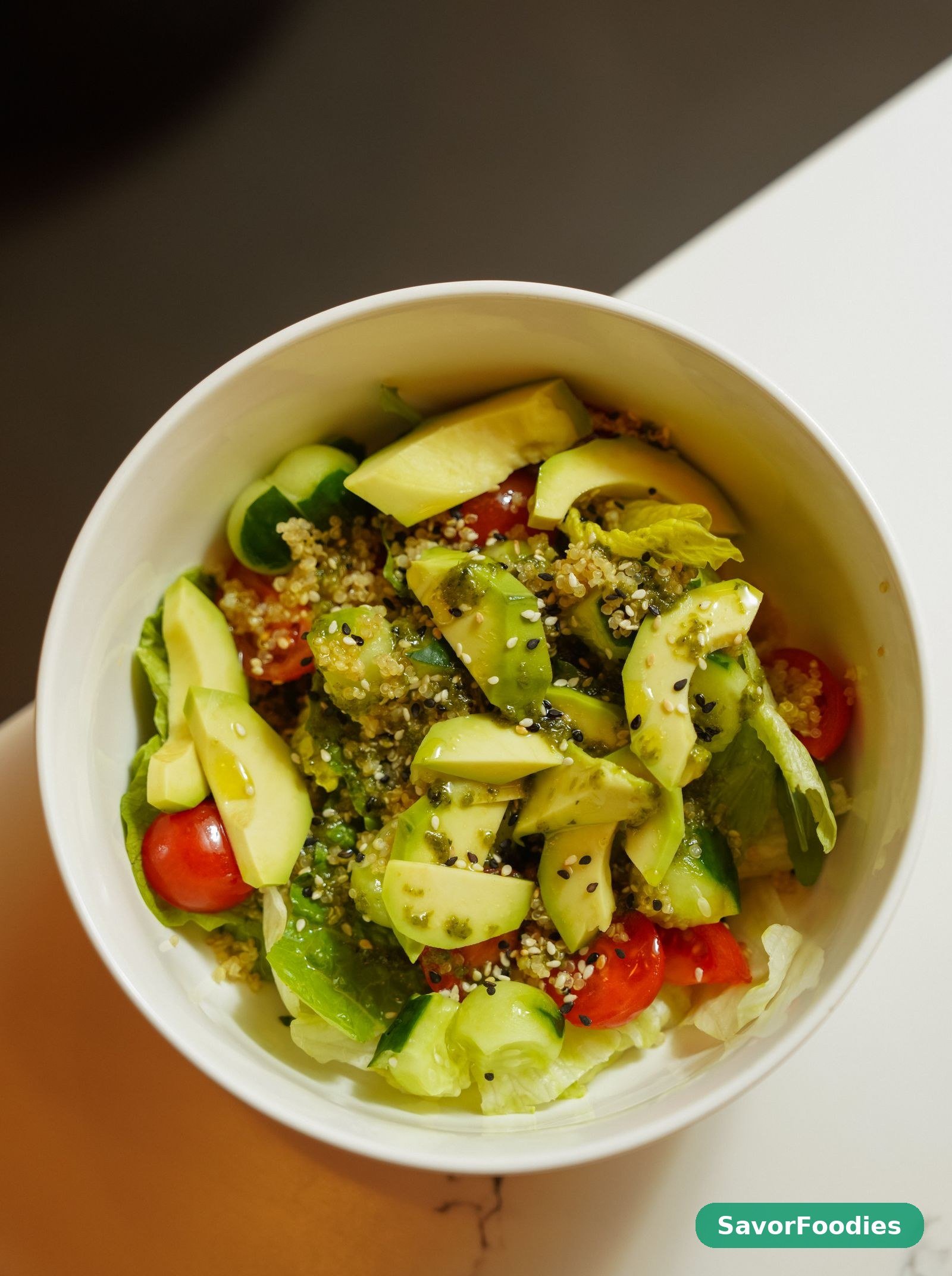
For a lighter lunch, the salad is a meal on its own, especially with the feta in it. I pack it into a container with a fork and eat it at my desk more often than I care to admit, and it holds up well. It travels without falling apart, it does not need reheating, and it tastes just as good cold from the fridge as it does at room temperature. If you want a little more protein, a handful of chickpeas stirred through makes it heartier, and a boiled egg on top turns it into a proper packed lunch that keeps you going until dinner.
It also works as part of a bigger spread. At a barbecue or a potluck, this salad sits happily next to coleslaw, potato salad and grilled corn, and it is usually the bowl that empties first, partly because it looks so fresh and partly because it is one of the few things on the table that everyone can eat. If you are serving it at a gathering, make a double batch in a big bowl and put a serving spoon in it, because people will come back for more. One batch serves four as a side, and I have never once had leftovers when I took it to a party.
Storage and Leftovers
Stored properly, this salad keeps well in the fridge for three to four days. Put it in an airtight container, press a piece of cling film or parchment directly onto the surface if you can, and keep it in the coldest part of the fridge. The quinoa will firm up slightly in the cold, and the flavours will deepen overnight, so day two is often better than day one. Give it a good stir before serving, and add a fresh squeeze of lemon and a drizzle of olive oil to wake it up again, because cold tends to mute flavours.
The cucumber is the first thing to go soft, usually after about two days, and the herbs will start to darken by day three. The salad is still perfectly fine to eat, it just looks a little less bright. If you know you will be eating it over several days, keep a little of the chopped herbs aside and stir them in fresh each time you serve it. It is a small habit that keeps the leftovers looking and tasting like a fresh salad rather than a tired one.
Freezing is not a good idea for this salad. Quinoa freezes fine on its own, but the cucumber and tomatoes turn soft and watery when they thaw, and the herbs go dark and limp. If you have a lot of quinoa left over, freeze the plain cooked quinoa in a bag and use it another day, but make the salad fresh when you want it. It only takes about thirty minutes from start to finish, and most of that time is the quinoa cooking itself while you do something else.
Frequently Asked Questions
Can I make this quinoa salad the night before?
Yes, and it is one of the better salads for making ahead. Cook and dress the quinoa the night before, add the vegetables, cover it and refrigerate it, then hold back the fresh herbs, feta and toasted nuts until the morning. Stir the herbs and nuts in just before serving and it will taste and look freshly made. The flavours actually improve overnight, so a salad made the night before is often better than one made in a rush on the day.
Do I have to rinse the quinoa?
You really should. Quinoa seeds have a natural coating called saponin, which can taste bitter or soapy if it is not washed off. Most quinoa sold today is pre-rinsed, but a quick thirty-second rinse under cold water in a fine-mesh sieve is cheap insurance and takes almost no time. If you have ever made quinoa that tasted oddly bitter and you could not work out why, skipping the rinse is the most likely reason.
Can I use a different grain instead of quinoa?
You can, though the salad will taste a little different. Couscous works well and cooks faster, in about five minutes, but it is softer and less nutty than quinoa. Bulgur wheat is another good option, with a pleasant chew. Brown rice works too, though it needs a longer cooking time and a little more dressing, because rice absorbs flavour differently. Whichever grain you use, cook it until it is just tender, let it cool slightly, and dress it while it is still warm, the same way you would with quinoa.
How do I keep the salad from going soggy?
The two things that make this salad soggy are overcooked quinoa and wet vegetables. Cook the quinoa until the grains are separate and fluffy, not soft and clumped, and let it cool before adding the cucumber and tomatoes. Dice the cucumber and scoop out the watery seeds if yours is very wet, and halve the tomatoes rather than chopping them, so they do not release too much juice into the bowl. If the salad does end up a little wet after sitting in the fridge, drain off any liquid at the bottom before serving and add a fresh squeeze of lemon.
Is this salad gluten-free?
Yes, as long as you use plain quinoa and check your stock and mustard. Quinoa is naturally gluten-free, and everything else in the recipe, the vegetables, herbs, lemon, olive oil and feta, is gluten-free too. Just check the label on your vegetable stock and your Dijon mustard, because a few brands add wheat-based thickeners. If you are cooking for someone with coeliac disease, also check that your quinoa is certified gluten-free, since it can pick up traces of wheat during processing and packing.
What can I add to make it a full meal?
The easiest additions are chickpeas, white beans or a tin of tuna, all of which turn the salad into a filling lunch without changing the recipe. Grilled chicken or salmon on top makes it a proper dinner. A couple of soft-boiled eggs, halved and set on top, work well too, and a handful of toasted seeds, like sunflower or pumpkin seeds, adds crunch and protein. Start with one addition rather than all of them at once. The salad is already well balanced, and one good addition is usually enough.
There is one more thing worth saying about this salad, and it is the reason I keep making it long after the novelty has worn off. It is the kind of recipe that teaches you something about cooking without trying to. The first time you make it, you learn that dressing warm grains changes everything. The second time, you learn which herbs you actually like and which ones you can leave out. By the third time, you are not really following a recipe any more, you are just making lunch the way you like it, with whatever is in the fridge and whatever herbs are growing by the back door. That is what a good side dish is supposed to do, and it is why this one has earned a permanent place in my kitchen.
If you enjoy bright, herb-filled sides like this one, a bowl of roasted Brussels sprouts with balsamic glaze is another favourite of mine, and it sits next to this salad on the table more often than you might expect. Both of them prove the same point, that vegetables do not need a lot of fuss to be the best thing on the plate. And here at SavorFoodies, that is the kind of cooking I come back to, week after week, simple food made well, with fresh herbs, a good lemon, and enough time to let the flavours do their work.