

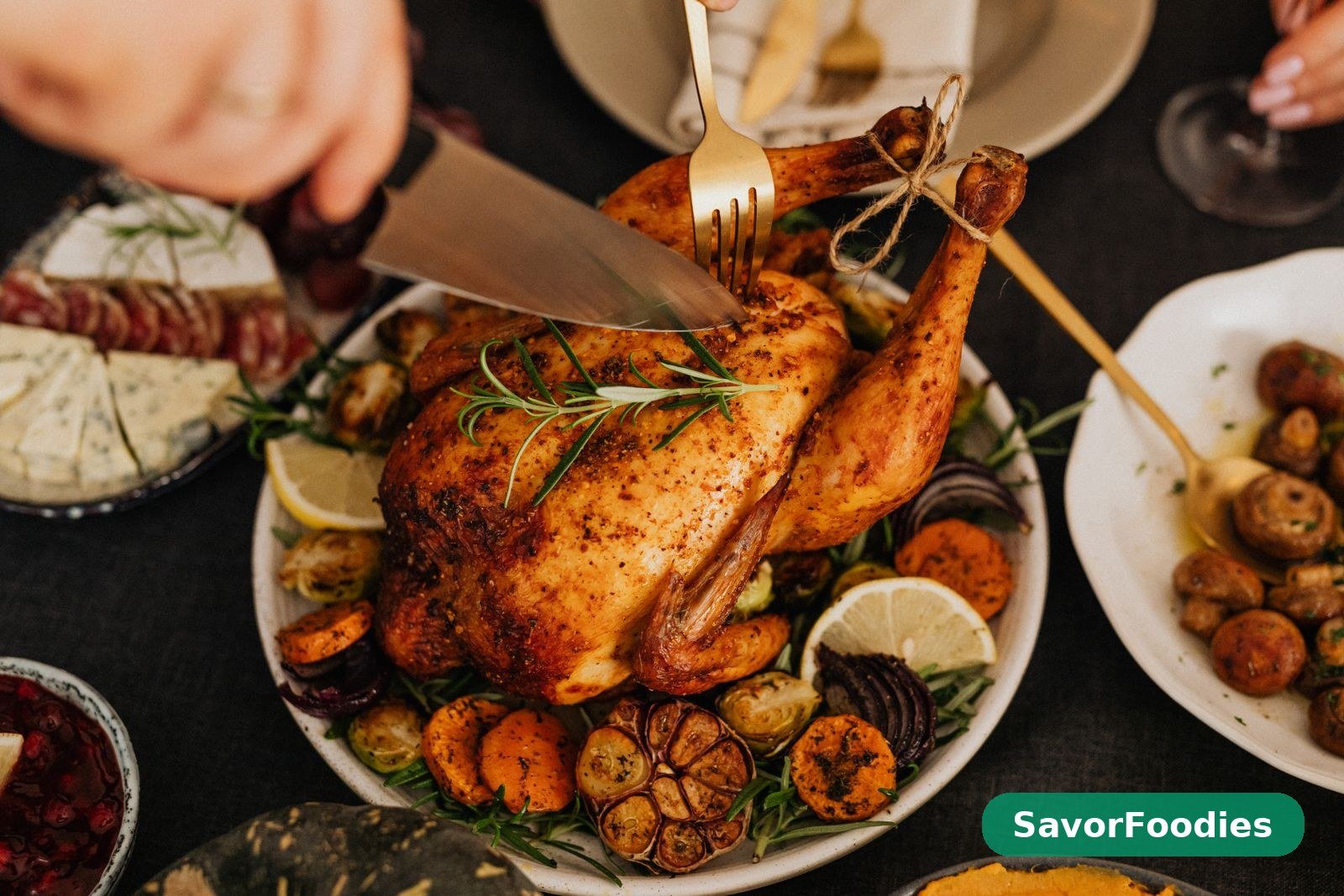
There is a particular smell that tells you dinner is going to be good, and it is the smell of rosemary and garlic hitting hot chicken fat in the oven. It starts off faint, just a warm herbal note drifting out when the oven door has been shut for ten minutes, and by the time the chicken has been in for half an hour it has filled the whole house. That is the moment people start asking when dinner will be ready, even if they asked five minutes ago. This rosemary garlic roast chicken with garden vegetables is built around that moment. It is not a complicated recipe, and it does not ask you to buy anything unusual. A whole chicken, a head of garlic, a few sprigs of rosemary, and whatever vegetables are sitting in the fridge will do. The oven does the hard work, and you get a golden, juicy bird with crisp skin and a tray of vegetables that have roasted in all those good drippings.
I make this on Sundays more than any other day, but there is nothing about it that belongs only to the weekend. It takes about fifteen minutes of hands-on work and then the oven takes over for a little over an hour, which is just enough time to tidy the kitchen, set the table properly, and pour yourself something cold. When the chicken comes out, you carve it right on the board, pile the vegetables alongside, and put the whole lot in the middle of the table. People help themselves, and that is the best kind of dinner — the kind where nobody is waiting to be served and everyone reaches for a second helping before the first plate is finished.
Why This Recipe Works
A whole roast chicken works because of two things that are hard to fake: time and fat. Given enough time in a hot oven, the skin renders and crisps, the meat cooks gently from the outside in, and the juices stay inside instead of running out onto the board. The vegetables underneath are not an afterthought, either. They sit in the pan catching everything that drips off the bird, and by the end they are soft inside, golden at the edges, and flavoured in a way that no amount of seasoning on their own could manage. Cooking the chicken on top of the vegetables is the whole trick. It means one pan, less washing up, and vegetables that taste like they were cooked in something far fancier than their own juices.
Rosemary and garlic are the right partners for this because both of them love heat and fat. Garlic softens and sweetens as it roasts, losing the sharp bite it has raw, and rosemary turns fragrant without turning bitter, as long as you do not scorch it. Together they are the classic flavour of a roast chicken, and for good reason — they season the skin, they perfume the pan juices, and they make the vegetables taste like they belong with the chicken rather than next to it. If you want to know more about why this herb has been paired with roasted meat for centuries, the background on rosemary is worth a look, though you do not need a history lesson to enjoy what it does in the oven.
There is also a practical reason this recipe earns its place in a weekly rotation. It feeds four people generously, and it feeds two people twice, because roast chicken leftovers are some of the most useful food in the kitchen. The meat goes into sandwiches, salads, and soups all week, and the bones make a stock that costs you nothing but a pot of water and an hour on the stove. So while the chicken is in the oven, you are not just cooking tonight’s dinner. You are quietly setting up the next two days as well.
Ingredients You Need
A whole chicken is the starting point, and the size matters more than people think. A bird of about 1.6 to 1.8 kg is the sweet spot for a family of four: big enough to feed everyone with some left over, small enough to cook through evenly without the legs drying out while the breast catches up. If your chicken is much bigger, give it more time in the oven and check the temperature rather than guessing. Buy the best chicken you can comfortably afford — free-range if it is in the budget — because the flavour of a roast chicken comes mostly from the bird itself, and a good one needs very little help.
For the rest, gather:
- 1 whole chicken, about 1.6–1.8 kg, patted dry
- 4 tablespoons olive oil, divided
- 1 whole head of garlic, halved across the middle, plus 6 cloves, minced
- 4–5 sprigs fresh rosemary, plus 1 tablespoon leaves, chopped
- 1 lemon, halved
- 1 teaspoon kosher salt, plus more to taste
- 1 teaspoon black pepper, freshly ground
- 1 teaspoon smoked paprika
- 1/2 teaspoon dried thyme
- 4 medium carrots, peeled and cut into thick batons
- 4 medium potatoes, cut into chunky wedges
- 2 parsnips, peeled and cut into batons (or 2 extra carrots)
- 2 medium red onions, cut into thick wedges
- 1 small head of broccoli, broken into florets (optional, add later)
- 2 tablespoons unsalted butter, softened
- 1/2 cup low-sodium chicken broth
A word about the vegetables: this is a use-what-you-have recipe, and the list above is a guide rather than a rule. Sweet potatoes, butternut squash, turnips, and whole shallots all roast beautifully under a chicken, and a few Brussels sprouts tossed in for the last half hour are lovely too. What matters is cutting everything to roughly the same size so it cooks at the same pace, and not crowding the pan, because vegetables that are piled on top of each other steam instead of roasting. If your tray looks crowded, use two trays — the chicken can sit on one and the extra vegetables on the other, and you can swap them halfway through.
How to Make It
-
Heat the oven and prepare the pan. Put a rack in the middle of the oven and heat it to 220°C (425°F). A hot oven is important here, because it is what crisps the skin in the first twenty minutes. While the oven heats, toss the carrots, potatoes, parsnips, and red onions with two tablespoons of the olive oil, half the chopped rosemary, a good pinch of salt and pepper, and spread them in a single layer in a large roasting pan. Leave a little space in the middle for the chicken to sit, or use a rack over the pan if you have one. The vegetables should not be stacked on top of each other.
-
Make the rosemary garlic butter. In a small bowl, mash the softened butter with the minced garlic, the remaining chopped rosemary, the smoked paprika, dried thyme, a pinch of salt, and a grind of black pepper. This butter is what carries the flavour into the chicken, and it does two jobs at once: it seasons the meat under the skin, and it helps the skin brown and crisp as it melts in the oven. If your butter is too cold to mash, give it ten seconds in the microwave, but do not melt it completely — you want it soft and spreadable, not liquid.
-
Season the chicken. Take the chicken out of the fridge twenty minutes before you start, so it is not ice-cold when it goes in the oven. Pat it very dry with paper towels, inside and out. Wet skin never crisps properly, and this is the single most common reason a roast chicken comes out pale and floppy instead of golden. Rub the rosemary garlic butter all over the outside, then gently loosen the skin over the breast with your fingers and push about half of the butter underneath it, spreading it as evenly as you can. Season the cavity with salt and pepper, then stuff it with the halved lemon and the halved head of garlic, and tuck two sprigs of rosemary in alongside them. The lemon steams gently from the inside and keeps the breast meat moist, and the garlic softens into something you can squeeze out and spread on the vegetables later. Tie the legs together with kitchen string if you have it — it helps the bird cook evenly — and tuck the wing tips underneath so they do not burn.
-
Put it in the oven. Set the chicken on top of the vegetables, breast side up, and drizzle the remaining olive oil over the skin. Season the skin generously with salt and pepper. Slide the pan into the hot oven and roast for twenty minutes at 220°C, until the skin has started to turn golden and you can hear it sizzling. Then turn the oven down to 190°C (375°F) and continue roasting for another fifty to sixty minutes, until the thickest part of the thigh reads 74°C (165°F) on an instant-read thermometer. If you do not have a thermometer, pierce the thigh with a skewer — the juices should run clear, not pink — and wiggle the leg. It should feel loose in its socket.
-
Baste once, halfway through. About halfway through the cooking time, open the oven and spoon some of the pan juices over the breast and the vegetables. This takes thirty seconds and it is worth it, because it keeps the breast from drying out and it glazes the vegetables with chicken fat. While you are there, give the vegetables a stir so the ones underneath get a turn at the edges of the pan, and if you are adding broccoli, toss it in now with a little oil — it only needs about twenty-five minutes, and any longer will turn it soft and grey. Do not baste more than once or twice. Every time you open the oven door, the temperature drops, and the chicken pays for it.
-
Rest the chicken. This step is not optional. When the chicken is done, lift it out of the pan onto a carving board and leave it alone for fifteen minutes, tented loosely with foil. The meat is still cooking from residual heat, and the juices that were driven to the centre by the heat of the oven need time to settle back through the flesh. If you carve it straight away, those juices run out onto the board and the meat dries out in front of you. Fifteen minutes feels like a long time when dinner smells this good, but it is the difference between a juicy chicken and a dry one. While it rests, put the vegetables back in the oven for five minutes if they need a little more colour, and pour the pan juices into a small jug — they are liquid gold, and you will want them on the table.
-
Carve and serve. Carve the chicken on the board, starting with the legs, then the wings, then slicing the breast meat into thick pieces. Arrange everything on a large platter with the roasted vegetables piled around it, and pour a little of the warm pan juices over the top. Put the rest of the juices in the jug on the table, because someone will always want more. Serve it family-style, in the middle of the table, and let people help themselves.
Tips for the Best Result
The first thing to get right is the drying. I know it sounds fussy, but patting the chicken dry with paper towels is the one step that decides whether the skin crisps or stays soft. Do it thoroughly, inside the cavity too, and do not skip it even if the bird looks dry already. The second thing is the oven temperature. Starting hot and then turning the heat down gives you the best of both worlds: a crisp, golden skin from the first blast, and gentle, even cooking for the rest of the time so the breast does not dry out before the thighs are done.
Salt deserves a mention as well. Season the skin generously, and do it just before the chicken goes in the oven, not hours ahead, unless you are dry-brining overnight — in which case, salt it the night before, leave it uncovered in the fridge, and watch the skin turn almost papery, which is exactly what you want for maximum crispness. Either way works, but half-hearted salting done at the wrong time is the only approach that does not. And a note on the rosemary: fresh sprigs are far better than dried here, because dried rosemary can turn woody and bitter in a long roast. If fresh is not available, use half the amount and crush it finely, but fresh is worth buying for this one dish.
One more practical point: do not trust the clock alone. Ovens lie, chickens vary, and a thermometer is the only honest answer to the question of whether your chicken is done. A cheap instant-read thermometer is one of the best things you can buy for a kitchen, and it takes the guesswork out of every roast you will ever make. The classic guidance on roast chicken has not changed in decades for a reason — a properly rested bird, cooked to temperature rather than to time, is hard to beat.
What to Serve With It
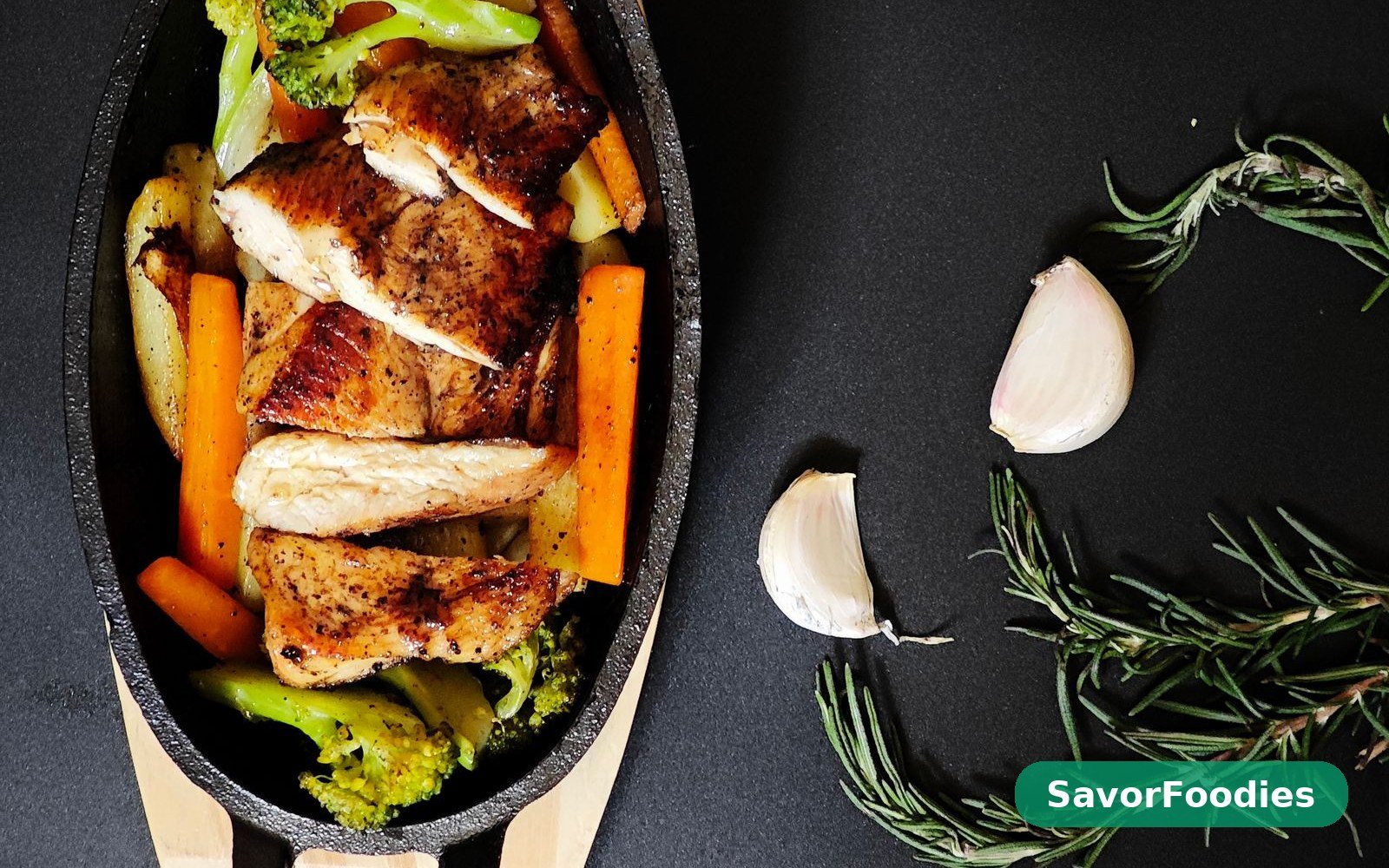
The honest answer is that this chicken does not need much, because the vegetables are already on the tray. But a few things on the side turn it from a good dinner into a proper meal. A simple green salad with a sharp lemon dressing is the best partner, because the acidity cuts through the richness of the skin and the pan juices, and it gives the plate something fresh and bright. A loaf of crusty bread is almost compulsory — not for the chicken, but for mopping up the juices left on the plate, which are too good to leave behind. If you want a starch as well, buttery mashed potatoes are the classic choice, though the roast potatoes on the tray already cover that ground for most people.
For a drink, keep it simple: sparkling water with lemon, or a light red wine if that is your thing. And if you are planning the week ahead, think of this chicken as two dinners in one. The leftover meat is perfect sliced cold into sandwiches the next day, or shredded into a soup, and the carcass makes a stock that will carry you through a pot of soup or a risotto later in the week. If you are building a routine of chicken dinners, you will find the same weeknight thinking in this creamy garlic butter chicken skillet, which is the faster, pan-based cousin of this roast, and in the chicken and vegetables skillet without oven, which uses the same one-pan logic on the hob when you do not want the oven on.
Storage and Reheating
Leftover roast chicken keeps well in the fridge for three to four days, and the way you store it matters. Pull the meat off the bones once it has cooled, and store it in an airtight container with a spoonful of the pan juices poured over the top — this stops it drying out, which is the main risk with reheated chicken, especially breast meat. Keep the vegetables in a separate container, because they will go soft if they sit in the juices for days, and reheat them in a hot oven rather than the microwave so they crisp up again.
To reheat, warm the chicken gently in a covered dish in a low oven, about 160°C, with a splash of broth, until it is hot all the way through. The microwave works in a hurry, but use half power and short bursts, because chicken reheated too hard turns stringy fast. For the freezer, shredded chicken freezes well for up to three months — portion it into bags, press out the air, and label them, because frozen chicken all looks the same after a month. The carcass should go straight into a pot with an onion, a carrot, and a bay leaf, covered with water, and simmered for an hour. Strain it, and you have stock for soup, gravy, or a risotto that tastes like it cost far more than it did.
Frequently Asked Questions
How long does it take to roast a whole chicken?
It depends on the size of the bird and the heat of your oven, but a good rule is about twenty minutes per 500 g at 190°C, after an initial blast at 220°C, plus the resting time. A 1.6 kg chicken takes roughly an hour and ten minutes in the oven, plus fifteen minutes of rest. That said, time is only a guide. The only reliable test is a thermometer in the thickest part of the thigh reading 74°C (165°F), with clear juices. If the breast is browning too fast before the thighs are done, tent the breast loosely with foil for the last twenty minutes.
Can I use dried rosemary instead of fresh?
You can, but fresh is noticeably better in this recipe. Dried rosemary is tougher and more resinous, and it can stay woody even after a long roast. If fresh is not available, use half the amount — about a teaspoon and a half of dried leaves, crushed between your palms — and mix it into the butter rather than leaving whole sprigs in the cavity. Do not put dried sprigs inside the chicken, because they will not soften the way fresh ones do, and nobody enjoys picking them out of the meat.
What vegetables roast best under a chicken?
Root vegetables are the most reliable, because they can take a long roast without falling apart: carrots, potatoes, parsnips, sweet potatoes, and turnips all work beautifully. Onions and whole shallots soften and sweeten in the drippings, and chunks of squash hold up well too. Softer vegetables like broccoli, green beans, and courgettes should go in for the last twenty to twenty-five minutes only, or they will turn to mush. The key is size — cut everything roughly the same thickness so it cooks evenly, and do not crowd the pan.
Should I roast the chicken breast side up or down?
Breast side up, always, for this recipe. Roasting breast side down does keep the breast meat moist, but the skin on the breast never crisps, and you lose the golden top that makes a roast chicken look like a roast chicken. The lemon in the cavity and the resting time do the job of keeping the breast juicy, so you do not need to sacrifice the skin. If you are worried about dryness, baste once halfway through and do not overcook — pull the chicken as soon as the thigh hits temperature.
Can I make this ahead of time?
The chicken is best eaten fresh from the oven, but you can do most of the preparation ahead. Season the bird and prepare the vegetables the night before, keep them covered in the fridge, and take the chicken out twenty minutes before roasting so it is not ice-cold. The cooked chicken also reheats well for two or three days, as described above, though the skin will not be as crisp the second time. For the best result, reheat the meat in a low oven and the vegetables separately at a higher heat so they crisp up again.
What do I do with the leftover bones?
Do not throw them away — they are the start of your next meal. Put the carcass in a pot with a halved onion, a carrot, a stick of celery, and a bay leaf, cover with cold water, and simmer gently for an hour, skimming off any foam. Strain it and you have a litre or so of proper chicken stock, which will keep in the fridge for four days or in the freezer for three months. Use it for soup, for cooking rice, or for a pan sauce the next time you roast a chicken. It costs nothing and it tastes far better than anything from a carton.
This is the kind of dinner that reminds you why a whole chicken is one of the best value meals in the kitchen. One bird, one tray, an hour in the oven, and you have a meal that feels like a small celebration without any of the fuss of one. Make it once exactly as written, and then make it yours — swap the vegetables for whatever is in season, add a few whole garlic cloves to the pan, or try a different herb if rosemary is not your favourite. That is how a recipe earns its place in a home kitchen: not by being perfect the first time, but by being good enough that you want to cook it again next weekend, and the weekend after that. For more chicken dinners in the same spirit, browse the SavorFoodies chicken recipes collection, or start from the SavorFoodies homepage and see what else is cooking.
[…] with a little butter. If you are feeding a crowd and want another chicken dish on the table, our rosemary garlic roast chicken with garden vegetables makes a wonderful companion — the two dishes share a garden-herb spirit but taste completely […]